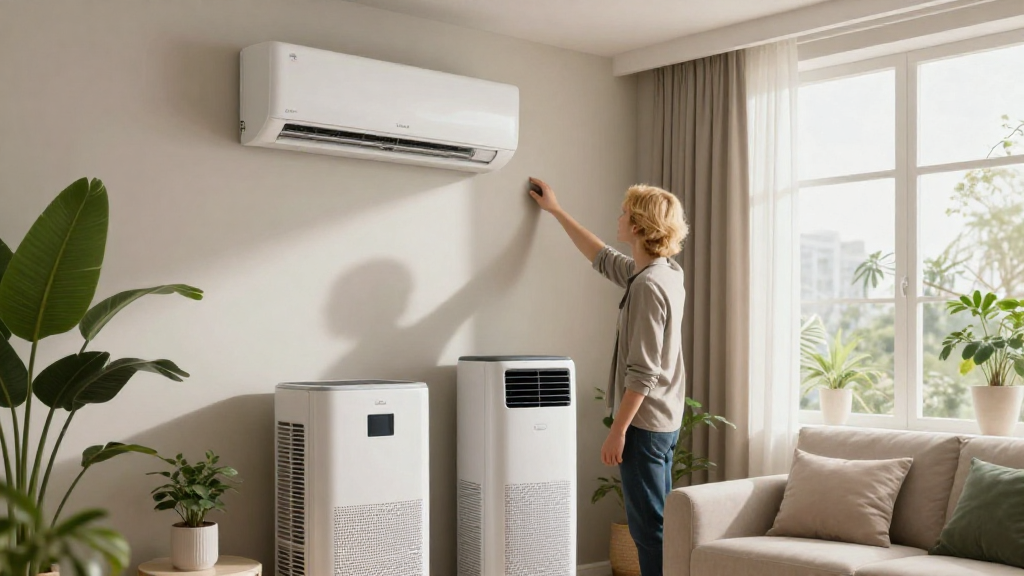
Understanding the various air conditioning types is crucial for making an informed choice for your home or office.
Whether you are replacing an old unit or installing a new system, knowing the air conditioning types available will help you select the one that best suits your needs.
What Are the Common Air Conditioning Types?
When it comes to air conditioning types, there are several main categories. Here are the most common options:
-
Central Air Conditioning
– This system is designed to cool multiple rooms using a network of ducts.
– It operates quietly and maintains a consistent temperature throughout larger spaces. -
Ductless Mini-Split Systems
– These systems consist of an outdoor compressor and one or more indoor air-handling units.
– They are energy-efficient and perfect for homes without existing ductwork. -
Window Air Conditioners
– These units are compact and fit into a window frame.
– They are an affordable option for cooling a single room. -
Portable Air Conditioners
– These are standalone units that can be moved from room to room.
– They typically feature exhaust hoses that vent hot air outside. -
Hybrid Systems
– This innovative system combines a traditional electric air conditioning system with a gas furnace.
– It allows users to switch between heating methods depending on the weather, enhancing energy efficiency. -
Geothermal Systems
– These systems use the earth’s constant temperature to either cool or heat.
– They are eco-friendly and can significantly reduce energy bills over time, though their installation is typically more expensive upfront.
How Do You Choose the Right Air Conditioning Type?
When selecting an air conditioning type, several factors come into play.
Here’s what to consider:
- Size of the Area: Evaluate how large the space you want to cool is. Larger spaces will require more powerful systems.
- Existing Infrastructure: If you have ductwork in place, a central air system may be suitable. Otherwise, consider ductless options.
- Energy Efficiency: Look for SEER ratings (Seasonal Energy Efficiency Ratio) to determine how efficient a unit is. Higher ratings can save you money in the long run.
- Budget: Consider both initial costs and long-term operating expenses. Portable or window units are cheaper upfront but might not be as efficient as central systems.
- Climate: The local climate can affect your decision; for instance, warmer areas might benefit more from central air conditioning.
What Are the Benefits of Each Air Conditioning Type?
Each air conditioning type has its unique benefits. Here’s a closer look:
Central Air Conditioning
- Consistent Temperature: Maintains even cooling throughout multiple rooms.
- Aesthetics: Installed out of sight, enhancing your home’s appearance.
Ductless Mini-Split Systems
- Energy Savings: More energy-efficient with no duct losses.
- Zoning Capability: Allows you to cool specific rooms based on occupancy.
Window Air Conditioners
- Cost-Effective: Affordable and easy to install.
- Targeted Cooling: Ideal for individual rooms without the need for central cooling.
Portable Air Conditioners
- Flexibility: Easy to move to wherever cooling is needed.
- No Permanent Installation: Perfect for renters or temporary arrangements.
Hybrid Systems
- Versatility: Ideal for varying temperature changes.
- Energy Efficiency: Automatically adapts to minimize energy consumption.
Geothermal Systems
- Eco-Friendly: Uses renewable energy sources, reducing carbon footprint.
- Long-term Savings: Although initial costs are high, the efficiency saves money over time.
How Do Air Conditioning Types Impact Energy Efficiency?
The choice of air conditioning type can significantly affect your energy consumption.
Here’s how some technologies stack up:
-
Central Systems: Often have higher SEER ratings and are designed for larger spaces, making them more efficient overall despite higher installation costs.
-
Ductless Systems: Excellent energy efficacies can be achieved. They eliminate duct losses, making them a smart choice for energy savings.
-
Window Units: Efficient for individual rooms but can use more energy if multiple units are needed throughout the home.
-
Portable Air Conditioners: These units generally consume more electricity and may not be as efficient for long-term use compared to other types.
-
Geothermal Systems: They are among the most energy-efficient options available, using significantly less electricity than traditional air conditioning types.
What Maintenance Is Required for Each Air Conditioning Type?
Proper maintenance is essential for keeping your air conditioner functioning efficiently.
Different air conditioning types require different levels of care.
-
Central Air Conditioning
– Regular Filter Changes: Monthly checks and changes during peak seasons.
– Professional Inspections: At least once a year for system efficiency. -
Ductless Mini-Split Systems
– Clean Filters: Monthly cleaning is recommended to maintain airflow.
– Coil Cleaning: Periodically inspect the coils for dirt and debris buildup. -
Window Air Conditioners
– Dust and Debris Removal: Keep the exterior and filter clean every few weeks.
– End-of-Season Care: Remove the unit or cover it during winter. -
Portable Air Conditioners
– Regular Filter Changes: Similar to window units, keep filters clean to avoid air quality issues.
– Draining Water: Make sure to empty the condensation tank as needed. -
Hybrid Systems
– Both Heating and Cooling Maintenance: Requires attention to both functionalities.
– Regular Filter Replacement: Same recommendation as standard systems. -
Geothermal Systems
– Minimal Maintenance: Generally requires less upkeep, but check the system yearly for safety.
When Should You Consider Upgrading Your Air Conditioning Type?
If your current air conditioning type exhibits the following signs, it might be time for an upgrade:
- Increased Energy Bills: If your bills are rising without increased usage, it might be time to consider a more efficient model.
- Frequent Repairs: If you’re consistently investing money in repairs, it’s worth evaluating new options.
- Inconsistent Temperatures: If some rooms are too hot or too cold, you may need a more efficient system.
- Age of the Unit: Most air conditioners last between 10 to 15 years; if yours is approaching this age, consider investing in a more modern system.
Conclusion
In summary, understanding the various air conditioning types is crucial in making the best decision for your cooling needs.
Each type has its advantages, costs, and maintenance considerations.
By evaluating your specific requirements, considering factors like energy efficiency, space size, and initial budget, you can choose the right air conditioning type for your home or business.
Doing so will not only provide comfort but also ensure cost-efficiency and sustainability in the long run.
Remember, your comfort matters, so choose wisely!