Low water pressure can make showers frustrating, appliances slow to fill, and irrigation unreliable. The right automatic booster pump can improve flow while starting and stopping with demand.
This roundup compares 10 options across whole-house systems, point-of-use showers, wells, gardens, RVs, and transfer applications. Use the guide below to match pump capacity, controls, installation requirements, and power needs to your setup.
Best 10 Automatic Water Pressure Booster Pumps Picks for 2026
Best Overall Constant-Pressure Pick

- Adjustable 22–80 PSI constant-pressure operation
- Quiet, efficient variable-speed motor
- Built-in dry-run and overheating protection
Best For: Whole-house, apartment, garden, and shallow-well boosting
Best Tankless Inline Option
BACOENG Smart Controller Booster

- Installs directly in tankless supply lines
- Automatic start and stop based on demand
- 304 stainless steel water-contact components
Best For: Homes and cabins needing inline pressure boosting
Best Smart-Controlled High-Pressure Model
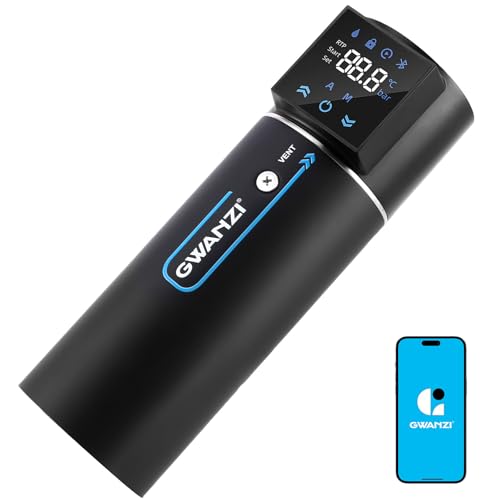
- Adjustable pressure up to 90 PSI
- Wireless app monitoring and OTA updates
- Compact, water-cooled design rated around 30 dB
Best For: Connected whole-house systems and compact installations
Best Compact Utility Pump
ECO-WORTHY 5.5 GPM Diaphragm Pump

- Automatic 70 PSI pressure-switch operation
- 5.5 GPM flow in a compact body
- Thermal overload protection included
Best For: Irrigation, RVs, outdoor cleaning, and small water systems
Best Smart Whole-Home Booster
1.2 HP 85 PSI Variable-Speed Pump

- Up to 26.5 GPM and adjustable 22–92 PSI range
- Smart Life App control with automatic demand response
- Quiet stainless steel design with three-year warranty
Best For: Whole-house pressure boosting and multi-fixture demand
Best Compact Point-of-Use Booster

- Compact 4-pound design for tight installation spaces
- Automatic or manual modes with adjustable pressure and flow
- Quiet 40 dB operation with stainless wetted parts
Best For: Apartments, showers, kitchens, and water heaters
Best Whole-Home Option
Aquastrong 1.6 HP Booster Jet Pump

- 1,340 GPH flow and 164-foot maximum head
- Automatic 20-to-40-PSI pressure control
- 5-gallon tank with stainless steel housing
Best For: Homes, irrigation, shallow wells, and domestic water supply
Best Quiet Fixture Booster
Smart 24V Shower Pressure Pump

- Up to 9.2 GPM and 26.1 PSI
- Automatic or manual operating modes
- Compact, low-noise 24V design
Best For: Showers and individual household fixtures
Best Overall Constant-Pressure Pick – Aquastrong Smart 45
For shoppers comparing automatic water pressure booster pumps, the Aquastrong Smart 45 stands out as a feature-rich whole-house option. Its variable-speed motor automatically adjusts to demand and maintains adjustable pressure up to 80 PSI across multiple faucets.
Best For: Whole-house boosting, apartments, showers, gardens, shallow wells, and systems supplied by mains or tanks.
Pros:
- Maintains constant pressure with a 22–80 PSI adjustment range.
- Integrated design includes a maintenance-free pressure tank, check valve, and stainless steel components.
- Quiet 55 dB(A) operation with permanent-magnet motor and inverter technology.
- Includes dry-run, leak, overheating, blockage, and pressure-sensor protection.
Cons:
- Its 17.2-inch length may require more installation space than compact boosters.
- Designed for clean-water applications rather than wastewater pumping.
The Smart 45 is a strong all-around choice when consistent pressure, automatic control, and built-in protection matter more than the smallest possible footprint.
Best Tankless Inline Option – BACOENG Smart Controller Booster
The BACOENG is a practical choice among automatic water pressure booster pumps for tankless systems. It installs directly in the home water-supply line and automatically turns on as pressure drops during water use, then shuts off when demand ends.
Best For: Residential homes, cabins, and tankless water-supply systems that need inline pressure support without a separate pressure tank.
Pros:
- Tankless design avoids the need for a pressure tank.
- Offers up to 6 bar pressure, 12 GPM maximum flow, and 29.5-foot suction capability.
- Real-time water monitoring automatically stops the pump when the inlet lacks water.
- 304 stainless steel wetted components help resist corrosion and support hygienic water delivery.
Cons:
- The product notes indicate that it makes some noise during operation.
- Its maximum lifting height is listed as 40.7 feet, lower than some whole-house alternatives.
Choose this model if straightforward automatic inline operation is the priority and your installation does not require a large pressure tank or very high lift.
Best Smart-Controlled High-Pressure Model – GWANZI K90S600L
The GWANZI K90S600L combines high-pressure performance with app-based control, making it one of the more connected automatic water pressure booster pumps in this group. Its variable-speed system supports adjustable pressure up to 90 PSI, while the SmartFarintl app enables remote adjustments and monitoring.
Best For: Whole-house systems, villas, apartments, and installations where wireless monitoring and compact placement are useful.
Pros:
- Adjustable 15–90 PSI pressure range with up to 150 feet of head.
- Wireless app control supports pressure changes, mode selection, monitoring, and OTA firmware updates.
- Water-cooled motor is designed for approximately 30 dB operation.
- Compact 11-by-3.5-inch integrated design with 1-inch NPT inlet and outlet.
Cons:
- App connection distance is approximately 30 feet.
- Maximum pressure depends on the water source, with the notes listing up to 80 PSI on mains and 58 PSI from a tank.
- App or firmware setup adds complexity compared with a basic pressure-switch pump.
This is a compelling fit for buyers who want strong adjustable pressure and remote access, provided the installation location can maintain a suitable wireless connection.
Best Compact Utility Pump – ECO-WORTHY 5.5 GPM Diaphragm Pump
The ECO-WORTHY diaphragm pump offers a simpler approach to automatic water pressure boosting. Its pressure switch starts the 110V pump when a faucet opens and shuts it off when the faucet closes, making it useful for irrigation, cleaning, RV, and smaller residential tasks.
Best For: Garden irrigation, hose spraying, outdoor cleaning, RV use, and other applications needing up to 5.5 GPM at a 70 PSI switch setting.
Pros:
- Automatic on-demand operation through an integrated pressure switch.
- Provides 5.5 GPM flow and a 70 PSI pressure setting.
- Compact 10.6-by-5.9-by-5.2-inch form factor.
- Includes thermal overload protection that disconnects above 158°F.
Cons:
- Its 5.5 GPM capacity is lower than the whole-house variable-speed models listed here.
- Self-priming is limited to 9.8 vertical feet.
- The notes describe it for intermittent or task-focused uses rather than comprehensive whole-house constant-pressure control.
For targeted boosting and water-transfer jobs, this compact diaphragm pump is easier to match and install than a larger whole-house system. It is less suited to maintaining high flow throughout a large home.
Best Smart Whole-Home Booster – 1.2 HP 85 PSI Variable-Speed Pump
For shoppers comparing automatic water pressure booster pumps, the EVO BOOST5 stands out as a high-capacity whole-house option with variable-speed control. It delivers up to 26.5 GPM, supports an adjustable 22–92 PSI range, and automatically responds to water demand across multiple fixtures.
Best For: Whole-house pressure boosting, larger homes, showers, storage tanks, irrigation, and shallow-well applications.
Pros:
- High 1.2 HP output with up to 26.5 GPM flow and 197 feet of head.
- Variable-speed operation maintains steady pressure for up to eight faucets across three floors.
- Smart Life App control, dry-run protection, overcurrent protection, and voltage-fault protection.
- Stainless steel construction, 50 dB operation, and a three-year full warranty.
Cons:
- Its larger size and 20.4-pound weight may require more installation space.
- Professional installation guidance may still be useful because of the 1-inch MNPT connections and advanced controls.
This is the most capable choice of the three for demanding whole-home use. Its app control and constant-pressure features add convenience, while the higher capacity makes it better suited to several simultaneous outlets than a compact point-of-use pump.
Best High-Head Utility Booster – 1.5 HP Automatic Pump
This 1.5 HP model is a straightforward choice among automatic water pressure booster pumps, using a mechanical pressure switch to start and stop automatically. Its self-priming design and 1600 GPH flow make it suitable for pressure boosting, irrigation, and water-transfer jobs where simple operation matters.
Best For: Showers and faucets, garden irrigation, basement drainage, pool or pond circulation, and emergency water transfer.
Pros:
- Mechanical pressure switch provides automatic start-stop operation without complex electronics.
- Self-priming design supports quick setup and easier use.
- Up to 1600 GPH flow and a stated maximum lifting height of 120 feet.
- Built-in overheat and dry-run protection helps protect the motor during use.
Cons:
- The pressure setting cannot be customized.
- Its utility-focused design may be less convenient for users wanting smart monitoring or variable-speed control.
- The supplied specifications describe high lift and flow, but not a whole-house multi-fixture pressure rating.
Choose this pump when you want automatic mechanical control and broad utility coverage rather than app-based features. It is a practical fit for transfer and irrigation tasks, but the fixed pressure behavior is a limitation for buyers seeking fine adjustment.
Best Compact Point-of-Use Booster – 100W 32 PSI Smart Pump
For smaller installations, this compact 100-watt model offers a space-saving approach to automatic water pressure booster pumps. It provides automatic or manual operation, real-time flow monitoring in automatic mode, and a rated operating output intended for everyday point-of-use applications.
Best For: Showers, kitchen fixtures, water heaters, apartments, and other compact point-of-use installations.
Pros:
- Compact 4-pound design measures approximately 3.7 by 4.1 by 5.3 inches.
- Automatic mode adjusts pressure and flow with automatic start-stop operation.
- PM variable-frequency motor is designed to save over 50% energy versus regular pumps.
- Quiet 40 dB operation, 304 stainless steel wetted parts, IP67 waterproofing, and 194°F heat resistance.
Cons:
- Its rated 264 GPH flow and 17 PSI pressure are much lower than the larger booster pumps in this roundup.
- It is better suited to a fixture or small installation than broad whole-house demand.
- Manual mode does not provide automatic on/off operation.
This is the most compact and quiet option for targeted pressure improvement. Its automatic mode and included installation hardware simplify setup, but the lower rated output means buyers should reserve it for modest, point-of-use needs rather than multiple high-demand outlets.
Best Whole-Home Option – Aquastrong 1.6 HP Booster Jet Pump
For homeowners comparing automatic water pressure booster pumps, the Aquastrong combines a 1.6 HP motor with a pressure tank for garden irrigation, lawn sprinklers, and domestic water supply. Its stainless steel housing, 164-foot maximum head, and automatic 20-to-40-PSI pressure switch make it suited to larger residential or shallow-well applications.
Best For: Homes, cabins, farms, irrigation systems, and general domestic water boosting where higher capacity is needed.
Pros:
- 1.6 HP motor delivers up to 1,340 GPH and 164 feet of maximum head.
- Automatic pressure switch starts at 20 PSI and stops at 40 PSI.
- Includes a compact 5-gallon pressure tank and pressure gauge.
- Stainless steel housing, overload protection, and a two-year warranty.
Cons:
- Requires priming before startup.
- Must be protected from freezing during winter.
- Its larger size and 115V design may be excessive for a single shower or fixture.
This is the most capable choice of the three for broad residential water boosting and irrigation. The pressure tank and safety features add convenience, while the installation requirements make it better suited to a planned, permanent setup than a quick portable upgrade.
Best Quiet Fixture Booster – Smart 24V Shower Pressure Pump
This compact model is one of the more targeted automatic water pressure booster pumps, designed to improve pressure at individual fixtures rather than throughout an entire home. It delivers up to 9.2 GPM and 26.1 PSI, with automatic and manual modes, low-voltage 24V operation, and a stated noise level as low as 20 dB at three feet.
Best For: Showers, sinks, toilets, and washing machines that need localized pressure support.
Pros:
- Compact design measures approximately 3.34 by 4.13 by 6.3 inches.
- Automatic mode adjusts to help maintain steady water flow.
- 24V operation is designed for lower-voltage safety.
- Supports up to 9.2 GPM with low-noise ceramic-rotor construction.
Cons:
- Not suitable for whole-house water pressure boosting.
- Must be installed with hard pipes, not flexible piping.
- Requires attention to connection sizing and may need the supplied adapter.
Choose this pump when the problem is limited to a bathroom or another individual fixture. Its small footprint and quiet operation are appealing indoors, but its lower pressure rating and fixture-focused design make it a poor substitute for a whole-home booster.
Best Versatile On-Demand Pump – 110V 75-PSI Diaphragm Booster
For RVs, garden hoses, and smaller residential water-boosting tasks, this 110V diaphragm pump offers automatic on-demand operation at a factory-set 75 PSI. It provides 5.5 GPM flow, self-primes to 9.8 feet, and includes fittings, a strainer, tape, and a spanner for a more complete installation package.
Best For: RV and marine use, garden irrigation, household boosting, attic tanks, and portable water-transfer applications.
Pros:
- Automatically starts when a tap opens and stops when it closes.
- Adjustable pressure with a factory setting of 75 PSI.
- Pure copper motor, thermal protection, and dry-run-capable diaphragm design.
- Includes a 50-mesh strainer, hose fittings, Teflon tape, and spanner.
Cons:
- Maximum flow is 5.5 GPM, lower than the other listed pumps.
- Self-priming capability is limited to 9.8 feet vertically.
- Backed by a 180-day warranty, shorter than the Aquastrong’s two-year warranty.
This pump balances automatic control, portability, and useful accessories. Its adjustable 75-PSI setting is attractive for demanding applications, while the modest self-priming height means installation planning is important when drawing from a lower water source.
How We Picked the Best Automatic Water Pressure Booster Pumps
We evaluated these pumps by intended use, pressure and flow ratings, automation, motor design, installation format, power requirements, and the type of water system each model is designed to support. Because a pump rated for an RV or single shower may not suit a whole house, we considered application fit as carefully as maximum performance.
Ratings are useful for comparison, but real-world output depends on pipe size, elevation, inlet supply, fittings, wiring, and whether the pump is operating at its maximum head. Always confirm the manufacturer’s installation instructions before buying.
Quick Comparison
- Whole-house pressure: Look for constant-pressure or variable-speed models with higher flow and durable construction.
- Point-of-use boosting: Compact shower and low-wattage pumps are better for one fixture or a small zone.
- Tank, RV, and transfer use: Diaphragm pumps with automatic pressure switches offer convenient demand-based operation.
- Well and irrigation systems: Jet or shallow-well pumps are designed for water lifting and outdoor distribution rather than simple fixture boosting.
Key Buying Factors for Automatic Water Pressure Booster Pumps
Pressure and Flow
Pressure is measured in PSI, while flow is usually listed in gallons per minute. Higher PSI does not automatically mean better performance. Match the pump’s usable flow at your system’s required pressure to the number of fixtures you expect to run simultaneously.
Automatic Controls
Pressure switches, flow sensors, smart controllers, and variable-speed drives can start the pump when water is demanded and stop it when flow ends. Variable-speed constant-pressure systems generally provide smoother performance, while mechanical switches are simpler and often easier to service.
Installation and Compatibility
Check inlet and outlet thread sizes, voltage, maximum water temperature, self-priming capability, and whether the pump is intended for potable water. Confirm that your plumbing can handle the stated pressure, and use appropriate check valves, filters, isolation valves, and pressure relief protection where required.
Noise, Energy, and Maintenance
A compact diaphragm pump may be practical for intermittent use, while a whole-house pump should have suitable cooling and construction for its duty cycle. Stainless-steel housings can improve corrosion resistance, but every system still benefits from clean inlet water and periodic inspection.
Who Should Buy Which Automatic Water Pressure Booster Pumps?
Choose a whole-house variable-speed model if multiple bathrooms or appliances need steadier pressure. Choose a smart or compact shower booster when only one fixture needs improvement and space or energy use matters. Choose a diaphragm pressure-switch pump for RVs, tanks, light transfer work, or on-demand water delivery. Choose a shallow-well or jet pump for well-water lifting, garden irrigation, or outdoor distribution.
Before ordering, identify your water source, measure existing pressure, estimate simultaneous flow demand, and verify electrical service. If the system will connect to household drinking water or a pressurized well, professional installation may be the safest choice.