A power outage, severe storm, or failed primary pump can turn basement moisture into expensive damage quickly. The best battery backup sump pumps provide automatic protection when your main system cannot run, helping move water even when the electrical supply is interrupted.
This roundup compares 10 backup pump systems, combo units, and battery-inverter solutions by pumping capacity, controls, installation needs, monitoring, and overall practicality for different homes.
Best 10 Battery Backup Sump Pumps Picks for 2026
Best Preassembled Combo
Wayne Primary & Battery Backup System

- Preassembled for quick installation
- Primary pump moves up to 5,100 GPH
- Requires a separately purchased 75 Ah battery
Best For: Indoor basements needing an easy-to-install primary and backup combination
Best Compact Backup
Basement Watchdog Special CONNECT

- Fits small or narrow sump pits
- Pumps 1,730 GPH at 10 feet of lift
- Includes monitoring controls and battery box
Best For: Compact backup protection where sump-pit space is limited
Best Heavy-Duty Backup
Wayne ESP25n Battery Sump Pump

- Durable coated-steel and cast-iron construction
- Moves 1,680 GPH at 10 feet of lift
- Includes LED status display and audible alarm
Best For: Adding durable automatic backup protection to an existing primary pump
Best Monitored Combo
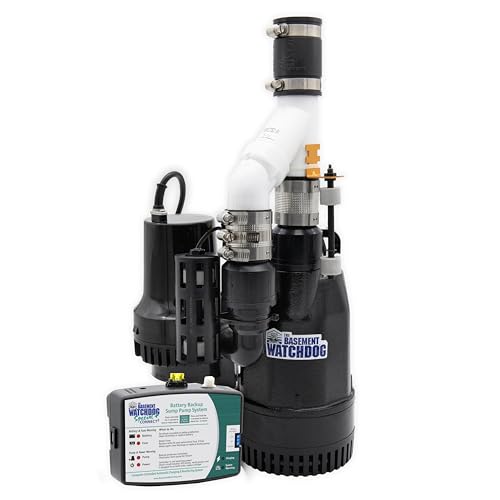
- Preassembled and preplumbed
- Monitors pump, power, and battery conditions
- Optional Wi-Fi alerts and two-battery operation
Best For: Preassembled primary-and-backup protection with detailed monitoring
Heavy-Duty Choice
Westinghouse 1/2 HP Dual-Pump System

- 1/2 HP AC primary pump plus automatic 12V DC backup
- Up to 5,200 GPH and 30-foot maximum lift
- Stainless steel construction; battery sold separately
Best For: High-capacity protection in large or flood-prone basements
Easy-Install Pick
Basement Watchdog CITE-33 Combo System

- Preassembled and preplumbed for simpler installation
- Dual float switches and 24/7 monitoring controller
- Fits pits as small as 12 inches; battery sold separately
Best For: Compact installations where monitoring and convenience matter
Versatile Power Option
2500W 12V Sump Pump Backup UPS

- 2500W pure sine wave output for sump pumps and devices
- 25A smart charger supports several 12V battery types
- LCD remote monitoring; battery sold separately
Best For: Multi-purpose outage power for a sump pump and essentials
High-Capacity Pure Sine Backup
2500W Sump Pump Battery System

- 2500W pure sine wave output
- 25A deep-cycle battery charger
- LCD remote with safety monitoring
Best For: Larger sump pump setups needing high-capacity backup
Feature-Rich Flood Protection

- Automatic 12V battery transfer
- Compatible with four deep-cycle battery types
- Three AC outlets plus USB and Type-C
Best For: Finished basements and emergency preparedness
Complete Secondary Pump Kit
Basement Sentry 12V Backup System
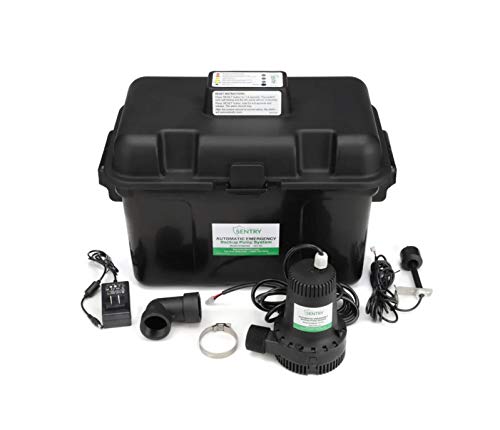
- Installs alongside a primary 115V pump
- Includes controller, alarm, charger, and battery box
- 29 GPM emergency backup flow rate
Best For: Adding a dedicated secondary pump to an existing sump basin
Best Preassembled Combo – Wayne Primary & Battery Backup System
For homeowners comparing battery backup sump pumps, the Wayne WSS30VN stands out as a preassembled primary-and-backup system designed for straightforward installation. Its 1/2 HP primary pump can move up to 5,100 GPH, while the battery backup can remove up to 10,000 gallons on a single charge when paired with the required battery.
Best For: Indoor basements needing an easy-to-install primary and battery backup combination.
Pros:
- Preassembled design fits sump basins 16 inches in diameter or larger.
- Primary system pumps up to 5,100 GPH.
- Tested to 1 million cycles and backed by a three-year warranty.
- Includes an eight-foot power cord.
Cons:
- The required 75 Ah battery is sold separately.
- Intended for indoor use only.
- At 44 pounds, it is heavier than a backup-only pump.
This is a practical choice when you want both everyday pumping and outage protection in one drop-in-ready package. Confirm your basin size and budget separately for the required battery.
Best Compact Backup – Basement Watchdog Special CONNECT
The Basement Watchdog Special CONNECT is a compact option for shoppers seeking battery backup sump pumps that can fit in narrow or smaller sump pits. It pumps 2,500 GPH at zero feet of lift and 1,730 GPH at 10 feet, with a control panel that provides warnings and maintenance guidance.
Best For: Smaller or narrow sump pits where a compact backup system is important.
Pros:
- Compact pump can fit small or narrow sump pits.
- Control panel displays warnings and recommended actions.
- Battery fluid sensor helps monitor battery condition.
- Includes the controller, charger, dual float switch, pump, and battery box.
Cons:
- The battery is sold separately.
- Its rated flow is lower than the larger combination systems in this roundup.
- The Wi-Fi function requires a separate add-on module.
This model makes sense when installation space is limited and you value visible system status information. Check the stated lift performance against your discharge height before buying.
Best Heavy-Duty Backup – Wayne ESP25n Battery Sump Pump
The Wayne ESP25n is a backup-only choice for battery backup sump pumps, using a 12-volt motor and automatic reed float switch to remove rising water during outages or flooding. Its coated-steel and cast-iron construction is designed for demanding sump-pit conditions, with output rated at 2,700 GPH at zero feet of lift and 1,680 GPH at 10 feet.
Best For: Homeowners who already have a primary pump and want a durable, automatic backup.
Pros:
- Heavy-duty coated-steel and cast-iron construction.
- Automatic reed float switch starts the pump as water rises.
- Top-suction design helps resist clogs and air lock.
- Battery case includes an LED display and audible alarm.
Cons:
- The recommended WSB1275 battery is not included.
- It is a backup-only pump, not a primary-and-backup combo.
- Intended for indoor use only.
Choose the ESP25n when durability, automatic activation, and basic status alerts matter more than having a complete primary pumping system. Compare its 10-foot lift rating with your installation requirements.
Best Monitored Combo – Basement Watchdog CITS-50
The Basement Watchdog CITS-50 combines a preassembled primary pump with a battery backup and monitoring controller. For shoppers comparing battery backup sump pumps, it offers strong stated flow rates—4,400 GPH for the primary pump and 2,890 GPH for the backup at zero feet of lift—plus 24-hour monitoring of pump, power, and battery conditions.
Best For: Homeowners who want a preassembled combo with monitoring and optional remote alerts.
Pros:
- Preassembled and preplumbed for simpler installation.
- Energy-efficient 1/2 HP copper-wound PSC primary motor.
- Backup controller provides alarms, warning lights, and maintenance instructions.
- Compatible with AGM or wet-cell batteries, with two-battery parallel capability.
Cons:
- The batteries are not included.
- Remote text, email, and app alerts require the separately purchased BW-WiFi2 module.
- Monitoring features may be more than needed for a basic backup setup.
This is a strong fit for buyers who want a complete combo system with more detailed condition monitoring than a basic backup pump provides. Its optional two-battery setup can also extend runtime, depending on the batteries used.
Heavy-Duty Choice – Westinghouse 1/2 HP Dual-Pump System
For homeowners comparing battery backup sump pumps, the Westinghouse WH50BBU combines a 1/2 HP AC primary pump with an automatic 12V DC backup. Its stainless steel construction, top suction design, alarm system, and 30-foot maximum lift make it suited to demanding basement drainage needs. The battery is not included.
Best For: Large or flood-prone basements needing high-capacity primary and emergency pumping.
Pros:
- Dual-pump system automatically activates the backup during power loss.
- Rated for up to 5,200 gallons per hour with a maximum lifting height of 30 feet.
- Stainless steel housings, thermal overload protection, and top suction help support durability and reliable flow.
Cons:
- Battery must be purchased separately.
- Its 14.4-by-9.3-by-15-inch footprint may still require careful pit-space planning.
The Westinghouse is a strong option when pumping capacity and construction are priorities. Confirm that your sump pit can accommodate the system and plan for a compatible battery before installation.
Easy-Install Pick – Basement Watchdog CITE-33 Combo System
The Basement Watchdog CITE-33 is a practical battery backup sump pump system for shoppers who want a preassembled setup. It includes primary and backup pumps, dual float switches, and a monitoring controller with lights and alarms. The compatible standby battery is sold separately.
Best For: Homeowners seeking a compact, monitored system with simpler installation.
Pros:
- Preassembled and preplumbed design can make installation quicker.
- Dual float switches on both pumps provide multiple activation points.
- Compact design fits sump pits as small as 12 inches in diameter.
- Monitoring controller includes lights and alarms, while the charger supports the compatible AGM battery.
Cons:
- The backup battery is not included and must be compatible with the system.
- The backup pump is rated at 25 GPM at a 10-foot lift, lower than its no-lift flow rate.
Choose the CITE-33 when installation convenience, compact sizing, and system monitoring matter most. Check your pit dimensions and battery requirements before ordering.
Versatile Power Option – 2500W 12V Sump Pump Backup UPS
This 2500W UPS inverter system takes a different approach to battery backup sump pumps: it supplies pure sine wave AC power to a sump pump or other essential devices when utility power fails. It automatically switches to a required 12V deep-cycle battery and recharges when power returns. The battery is not included.
Best For: Homeowners who want sump pump backup power that can also support selected household devices during outages.
Pros:
- 2500W pure sine wave output is designed to run sump pumps and sensitive equipment.
- Built-in 25A multi-stage charger supports LiFePO4, AGM, GEL, and flooded deep-cycle batteries.
- LCD remote monitoring shows battery voltage, load status, and operating mode.
- Includes three AC outlets, USB, and Type-C connectivity.
Cons:
- It requires a separate 12V deep-cycle battery.
- Installation requires attention to ventilation, wiring, and the floating-neutral hardwire-output instructions.
- This is a backup power inverter rather than a dedicated dual-pump assembly.
The system is appealing if you need flexible outage power beyond sump pumping. Verify your pump’s startup and running requirements, battery selection, and installation setup before relying on it for flood protection.
High-Capacity Pure Sine Backup – 2500W Sump Pump Battery System
For homeowners comparing battery backup sump pumps, this 2500W system emphasizes clean, stable power and broad battery compatibility. Its automatic transfer design is intended to keep a connected sump pump operating when utility power fails, while the LCD remote provides useful status information.
Best For: Larger sump pump setups and homeowners who want high-capacity pure sine wave backup with remote monitoring.
Pros:
- 2500W pure sine wave output can support resistive and inductive loads.
- Built-in 25A charger supports deep-cycle lithium and AGM batteries, plus other deep-cycle types.
- LCD remote displays voltage, power, and battery charge status.
- Includes cooling and multiple protection features, including overload, overheat, short-circuit, low-voltage, and overcharge protection.
Cons:
- Battery is not identified as included, so buyers should confirm the required battery separately.
- Not suitable for non-deep-cycle batteries.
- Its 2500W capacity may be more than smaller sump pump systems require.
This is a feature-rich option for buyers prioritizing power capacity, clean output, and installation flexibility. Verify battery compatibility and available ventilation space before installation.
Feature-Rich Flood Protection – 1500W Sump Pump Backup System
This 1500W system is designed for homeowners seeking battery backup sump pumps with automatic transfer during outages. It uses a required 12V deep-cycle battery, provides pure sine wave power, and adds extra outlets and monitoring features for emergency preparedness.
Best For: Finished basements, flood-prone homes, landlords, and property managers wanting a monitored backup system with multiple connection options.
Pros:
- Automatically switches to 12V battery power when utility service fails and recharges when power returns.
- Compatible with LiFePO4, AGM, GEL, and flooded deep-cycle batteries.
- Pure sine wave output includes three AC outlets, USB, and Type-C ports.
- Includes a 25A multi-stage charger, LCD remote, and multiple protective functions.
Cons:
- Battery is required but not included.
- Hardwire output terminals must not be connected to utility or generator power.
- Installation requires room for wiring and ventilation.
With its broad battery compatibility and useful monitoring controls, this system is a versatile choice for outage preparedness. Review the hardwire instructions carefully and choose a suitable 12V deep-cycle battery.
Complete Secondary Pump Kit – Basement Sentry 12V Backup System
Unlike inverter-focused battery backup sump pumps, the Basement Sentry system is a dedicated 12V emergency pump designed to install alongside a primary 115V sump pump. It adds a separate pumping path, controller, alarm, charger, float switch, and battery box for backup protection when the main power goes out.
Best For: Homeowners who want a dedicated secondary sump pump system installed in the existing basin with a primary pump.
Pros:
- Designed to work alongside a primary 115V sump pump.
- Includes the 12V pump, controller, alarm system, charger, float switch, and battery box.
- Provides an additional layer of protection during power outages.
- Rated flow rate is 29 gallons per minute.
Cons:
- Deep-cycle battery is required and sold separately.
- Primary sump pump is not included.
- Manufacturer recommends its own battery brand, which adds a separate purchase.
This is a straightforward choice for buyers seeking a dedicated backup pump rather than an inverter for an existing pump. Confirm that the basin and primary-pump arrangement can accommodate the additional system.
How We Picked the Best Battery Backup Sump Pumps
We focused on systems designed to protect a basement during power failures or primary-pump problems. Our comparison considers pumping output, battery and voltage requirements, automatic transfer or activation, alarm and monitoring features, construction quality, installation complexity, and compatibility with an existing sump pit or primary pump.
Because listed flow rates are often measured at zero lift, real-world performance depends on discharge-pipe height, pipe diameter, check valves, fittings, and battery condition. Treat capacity figures as a starting point rather than a guarantee of installed performance.
Quick Comparison
| Type | Best For | What to Check |
|---|---|---|
| Preassembled combo system | Replacing or upgrading a complete setup | Pit size, primary-pump capacity, controller, and discharge layout |
| 12-volt backup pump | Adding emergency pumping to an existing system | Battery, charger, float switch, and plumbing compatibility |
| Battery-inverter system | Running a compatible pump through an outage | Wattage, surge capacity, transfer time, and battery type |
| Monitored backup system | Homeowners who want alerts or status checks | Alarm functions, optional connectivity, and monitoring fees |
Key Buying Factors for Battery Backup Sump Pumps
Pumping Capacity and Head Height
Compare flow at the actual vertical lift of your discharge line, not only the advertised maximum. A pump with a lower headline GPH rating may outperform a larger-looking model if it handles your pipe routing more effectively.
Battery Runtime and Maintenance
Most 12-volt systems require a separate deep-cycle marine or AGM battery. Runtime varies with water inflow, pump load, battery capacity, age, and temperature. Choose a compatible battery, keep terminals clean, and test the system periodically. Some battery types also require ventilation and fluid checks.
Controls, Alarms, and Monitoring
Look for automatic activation, a reliable float or water-level sensor, audible alarms, charging indicators, and high-water warnings. Wi-Fi or add-on monitoring can be useful if you travel, but confirm whether the system needs a separate module, app, or subscription.
Installation and Compatibility
Measure the sump basin before buying. Check inlet and outlet sizes, available clearance, discharge plumbing, check-valve placement, and whether the backup pump can share or needs a separate discharge line. Professional installation may be worthwhile for complex plumbing or high-risk basements.
Who Should Buy Which Battery Backup Sump Pumps?
Choose a preassembled primary-and-backup combo when you want a coordinated replacement system with fewer compatibility questions. An add-on 12-volt pump is often the practical choice when your existing primary pump and discharge plumbing are in good condition. Select a monitored model if remote alerts provide meaningful peace of mind. Battery-inverter systems suit homeowners who want flexible emergency power, provided the inverter and battery can handle the pump’s running and startup demands.
Whichever system you choose, test the float switch, alarm, charger, and backup operation before storm season. Replace aging batteries proactively, and consider a second layer of protection—such as a generator or water alarm—if your basement contains finished living space or valuable equipment.