Electric baseboard heaters offer quiet, low-maintenance supplemental heat for rooms that need a little more comfort. The right model depends on room size, voltage, installation style, thermostat controls, and safety features.
We compared 10 options ranging from permanently installed 240-volt heaters to portable 120-volt convection models, highlighting the details that matter most before you buy.
Best 10 Electric Baseboard Heaters Picks for 2026
Best Built-In Option
Cadet F Series 36-Inch Baseboard Heater
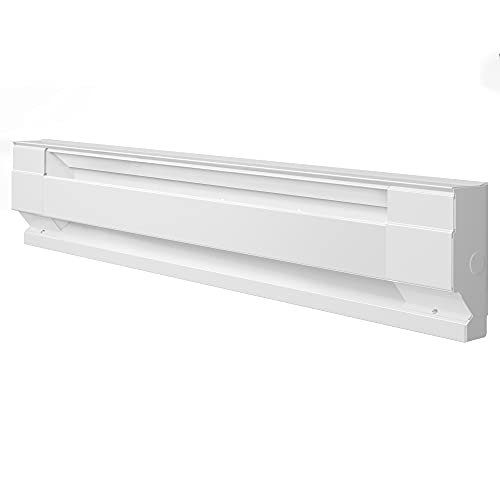
- 750/563-watt dual-wattage design
- Convection heat with universal wiring
- Limited lifetime warranty
Best For: Small rooms needing a permanent baseboard installation
Best Controls and Coverage
Comfort Zone Digital Baseboard Heater

- 1,500 watts with two heat settings
- Digital thermostat and temperature display
- Safety features include tip-over and overheat protection
Best For: Medium rooms needing quiet, adjustable heating
Best Portable Choice
Fahrenheat 46-Inch Convection Heater

- Portable 1,500-watt floor design
- Fanless, quiet natural convection
- Safety cutoffs help prevent overheating
Best For: Movable supplemental heat in rooms up to 250 square feet
Best Simple Thermostat
Comfort Zone Adjustable Baseboard Heater

- 1,500 watts with two heat settings
- Manual adjustable thermostat
- Cool-touch body and overheat protection
Best For: Bedrooms and living rooms needing simple, quiet heat
Best High-Capacity Hardwired Pick
Stelpro Brava 1,250W Baseboard Heater

- Covers up to 125 square feet on 240V
- Quiet one-piece steel convection design
- Thermostat sold separately
Best For: Larger rooms with a compatible hardwired circuit
Best for Everyday Use
EZ-HEAT 1,500W Baseboard Space Heater

- Corded 120V portable design
- Two heat settings with adjustable thermostat
- Tip-over and overheat protection
Best For: Medium rooms and spaces without hardwired heating
Best Compact Hardwired Pick
Stelpro Brava 500W Baseboard Heater
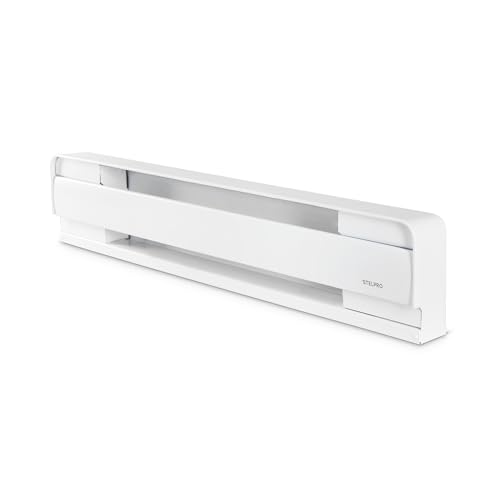
- Covers up to 50 square feet on 120V
- Compact 27.87-inch-wide cabinet
- Quiet convection heating with overheat protection
Best For: Small rooms needing permanent 120V heat
Quiet Everyday Heat
Adjustable 1500W Baseboard Heater

- 750W/1500W settings and adjustable thermostat
- Silent convection heating for quiet rooms
- Tip-over and overheat protection with ETL approval
Best For: Quiet supplemental heating in bedrooms and home offices
Remote-Controlled Coverage
48-Inch Heater with Humidifier

- Three heat settings with 1500W convection output
- Remote, touch controls, and 12-hour timer
- Built-in humidifier and child-lock protection
Best For: Larger indoor rooms where remote control and humidity features help
Best Built-In Option – Cadet F Series 36-Inch Baseboard Heater
The Cadet F Series is a practical choice when you need a permanently mounted electric baseboard heater for a smaller room. Its 750/563-watt, 240/208-volt design uses natural convection to circulate warmth, while universal wiring and pre-punched knockouts are intended to simplify installation.
Best For: Bedrooms, home offices, or study rooms up to about 125 square feet where a compact, hardwired heater is appropriate.
Pros:
- Dual-wattage operation supports 750 or 563 watts.
- Convection heating distributes warmth without a fan.
- Universal wiring and pre-punched knockouts can make installation easier.
- Limited lifetime warranty and automatic shut-off add peace of mind.
Cons:
- It is intended for baseboard or wall mounting rather than portable use.
- The 125-square-foot coverage is suited to smaller spaces.
- Its 240/208-volt setup may require compatible electrical service.
Choose this model when you want a straightforward, low-profile electric baseboard heater for a dedicated room and already have—or plan to install—the appropriate electrical connection.
Best Controls and Coverage – Comfort Zone Digital Baseboard Heater
The Comfort Zone CZ650B combines 1,500-watt heating with a digital thermostat for more precise room-temperature control. This electric baseboard heater offers two heat settings, quiet convection operation, and a floor-mounted design suited to medium-sized indoor spaces.
Best For: Bedrooms, living rooms, and offices up to about 500 square feet where adjustable digital temperature control is useful.
Pros:
- 1,500-watt heating element with two heat settings.
- Digital display and adjustable electronic thermostat support precise control.
- Tip-over switch, overheat protection, and stay-cool body add safety features.
- Dent-proof end panels and whisper-quiet operation suit everyday use.
Cons:
- Its 120-volt, 12.5-amp draw may require a suitable circuit.
- Floor mounting takes up some usable floor space.
- The supplied details describe medium-room use rather than whole-home heating.
This is a strong pick among electric baseboard heaters if convenient digital controls and broad stated coverage matter more than a permanently installed design.
Best Portable Choice – Fahrenheat 46-Inch Convection Heater
Fahrenheat FBE15002 Portable Electric Baseboard Heater,1500 Watt, 120 Volt, 46" Wide, White
Check Price On AmazonThe Fahrenheat FBE15002 is a portable electric baseboard heater that plugs into a standard 120-volt outlet, making it easier to move between rooms than a hardwired model. Its fanless convection design provides quiet, evenly distributed heat without blowing dust and allergens around the room.
Best For: Bedrooms, basements, offices, workshops, or other spaces up to about 250 square feet that need movable supplemental heat.
Pros:
- Portable floor-mounted design can be moved where extra heat is needed.
- Natural convection operates without a fan or clicking noise.
- Overheat protection and a high-temperature safety cutout help address blocked airflow.
- Low-profile white housing measures about 45 inches long and 7.5 inches high.
Cons:
- It has one speed and does not list a digital thermostat.
- Its 1,500-watt, 120-volt load draws 12.5 amps.
- Coverage is listed at about 250 square feet, so larger areas may need more heat.
Consider this model when portability and quiet operation are priorities. It is a flexible supplemental heater, but its long 46-inch format and high electrical draw should be considered before placement.
Best Simple Thermostat – Comfort Zone Adjustable Baseboard Heater
The Comfort Zone CZ600 delivers 1,500 watts of convection-style heating with a manual adjustable thermostat and two heat settings. As an electric baseboard heater, it is designed for floor or baseboard placement and includes a cool-touch exterior, overheat protection, and a tip-over switch.
Best For: Bedrooms and living rooms up to about 300 square feet where straightforward manual controls and quiet operation are preferred.
Pros:
- 1,500 watts and two heat settings provide adjustable output.
- Manual thermostat offers simple temperature control.
- Tip-over switch, overheat protection, and cool-touch exterior support safer operation.
- Quiet operation and dent-proof end panels suit regular household use.
Cons:
- Manual controls are less precise than the digital thermostat on the CZ650B.
- The 120-volt, 12.5-amp requirement needs a suitable outlet or circuit.
- Its stated 300-square-foot coverage may not suit larger rooms.
The CZ600 is a sensible option when you want the core features of a portable electric baseboard heater without paying for digital controls. It emphasizes simple adjustment, quiet warmth, and built-in safety features.
Best High-Capacity Hardwired Pick – Stelpro Brava 1,250W Baseboard Heater
For rooms that need dependable built-in warmth, this Stelpro Brava is one of the more capable electric baseboard heaters in the lineup. Its 1,250-watt output covers up to 125 square feet on a 240V circuit, while the one-piece steel cabinet is designed for quiet convection heating.
Best For: Bedrooms, home offices, condos, and apartments with a compatible 240V hardwired circuit.
Pros:
- Heats up to 125 square feet with 1,250 watts on 240V.
- One-piece steel construction is designed to reduce typical ticking and popping sounds.
- Includes overheat protection, rounded corners, universal wiring, and cable clamps.
- Backed by a five-year warranty and lifetime heating-element coverage for the original owner.
Cons:
- Requires hardwired installation rather than plugging into an outlet.
- An external thermostat is sold separately.
- The listed 1,250W output applies to 240V; output is about 938W on 208V.
This is a practical choice when you want quiet, permanent heat and have the appropriate electrical circuit already available. Plan for thermostat and installation costs when comparing it with portable alternatives.
Best for Everyday Use – EZ-HEAT 1,500W Baseboard Space Heater
If you want the convenience of a corded unit, the EZ-HEAT CZ600 offers portable electric baseboard-style heating without a hardwired installation. It combines 1,500 watts of output with two heat settings, an adjustable thermostat, and multiple safety features for everyday room heating.
Best For: Medium-sized bedrooms, living rooms, offices, and other spaces where portable floor-mounted heating is preferred.
Pros:
- Corded 120V design avoids permanent hardwired installation.
- Two heat settings and an adjustable thermostat provide flexible temperature control.
- Tip-over, overheat, and stay-cool-body safety features support safer operation.
- Whisper-quiet operation and dent-proof end panels suit everyday indoor use.
Cons:
- Floor-mounted and portable rather than a permanently installed wall-mounted baseboard.
- Its supplied notes do not specify a square-foot heating-coverage rating.
- Portable placement requires managing the power cord and available floor space.
The EZ-HEAT is the more flexible pick for renters or anyone who does not want electrical work. Its portable format and built-in controls make it simpler to use, though it will not provide the clean permanent installation of a hardwired model.
Best Compact Hardwired Pick – Stelpro Brava 500W Baseboard Heater
For smaller rooms, this compact Stelpro Brava delivers quiet, permanent warmth without oversizing the heater. The 500-watt model is rated to cover up to 50 square feet on a 120V circuit and uses the same one-piece steel convection design as the larger Brava option.
Best For: Small bedrooms, home offices, kitchens, and other areas up to about 50 square feet with a compatible 120V circuit.
Pros:
- 500-watt output is sized for spaces up to 50 square feet.
- Compact 27.87-inch width fits more easily along limited wall space.
- Quiet one-piece steel cabinet avoids the common noise associated with two-piece baseboards.
- Includes rounded corners, overheat protection, and left- or right-side wiring flexibility.
Cons:
- Requires hardwired 120V installation and is not a plug-in heater.
- A wall or built-in thermostat must be purchased separately.
- Its 500-watt rating is intended for smaller areas, not large rooms.
This model makes sense when you need a low-profile, quiet heating solution for a compact space. Its smaller output helps match the heater to the room, but confirm the coverage and electrical requirements before installation.
Quiet Everyday Heat – Adjustable 1500W Baseboard Heater
For shoppers comparing electric baseboard heaters for a bedroom, office, or other small-to-medium indoor space, the BEYOND HEAT model offers straightforward convection warmth in a slim, portable design. Its two heat settings and adjustable thermostat make it easy to balance comfort and energy use.
Best For: Quiet supplemental heating in bedrooms, home offices, nurseries, and similar indoor rooms.
Pros:
- Dual 750W and 1500W heat settings with an adjustable thermostat.
- Silent convection operation without fan noise or hum.
- Tip-over and overheat protection, plus ETL certification.
- Slim, lightweight freestanding design that is easy to move.
Cons:
- Its 1500W output is intended for small-to-medium rooms rather than whole-home heating.
- It has a basic control setup without a remote or digital display listed.
This is a practical pick when quiet operation and simple temperature adjustment matter more than advanced controls. The portable design also makes it convenient to move between rooms as needed.
Remote-Controlled Coverage – 48-Inch Heater with Humidifier
The ROVSUN is one of the more feature-rich electric baseboard heaters for shoppers who want broad, room-focused coverage and convenient controls. Its 48-inch profile, three heat settings, remote, timer, and built-in humidifier make it suited to bedrooms, offices, and living rooms.
Best For: Users who want remote operation, scheduled heating, and added moisture while warming rooms up to the stated 400 square feet.
Pros:
- 1500W convection heating with three adjustable modes.
- LED touch panel and full-featured remote control.
- 12-hour timer, child lock, and tip-over protection.
- Built-in humidifier and fan-free low-noise operation.
Cons:
- The 48-inch width requires more floor or wall-adjacent space than compact models.
- The supplied listing identifies the package as a two-pack, which may be more than some shoppers need.
- Combustible objects should be kept at least three feet away.
Choose this model if convenience features are a priority. The remote and timer simplify daily use, while the humidifier can help make heated indoor air feel more comfortable during colder months.
Programmable Precision – Digital 1500W Baseboard Heater
For buyers who want more precise control from electric baseboard heaters, the shinic model combines a digital display, electronic thermostat, timer, and two heat levels. Its plug-and-play floor design makes it easy to use in a bedroom, living room, or study.
Best For: Users who want programmable temperature control and quiet, targeted warmth in indoor living or work spaces.
Pros:
- 750W and 1500W modes support gentle maintenance heating or faster warming.
- Digital panel, electronic thermostat, programmable settings, and timer.
- Quiet operation rated at 30 decibels.
- Tip-over, overheat, and child-lock protections with dent-proof end panels.
Cons:
- As a 1500W corded unit, it draws up to the listed 12.5 amps.
- It is designed for targeted room heating rather than whole-home heating.
- No remote control is listed among the supplied features.
This heater stands out for shoppers who prefer a clear digital interface and scheduled shutoff. The two power levels and programmable thermostat provide more control than a basic manual heater while retaining quiet convection operation.
How We Picked the Best Electric Baseboard Heaters
We evaluated these heaters by looking at heating output, wattage, voltage, heater length, control options, portability, and safety features. We also considered whether each model is better suited to permanent installation, occasional supplemental heating, bedrooms, offices, or larger living areas. Thermostats, timers, overheat protection, tip-over switches, durable end panels, and remote controls were treated as practical advantages rather than substitutes for correct sizing.
Because the lineup includes both hardwired and plug-in designs, always verify the electrical requirements before purchase. A 240-volt baseboard heater is not interchangeable with a standard 120-volt outlet model.
Quick Comparison
- Best for permanent installation: Cadet F Series and Stelpro Brava models offer dedicated wattage and voltage options for room-specific heating plans.
- Best for portability: Fahrenheat, Comfort Zone, EZ-HEAT, BEYOND HEAT, ROVSUN, and shinic models are practical for renters or supplemental heat.
- Best for convenient controls: Digital thermostats, timers, and remote controls make models such as the ROVSUN and shinic easier to manage.
- Best for compact or lower-demand spaces: The 500-watt Stelpro Brava is a better fit where modest supplemental heat is all that is needed.
Key Buying Factors for Electric Baseboard Heaters
Wattage and Room Size
Higher wattage generally produces more heat, but room insulation, ceiling height, windows, and climate also matter. As a starting point, many rooms require roughly 10 watts per square foot, though cold or poorly insulated spaces may need more. Use the manufacturer’s sizing guidance and consider a licensed electrician for permanent installations.
Voltage and Installation
Check whether the heater uses 120 or 240 volts and whether it requires hardwiring. Portable 120-volt units can usually plug into a suitable wall outlet, while permanent baseboards may require dedicated wiring, a wall thermostat, and professional installation. Never use an extension cord unless the manufacturer explicitly permits it.
Controls and Safety
An adjustable or digital thermostat helps maintain a more consistent temperature and can reduce unnecessary energy use. Timers and remotes add convenience. For portable heaters, prioritize tip-over protection, overheat protection, stable placement, and cool-touch or durable end panels where available.
Size and Placement
Measure the available wall or floor area before ordering. Keep curtains, furniture, bedding, and other combustibles away from the heater, and follow the required clearance instructions. Longer units may distribute heat more evenly but need more open wall space.
Who Should Buy Which Electric Baseboard Heaters?
Choose a Cadet or Stelpro unit when you want a purpose-sized heater for a planned installation and already have the appropriate electrical supply. Choose a portable Fahrenheat, Comfort Zone, EZ-HEAT, BEYOND HEAT, ROVSUN, or shinic model when you need flexible supplemental heat without remodeling. For bedrooms and offices, prioritize quiet convection, precise thermostat control, and timer functionality. For larger or draftier rooms, look for higher wattage and confirm that the circuit can safely support the load.