The best smart light bulbs for sleep make it easier to shift from bright daytime lighting to a warmer, lower-stimulation bedroom environment. This roundup compares amber and red bulbs, adjustable white models, color-changing options, and sunrise-style lights.
Look beyond app compatibility: color temperature, dimming range, brightness, controls, and installation all affect whether a bulb fits your bedtime routine. The buying guide below highlights the practical differences before you choose.
Best 10 Smart Light Bulbs for Sleep Picks for 2026
Best Circadian-Rhythm Wake-Up Bulb

- Gradual sunrise and sunset simulation
- App and remote control with scheduling
- Built-in natural white-noise sounds
Best For: Custom sleep and wake routines
Best Smart-Home Sleep Scenes

- 1800K–6500K tunable white range
- Sleep scenes, schedules, and timers
- Works with Alexa and Google Home
Best For: Connected homes needing flexible bedroom lighting
Best Blue-Light-Free Night Light

- 1600K amber light with very low blue output
- Flicker-free dimming to 0.1%
- Four bulbs with six sleep modes
Best For: Bedrooms and nurseries needing gentle amber light
Best Multi-Bulb Sleep Scheduling

- Six A19 E26 bulbs for multiple fixtures
- Biorhythm, schedule, timer, and group controls
- Tunable white, RGB, app, and voice control
Best For: Coordinated multi-room sleep routines
Best Amber Sleep Bulb
1800K Blue-Light-Blocking Bulb

- 1800K amber light blocks 99.99% of blue-light components
- 3W output reaches up to 300 lumens
- E26 A15 design with up to 25,000-hour life
Best For: Bedside, nursery, and pre-sleep ambient lighting
Best Bright Smart Bulb

- 2700K–6500K tunable whites with dimming
- Offers 16 million colors and 54 scene modes
- Wi-Fi, Bluetooth, Matter, Alexa, and Google Assistant support
Best For: Connected whole-room lighting with sleep-friendly settings
Best Scheduled Smart Bulb
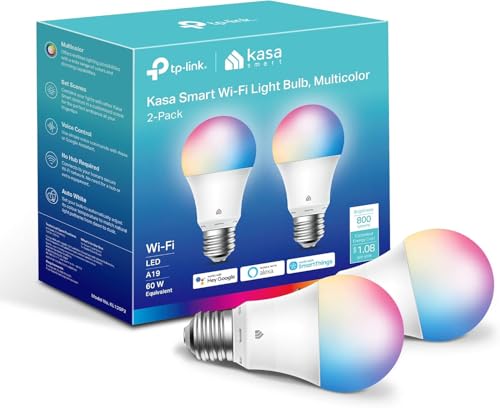
- 2500K–6500K tunable whites plus 16 million colors
- Supports dimming, schedules, and sunrise offset
- Includes energy monitoring and Alexa/Google Assistant control
Best For: Bedrooms needing automated evening and wake-up routines
Best Circadian-Focused Pick

- 670nm red and 1800K amber modes
- 1%-100% dimming and 1800K-6500K range
- Remote, timer, and no Wi-Fi required
Best For: Bedside and nighttime lighting without an app
Best Smart-Home Integration

- Millions of colors with dimming
- Schedules and remote app control
- Matter, Alexa, Google, and Apple Home support
Best For: Connected homes building automated evening routines
Best for Scenes and Scheduling

- 16 million colors and 54 preset scenes
- Sunrise, sunset, timer, and schedule features
- Alexa and Google Assistant voice control
Best For: Colorful routines and flexible app-based automation
Best Circadian-Rhythm Wake-Up Bulb – Sunrise/Sunset Sleep Aid
For shoppers comparing smart light bulbs for sleep, this 800-lumen E26 bulb stands out for its sunrise and sunset simulation. The Bioset Lamp app lets you customize schedules, light color, brightness, and natural white-noise sounds, while the included remote adds convenient bedside control.
Best For: Sleep and wake routines that combine gradual lighting with calming nature-inspired sounds.
Pros:
- Simulates gradual sunrise and sunset transitions.
- Offers warm, daylight, and cool light settings with dimming.
- Includes app control, handheld remote, timers, and built-in natural sounds.
Cons:
- Not suitable for dimmable fixtures.
- Requires the dedicated app for wireless schedule customization.
This is a specialized sleep-aid bulb rather than a general-purpose color bulb. Its standard E26 base makes it easy to install in a bedside or floor lamp, but buyers should confirm fixture compatibility before purchasing.
Best Smart-Home Sleep Scenes – Linkind Wi-Fi Color Bulb
If you want smart light bulbs for sleep that also fit into a broader smart home, this Linkind E26 bulb offers tunable white light, 16 million colors, schedules, and preset scenes including Sleep. It connects through 2.4GHz Wi-Fi and Bluetooth and works with Alexa and Google Home.
Best For: Smart-home users who want sleep scenes alongside voice control, remote access, and creative lighting modes.
Pros:
- Provides 1800K–6500K tunable white light for warmer evening settings.
- Includes Sleep and other preset scenes, timers, and schedules.
- Supports Alexa, Google Home, Wi-Fi, Bluetooth, and group control without a hub.
Cons:
- Initial setup requires 2.4GHz Wi-Fi and Bluetooth.
- Music-sync and DIY effects may be more than needed for a simple bedroom bulb.
Linkind is a versatile choice when bedroom lighting needs to coordinate with other rooms or smart-home routines. For sleep-focused use, select a warm white or Sleep scene rather than the more stimulating dynamic color modes.
Best Blue-Light-Free Night Light – 1600K Amber Sleep Bulbs
These four-pack amber bulbs are a strong option for shoppers seeking smart light bulbs for sleep with a simpler, sleep-focused design. Their 1600K amber output is specified to emit 99.95% less blue light, while flicker-free dimming and remote-controlled sleep modes support low-level nighttime lighting.
Best For: Bedrooms, nurseries, and households wanting very warm, low-blue-light illumination with remote dimming.
Pros:
- Very warm 1600K amber light with 99.95% less blue light as specified.
- Flicker-free, finely adjustable dimming down to 0.1% brightness.
- Four bulbs and six gradual sleep modes included.
Cons:
- Remote control is the listed control method rather than app or voice control.
- Amber output is specialized and less suitable for tasks requiring neutral or cool light.
This pack prioritizes nighttime comfort over broad smart-home features. It is a practical pick for lamps throughout a bedroom or nursery, especially when extremely warm light and precise low brightness matter most.
Best Multi-Bulb Sleep Scheduling – SmartLife 6-Pack
This six-pack is suited to shoppers who want smart light bulbs for sleep across several fixtures. Through the SmartLife app, you can create schedules, timers, plans, and biorhythm routines, then adjust 2700K–6500K white light, colors, and brightness by app, voice, or group control.
Best For: Whole-home or multi-room routines that need coordinated warm lighting, automation, and voice control.
Pros:
- Six standard A19 E26 bulbs provide broad fixture coverage.
- Supports biorhythm functions, schedules, timers, scenes, and group control.
- Offers tunable white, 16 million RGB colors, Alexa/Google Assistant support, and Bluetooth backup.
Cons:
- Initial Wi-Fi pairing requires 2.4GHz Wi-Fi and Bluetooth.
- The 2700K minimum is warmer than dedicated 1600K amber sleep bulbs.
Choose this pack when flexibility and coverage are more important than a specialized amber spectrum. Its biorhythm and scheduling tools can automate a gradual transition to warmer evening light across multiple rooms.
Best Amber Sleep Bulb – 1800K Blue-Light-Blocking Bulb
If you want smart light bulbs for sleep without app controls or Wi-Fi setup, this amber E26 bulb focuses on a very warm, low-output nighttime glow. Its 1800K color temperature and blue-light-blocking design make it suited to bedside, nursery, and pre-sleep lighting.
Best For: Bedside lamps, nursery night lighting, and bedtime reading where a soft amber glow is preferred.
Pros:
- 1800K amber light is designed to block 99.99% of blue-light components.
- Uses 3W while producing up to 300 lumens, replacing a 25–40W incandescent bulb.
- Fits standard E26 fixtures and has a stated service life of up to 25,000 hours.
- Non-dimmable design is suitable for simple night-light setups.
Cons:
- It is non-dimmable and does not offer app, voice, or scheduling controls.
- The A15 bulb measures about 1.77 inches wide by 3.22 inches tall, so fixture clearance should be checked.
- The amber color and 300-lumen output are intended for ambient lighting rather than bright room illumination.
This is the most sleep-focused option in the group, prioritizing a deeply warm color and simple operation over smart features. Confirm the E26 base and compact A15 dimensions before buying.
Best Bright Smart Bulb – Govee RGBWW 1000-Lumen Bulb
For shoppers comparing smart light bulbs for sleep with broader everyday flexibility, the Govee RGBWW bulb offers dimming, tunable white light, schedules, and voice control. Its warm-white range can support evening use, while its high maximum brightness handles larger spaces during the day.
Best For: Users who want one connected bulb for relaxing light, daily illumination, schedules, and color effects.
Pros:
- Tunable white light ranges from 2700K warm white to 6500K cool daylight.
- Dims from 1% to 100% and offers 16 million colors with 54 scene modes.
- Provides up to 1000 lumens and a CRI rating of 90 or higher.
- Supports app and voice control through Wi-Fi, Bluetooth, Matter, Alexa, and Google Assistant.
Cons:
- It requires a 2.4GHz Wi-Fi connection for connected features.
- Presets saving is available only when connected to Wi-Fi, and the bulb cannot be used with smart switches.
- Its 6500K maximum setting is much cooler and brighter than a dedicated amber sleep bulb.
The Govee is the more versatile pick if sleep lighting is only one part of your needs. For nighttime use, plan to select its warmest setting and reduce the brightness rather than relying on its full output.
Best Scheduled Smart Bulb – Kasa Color-Changing A19 Bulb
The Kasa KL125P2 is a practical option among smart light bulbs for sleep if automatic routines matter. It combines tunable white light, dimming, remote access, sunrise-offset scheduling, and energy monitoring in a standard E26 A19 format.
Best For: Bedrooms where users want scheduled wake-up lighting, remote control, and adjustable evening color temperature.
Pros:
- Offers tunable whites from 2500K to 6500K plus 16 million colors.
- Dimming and sunrise-offset schedules can help create a softer morning routine.
- Works with the Kasa app and voice control through Alexa or Google Assistant.
- Includes real-time energy monitoring and uses 9W for a 60W-equivalent output.
Cons:
- Requires a 2.4GHz Wi-Fi network and does not require, or include, a hub.
- Its 800-lumen maximum is less bright than the Govee bulb’s 1000-lumen output.
- It is a general-purpose color bulb rather than a dedicated amber, blue-light-blocking sleep bulb.
The Kasa stands out for routine-based lighting, especially if you want a soft wake-up schedule alongside adjustable evening illumination. Choose the lower, warmer settings at night for a more sleep-oriented setup.
Best Circadian-Focused Pick – Red & Amber Sleep Bulb
For shoppers seeking smart light bulbs for sleep without Wi-Fi setup, this E26 LED bulb combines 670nm red light, ultra-warm 1800K amber light, dimming, and remote control. It can also shift to brighter white settings for daytime use.
Best For: Bedside lamps, nurseries, nighttime nursing, meditation, and anyone wanting remote-controlled red or amber lighting.
Pros:
- Offers 670nm red and 1800K amber modes designed to reduce blue-light exposure.
- Adjusts from 1800K to 6500K and dims from 1% to 100%.
- Includes timer and memory functions with remote control up to 65 feet in open areas.
- Requires no Wi-Fi, app, or hub and uses a standard E26 base.
Cons:
- Remote control is required because app and voice control are not listed.
- Designed for indoor use only.
This is the most sleep-specific option in the group, especially if you prefer warm red or amber light and simple remote operation. Its 700-lumen output and daytime color range also make it practical as an all-purpose bulb.
Best Smart-Home Integration – Cync Full-Color Bulbs
The Cync GE A19 bulbs are a flexible choice for smart light bulbs for sleep when you want schedules, remote access, and broad smart-home compatibility. Use the app to select colors and brightness, then automate the bulbs around your evening routine.
Best For: Smart-home users who want full-color mood lighting, scheduled routines, and Alexa, Google Assistant, Samsung SmartThings, or Apple Home compatibility.
Pros:
- Provides millions of color options with dimming and tunable lighting features.
- Supports schedules, including turning on at dusk.
- Works remotely through the smartphone app and requires no hub or bridge.
- Offers Matter-based voice control and includes two A19 E26 bulbs.
Cons:
- Requires 2.4GHz Wi-Fi for setup and operation.
- The supplied notes do not specify a dedicated red or amber sleep mode.
Choose this two-bulb set if connected automation matters more than specialized circadian lighting. It can support a wind-down routine through color and scheduling, while remaining useful for everyday décor and general illumination.
Best for Scenes and Scheduling – Govee Color Smart Bulbs
Govee’s A19 bulbs suit shoppers comparing smart light bulbs for sleep who want app-based color control, timers, and preset scenes. Sunrise and sunset modes can help structure a daily lighting routine, while voice control adds convenience.
Best For: Users who want colorful scene presets, scheduled lighting, music sync, and Alexa or Google Assistant control.
Pros:
- Offers 16 million DIY colors and 54 preset scene modes.
- Includes timers plus sunrise and sunset modes for routine-based lighting.
- Supports Alexa and Google Assistant voice control without a hub.
- Provides group control for multiple Govee smart products and up to 800 lumens.
Cons:
- Supports only 2.4GHz Wi-Fi.
- Cannot be used with smart switches.
- Music sync requires microphone permission and an unoccupied phone microphone.
This is a strong general-purpose smart bulb for experimenting with relaxing colors and automated schedules. It offers more scene and entertainment features than sleep-specific light settings, so it is best for buyers who want one bulb for both winding down and everyday décor.
How We Picked the Best Smart Light Bulbs for Sleep
We focused on features that matter during the hours before bed: very warm or red-toned light settings, reliable dimming, convenient scheduling, and controls that do not require reaching for a phone every night. We also considered common E26 compatibility, useful brightness for daytime use, voice-assistant support, and whether each option is better suited to a bedside lamp, ceiling fixture, nursery, or whole-room setup.
Because “smart” can mean different things, this list includes both app-connected bulbs and sleep-focused bulbs with remote controls. Some products prioritize circadian-friendly color, while others offer broader color ranges for everyday lighting and entertainment.
Quick Comparison
- Best for automated routines: Wi-Fi or Bluetooth bulbs with schedules, scenes, and voice control.
- Best for the warmest bedtime glow: 1600K–1800K amber bulbs designed to minimize blue-toned light.
- Best for flexible everyday use: RGBWW bulbs with adjustable white temperatures and higher brightness.
- Best for gradual waking: Sunrise-style bulbs with timed brightening and sunset simulation.
- Best for simple control: Remote-controlled bulbs that work without a hub or complicated setup.
Key Buying Factors for Smart Light Bulbs for Sleep
Color Temperature and Spectrum
For winding down, look for amber, orange, red, or extra-warm settings around 1800K or lower. Tunable-white bulbs are more versatile, but verify that their warmest setting is genuinely warm rather than merely soft white. A red or amber bulb can be useful in bedrooms, nurseries, and bathrooms where you want low-disruption nighttime illumination.
Dimming and Brightness
A bulb should be bright enough for normal room use but dim low enough for reading or preparing for bed. Check the stated lumen output and confirm that dimming works through the included remote, app, or voice platform. Very bright bulbs are not automatically better if the lowest setting remains harsh.
Controls, Scheduling, and Connectivity
Wi-Fi models are convenient for routines and remote access, while Bluetooth bulbs may be simpler and more private but have shorter range. Check whether the bulb requires 2.4GHz Wi-Fi, a hub, or a specific app. Voice compatibility with Alexa or Google Home is helpful, but physical remotes can be more practical when your phone is charging elsewhere.
Fit and Placement
Confirm the E26 base, A19 shape, fixture clearance, and whether the bulb is rated for enclosed fixtures. Use sleep-oriented bulbs in bedside or ambient fixtures, and reserve brighter RGB or tunable-white models for rooms that need both daytime illumination and nighttime comfort.
Who Should Buy Which Smart Light Bulbs for Sleep?
Choose a dedicated amber or red bulb if your priority is a low-blue-light nighttime environment and you do not need elaborate color effects. Choose a tunable or RGBWW smart bulb if one bulb must handle work, relaxation, entertainment, and sleep routines. A sunrise-style model is the better fit for gradual morning wake-ups, while a remote-controlled option suits bedrooms, nurseries, or anyone who wants simple operation without app setup.
Before buying, decide whether you need one bedside bulb or several bulbs across the room, then match the product’s brightness, control method, and warmest available setting to that routine.