Protecting a large home from carbon monoxide requires more than placing one alarm near a bedroom. You need dependable coverage across sleeping areas, living spaces, utility rooms, and additional floors.
These 10 picks include standalone CO alarms, combination smoke and carbon monoxide detectors, interconnected systems, and hardwired models to help you build a practical whole-home safety setup.
Best 10 Carbon Monoxide Detectors for Large Homes Picks for 2026
Best Multi-Room Value
Kidde 6-Pack Plug-In CO Alarms

- Six plug-in alarms for broader room coverage
- Digital CO level display and peak memory
- 9-volt backup for power outages
Best For: Multi-room coverage with visible readings
Best Wireless Smoke-CO System

- Wireless interconnection across six alarms
- 10-year sealed lithium batteries
- Photoelectric smoke and electrochemical CO sensors
Best For: Whole-home alerts without rewiring
Best Single-Unit Display

- Plug-in installation with 9V backup
- Digital display for sensed CO levels
- Peak Level Memory for recent readings
Best For: Adding one visible-readout CO alarm
Best Whole-Home Display

- Six wireless-interconnected smoke and CO alarms
- LCD display with 10-year sealed batteries
- Photoelectric and electrochemical sensing
Best For: Large homes wanting shared alerts and an LCD
Simple Plug-In Coverage
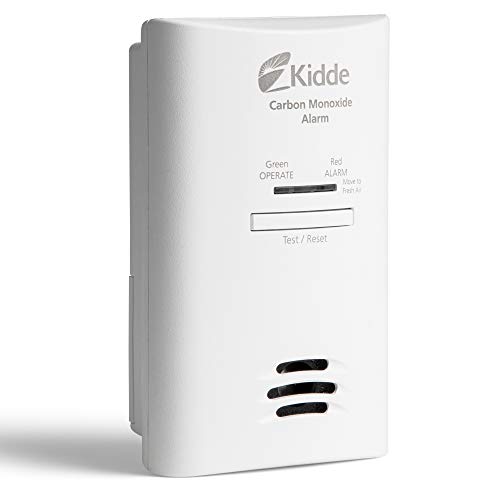
- Plugs into a standard 120V outlet
- AA backup supports outage protection
- 85 dB alarm with peak-level memory
Best For: Outlet-powered coverage with battery backup
Whole-Home Alerting
X-Sense Wireless Smoke & CO 3-Pack

- Three interconnected combination alarms
- All units sound when one detects danger
- 10-year sealed lithium batteries
Best For: Large homes needing coordinated alerts
Flexible Battery Placement

- Battery-powered installation needs no wiring
- Wall or tabletop placement
- Compact design for home or travel
Best For: Flexible, portable coverage in hard-to-wire locations
Best Wireless Whole-Home Pick

- Wireless links up to 18 alarms across 820 feet
- Sealed 10-year battery reduces maintenance
- Smoke and CO detection in one alarm
Best For: Large multi-story homes needing wireless interconnected coverage
Best Hardwired Coverage
First Alert SMICO105-AC 6-Pack

- Six interconnected combination alarms
- 10-year battery backup during outages
- Quick-connect replacement for compatible wiring
Best For: Large homes with an existing First Alert or BRK hardwired system
Best Standalone Value

- Five combination alarms for broad placement
- LCD displays CO levels and battery status
- Sealed 10-year battery with no rewiring
Best For: Large homes that prefer standalone alarms with visible CO readings
Best Multi-Room Value – Kidde 6-Pack Plug-In CO Alarms
For large homes, this six-pack of carbon monoxide detectors for large homes makes it easier to place alarms in multiple rooms. Each unit plugs into a standard 120V outlet, includes a 9-volt battery backup, and displays detected CO levels digitally.
Best For: Homeowners who want several plug-in CO alarms with digital readouts and backup power.
Pros:
- Six alarms help cover multiple areas of a larger home.
- Digital display shows the sensed carbon monoxide level.
- Battery backup provides protection during a power outage.
- Peak memory and a test-hush button support convenient checking.
Cons:
- These alarms are not wireless-interconnected.
- Each unit requires access to a standard outlet.
- The supplied warranty applies to the alarm, not battery performance.
This is a practical multi-room option when you prefer plug-in installation and visible CO readings. The included extension cords also allow some table or shelf placement.
Best Wireless Smoke-CO System – X-Sense SC06-W 6-Pack
The X-Sense SC06-W is designed for larger homes where an alarm in one area should alert occupants elsewhere. Its six battery-powered units wirelessly interconnect, so all alarms sound together without rewiring.
Best For: Homeowners seeking whole-home smoke and CO alerts with simple battery-powered installation.
Pros:
- Wireless interconnection makes all six alarms sound when one detects danger.
- Sealed lithium batteries are rated for 10 years.
- Combines photoelectric smoke and electrochemical CO sensing.
- Included mounting hardware supports installation on walls or ceilings.
Cons:
- It supports wireless interconnection but does not offer Wi-Fi or base-station connectivity.
- It does not use hardwired power.
- There is no stated digital display in the supplied specifications.
For carbon monoxide detectors for large homes, the shared alarm signal is the main advantage here. The system is suited to multi-floor layouts where hearing an alarm quickly matters.
Best Single-Unit Display – Kidde Plug-In CO Alarm
This Kidde plug-in alarm is a straightforward choice for adding one monitored location in a larger home. It connects to a standard outlet, uses a 9V battery backup, and provides a digital display of the CO level being sensed.
Best For: Adding a single plug-in CO alarm where a digital readout and backup battery are useful.
Pros:
- Simple installation in a standard 120V outlet.
- Digital display shows the detected carbon monoxide level.
- 9V battery backup helps maintain protection during outages.
- Peak Level Memory records the last detected level or test event.
Cons:
- This package contains one alarm, so larger homes may require additional units.
- It is not described as an interconnected model.
- The supplied notes identify an ionization sensor rather than an electrochemical sensor.
Choose this model when you want a focused, easy-to-install addition rather than a complete multi-room system. Its display and memory features make routine checks more informative.
Best Whole-Home Display – X-Sense SC07-W 6-Pack
The X-Sense SC07-W combines six wireless-interconnected smoke and CO alarms with an LCD display. For large homes, the linked units sound together when one detects smoke or dangerous CO, helping extend alerts across floors without rewiring.
Best For: Larger homes needing interconnected smoke and CO coverage plus local LCD information.
Pros:
- All interconnected units sound when one alarm detects smoke or CO.
- Sealed lithium batteries are designed to last 10 years.
- Photoelectric smoke and electrochemical CO sensors are combined in each unit.
- LCD display adds information beyond the audible alert.
Cons:
- Wireless interconnection does not include Wi-Fi.
- The alarms are battery powered rather than hardwired.
- Six units may be more coverage than needed for smaller layouts.
This is the most feature-rich option in the group for carbon monoxide detectors for large homes. Its whole-home interconnection and LCD display offer both broad alerting and at-a-glance information.
Simple Plug-In Coverage – Kidde Plug-In CO Detector
For large homes that need additional carbon monoxide detectors, this Kidde plug-in model offers straightforward placement near a standard 120V outlet. Its AA battery backup helps maintain protection during a power outage, while the peak-level memory provides useful information about previous detection or testing.
Best For: Homeowners who want easy-to-install, outlet-powered CO monitoring with backup batteries.
Pros:
- Plugs into a standard 120V outlet without wiring.
- Two-AA battery backup helps during power outages.
- 85-decibel alarm, LED status indicators, and peak-level memory.
- Test/Hush button supports routine testing and temporary silencing.
Cons:
- Requires access to a suitable outlet for primary power.
- Sold as a single detector, so covering a large home may require multiple units.
This is a practical choice when you prefer plug-in installation and want battery support without adding hardwiring. Its single-unit format works well for expanding coverage room by room.
Whole-Home Alerting – X-Sense Wireless Smoke & CO 3-Pack
For large homes, interconnected alarms can make it easier for everyone to hear an alert. This three-pack combines smoke and carbon monoxide detection, and its wireless interconnection makes all alarms sound together when one unit detects a hazard.
Best For: Larger households seeking coordinated smoke and CO alerts across multiple rooms.
Pros:
- Three alarms provide broader coverage in a large home.
- Wireless interconnection causes all units to sound together.
- Sealed lithium batteries are designed to last 10 years.
- Combines photoelectric smoke and electrochemical CO sensing.
Cons:
- Supports wireless interconnection but does not provide Wi-Fi.
- Cannot be used with a base station.
- The large mounting bracket may not fit every existing installation location.
This three-pack stands out when synchronized alerts matter more than app connectivity. Confirm the bracket size and installation requirements before replacing existing alarms.
Flexible Battery Placement – Kidde Portable AA CO Detector
Large homes often need detectors in locations without convenient outlets, and this battery-powered Kidde model can be mounted on a wall or placed on a table. Its compact design also makes it suitable for travel, adding flexibility when CO monitoring is needed away from home.
Best For: Renters, homeowners, and travelers who need flexible, wire-free CO detection.
Pros:
- Installs without wiring using two included AA batteries.
- Can be wall-mounted or placed on a table.
- Compact, lightweight design works for home or travel.
- 85 dB alarm, LED warning light, and Test/Hush button.
Cons:
- As a single battery-powered unit, multiple detectors may be needed for a large home.
- Battery replacement is required when the included AA batteries are depleted.
This model is a useful supplement when outlet access varies throughout the house. Its portability is especially helpful for hotels and vacation rentals, while the 10-year limited warranty adds long-term support.
Best Wireless Whole-Home Pick – X-Sense SC01-W 3-Pack
For large homes, the X-Sense SC01-W is a practical choice when you want connected coverage without running new wiring. This three-pack uses wireless interconnection, so alarms can sound together across multiple floors, basements, and detached garages.
Best For: Large, multi-story homes needing interconnected carbon monoxide detectors with sealed battery power.
Pros:
- Wireless linking supports up to 18 alarms over an 820-foot range.
- Sealed 10-year lithium battery avoids routine battery changes.
- Photoelectric smoke and electrochemical CO sensors provide combination protection.
- Includes mounting hardware and meets UL 217 and UL 2034 standards.
Cons:
- Wireless interconnection does not provide Wi-Fi functionality.
- The three-pack may not cover especially large properties by itself.
The SC01-W balances broad coverage with simple installation. Its wireless network is particularly useful where hardwiring would be difficult, though buyers seeking app connectivity will need a different model.
Best Hardwired Coverage – First Alert SMICO105-AC 6-Pack
If your large home already has compatible hardwired alarms, the First Alert SMICO105-AC six-pack can expand coverage while retaining a battery backup. Its interconnected design is intended to alert the household together when one unit detects smoke or carbon monoxide.
Best For: Large homes with existing hardwired First Alert or BRK detector connections.
Pros:
- Six alarms provide a substantial starting point for whole-home coverage.
- Hardwired power includes a 10-year battery backup for outages.
- Can connect with up to 12 other First Alert or BRK detectors and six compatible devices.
- Quick-connect installation can replace compatible existing alarms without rewiring.
Cons:
- Requires a hardwired installation setup, unlike battery-only models.
- Compatibility should be confirmed before replacing existing detectors.
This model is a strong fit for established hardwired systems and larger properties that need several alarms at once. It is less convenient for homes without existing compatible wiring, but the backup battery adds resilience during power failures.
Best Standalone Value – X-Sense SC07 5-Pack
The X-Sense SC07 five-pack offers a straightforward way to place carbon monoxide detectors throughout a large home without rewiring. Each standalone unit combines smoke and CO detection with an LCD that displays battery status and real-time carbon monoxide readings.
Best For: Buyers who want multiple easy-install alarms with visible CO readings but do not need interconnection.
Pros:
- Five alarms help distribute protection across a larger property.
- Sealed lithium battery is designed to last 10 years.
- LCD shows battery level and real-time CO levels in PPM.
- Photoelectric and electrochemical sensors provide two-in-one detection.
Cons:
- These are standalone units and cannot sound together wirelessly.
- No Wi-Fi or base-station support is included.
- Buyers seeking interconnection need the SC07-W variant instead.
The SC07 is a useful low-maintenance option when independent alarms are acceptable. Its five-pack and LCD readout offer practical coverage, but it is not the right choice if you need every alarm to activate together.
How We Picked the Best Carbon Monoxide Detectors for Large Homes
We focused on coverage, alarm communication, power options, installation flexibility, and everyday usability. Interconnected models received particular attention because one detected hazard can trigger alarms throughout the home. We also included plug-in and battery-powered units for easier placement, along with a hardwired option for homes with compatible wiring.
Display-equipped alarms can show carbon monoxide readings or status information at a glance, while loud 85 dB alarms are useful when occupants are sleeping or moving between floors. Combination smoke and CO models may also simplify installation by handling two hazards in one device.
Quick Comparison
| Type | Best For | Main Advantage |
|---|---|---|
| Plug-in CO alarm | Existing homes and quick installation | Simple setup near outlets |
| Battery-powered alarm | Rooms without convenient outlets | Flexible placement |
| Interconnected combination alarm | Large, multi-level homes | Alerts can reach other detectors |
| Hardwired combination alarm | Homes with existing alarm wiring | Permanent installation with backup power |
Key Buying Factors for Carbon Monoxide Detectors for Large Homes
Coverage and Placement
Plan locations by sleeping areas and floors rather than relying on a single central alarm. Follow the manufacturer’s placement instructions and local code requirements, especially around bedrooms, fuel-burning appliances, attached garages, and enclosed utility spaces. A multi-pack can make consistent coverage easier and less expensive.
Interconnection
For larger properties, interconnected alarms are often the most useful choice. Wireless systems can connect detectors without opening walls, while hardwired systems may be preferable when compatible wiring is already installed. Confirm that every unit in the set uses the same compatible interconnection system.
Power and Maintenance
Plug-in models should have battery backup so they continue operating during outages. Battery-only alarms offer more placement freedom, but require scheduled battery replacement unless they use long-life batteries. Test every alarm regularly and replace units according to the manufacturer’s service life.
Readability and Alerts
A digital display is helpful for checking readings and status, while a loud alarm and clear visual indicators improve awareness. Consider whether the detector will be heard from bedrooms, basements, and remote rooms.
Who Should Buy Which Carbon Monoxide Detectors for Large Homes?
- Choose interconnected X-Sense models if you want coordinated alerts across multiple rooms or floors.
- Choose Kidde plug-in models if you want straightforward installation with battery backup and, on select models, a digital display.
- Choose battery-powered Kidde or X-Sense units for rooms without suitable outlets or for flexible supplemental coverage.
- Choose the First Alert hardwired combination alarms if your home already has compatible hardwired alarm connections and you want smoke and CO protection together.
Before buying, map your home’s rooms, floors, outlets, and existing wiring. The best setup is the one that provides complete coverage, remains powered during outages, and can be tested and maintained consistently.