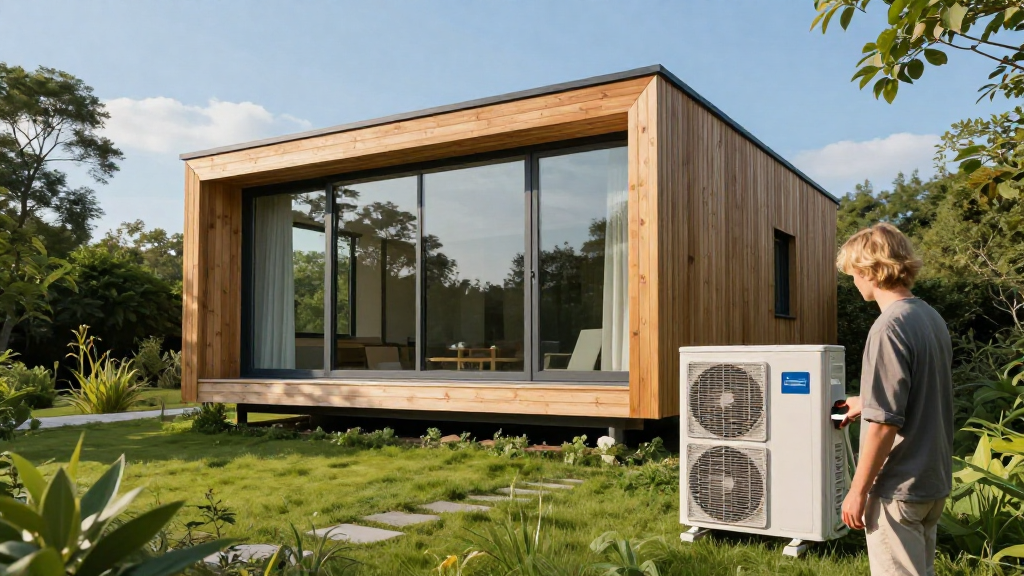
Integrating air conditioning with passive design can seem challenging, yet it is essential for modern comfort and efficiency.
What Is Passive House Design?
Passive House (or Passivhaus) design is a rigorous building standard that focuses on energy efficiency and sustainability.
By using a combination of advanced insulation, high-performance windows, and airtight construction, Passive House aims to significantly reduce the need for heating and cooling energy.
Key principles of Passive House design include:
- Super insulation to minimize heat loss.
- Airtight construction to prevent leaks.
- High-performance windows to enhance natural light.
- Ventilation systems for fresh air without energy loss.
But how does air conditioning fit into this concept without compromising energy efficiency?
How Can Air Conditioning Complement Passive House Design?
The blend of air conditioning and passive design is based on strategic implementation.
While Passive House minimizes the need for mechanical heating and cooling, air conditioning often becomes necessary during extreme weather.
Here are the main aspects to consider for their integration:
-
Selecting the Right System
– Choose an energy-efficient air conditioning system, such as ductless mini-splits or variable refrigerant flow (VRF) systems.
– Ensure that the air conditioning has a high SEER (Seasonal Energy Efficiency Ratio) rating. -
Utilizing Passive Cooling Methods
– Make use of architectural elements that encourage air movement, such as overhangs or ventilation towers.
– Incorporate thermal mass materials in the building’s structure to help regulate indoor temperatures. -
Zoning for Efficiency
– Implement zoned air conditioning to direct cooling only where needed.
– Use smart thermostats that adjust automatically based on occupancy.
What Passive Features Support Air Conditioning Efficiency?
To optimize air conditioning in a passive design, several elements can enhance efficiency:
-
Orientation and Design
– Position windows to capitalize on prevailing breezes.
– Align the building layout to minimize exposed surfaces to direct sunlight during peak summer months. -
Strategic Landscaping
– Use trees and vegetation to shade the building from direct sunlight.
– Consider green roofs or vertical gardens, which can act as insulators while promoting air circulation. -
High-Quality Insulation
– Invest in advanced insulation materials that keep indoor temperatures stable.
– Ensure that the insulation extends to ceilings, walls, and foundations.
How Do Ventilation Systems Help with Air Conditioning?
Integrating air conditioning and passive design also involves effective ventilation.
A well-designed ventilation system can enhance indoor air quality while assisting the performance of air conditioning.
There are different types of systems to consider:
-
Heat Recovery Ventilators (HRV)
– HRVs exchange stale indoor air with fresh outdoor air.
– They recover energy from outgoing air, which can be used to precondition incoming air. -
Energy Recovery Ventilators (ERV)
– ERVs work similarly to HRVs but can also manage humidity levels.
– They are beneficial for climates with humid summers.
What Role Does Humidity Control Play?
Humidity control is critical when combining air conditioning and passive design.
Excess humidity can lead to discomfort and health issues, even in a well-insulated passive house.
Consider these options for managing humidity levels:
-
Dehumidification Strategies
– Utilize air conditioning systems that include built-in dehumidifiers.
– Use desiccant systems that absorb moisture from the air. -
Natural Ventilation
– Open windows and doors on cooler days to allow fresh airflow.
– Ensure that cross-ventilation pathways are designed effectively.
Can Air Conditioning Be Used Efficiently in Passive House Design?
Absolutely! While air conditioning is not the primary focus of Passive House design, it can be utilized efficiently.
To ensure that air conditioning complements passive design principles, consider the following:
- Expert Consultation: Work with architects and engineers specialized in both Passive House standards and air conditioning systems.
- System Sizing: Properly size the air conditioning system to the building’s specific needs, avoiding oversized units that waste energy.
- Regular Maintenance: Perform routine check-ups on the air conditioning system to ensure it operates at peak efficiency.
What Are the Benefits of This Integration?
The integration of air conditioning and passive design offers numerous benefits.
These include:
-
Increased Comfort: Maintaining a consistent indoor temperature and air quality.
-
Energy Savings: Reduced utility bills due to lower energy consumption.
-
Environmental Impact: Lower carbon footprint by effectively reducing overall energy usage.
-
Improved Resale Value: Homes with effective energy solutions are increasingly appealing to buyers.
-
Enhanced Indoor Air Quality: Comprehensive ventilation systems help eliminate pollutants and allergens.
Conclusion: How to Achieve the Best of Both Worlds
In conclusion, integrating air conditioning with passive design is not just possible but can lead to a highly efficient, comfortable living environment.
By following these strategies—selecting the right systems, utilizing passive cooling, focusing on ventilation, and controlling humidity—you can create a home that thrives year-round.
The benefits of combining air conditioning and passive design significantly outweigh the challenges.
Take action to explore and implement these techniques, and witness the transformation of your living space into a model of efficiency and comfort.
With careful planning and execution, the synergy between air conditioning and passive design can truly elevate your home to the next level.