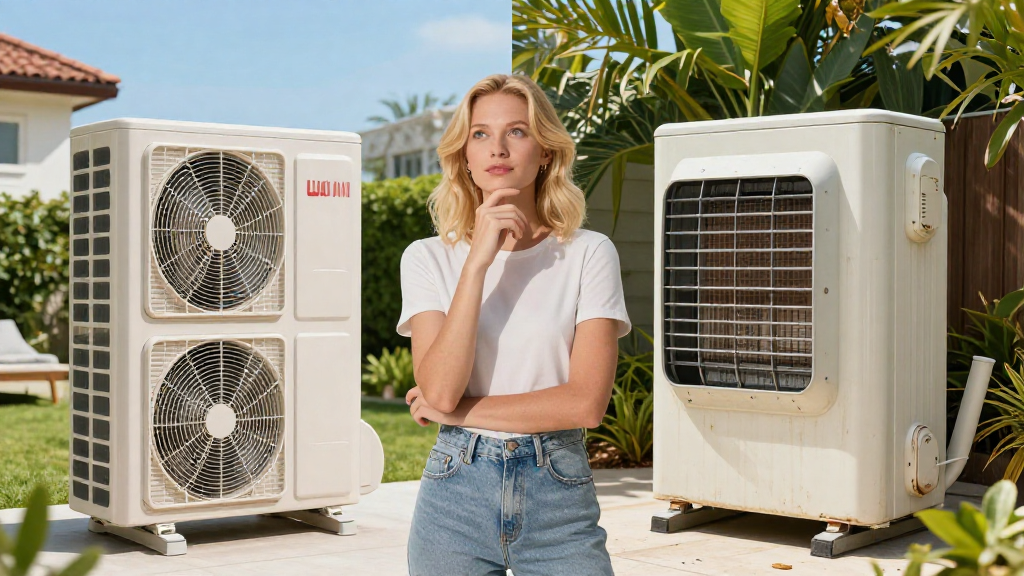
When it comes to beating the heat, understanding air conditioning vs swamp cooler options is essential for making the right choice for your home.
What Is Air Conditioning?
Air conditioning is a widely recognized method for cooling indoor spaces.
It works by using a refrigerant to absorb heat from the air inside your home.
Key components of Air Conditioning:
-
Compressor: The heart of the system compresses refrigerant gas.
-
Condenser: Releases heat to the outside air.
-
Evaporator Coil: Absorbs heat, cooling the air that circulates in your home.
Benefits of Air Conditioning:
-
Effective Cooling: Provides a quick and efficient cooling solution.
-
Humidity Control: Air conditioning helps in reducing indoor humidity.
-
Consistent Temperature: Maintains a comfortable temperature throughout the house.
-
Air Filtration: Most systems include filters that clean the air of allergens and pollutants.
However, air conditioning systems can be more expensive upfront and require regular maintenance to ensure they operate efficiently.
What Is a Swamp Cooler?
Also known as an evaporative cooler, a swamp cooler offers a different approach to cooling.
It uses water evaporation to cool the air, making it a more natural and eco-friendly option, especially in dry climates.
Key components of a Swamp Cooler:
-
Water Supply: Provides moisture required for cooling.
-
Blower Fan: Circulates the cooled air throughout your home.
-
Cooling Pads: Saturated with water, absorbing heat and cooling the air as it passes through.
Benefits of Swamp Coolers:
-
Energy Efficient: Typically requires less electricity compared to air conditioning systems.
-
Cost-Effective: Lower initial cost and maintenance expenses make them budget-friendly.
-
Eco-Friendly: Uses natural processes and minimal electricity.
However, swamp coolers are best suited for dry, arid climates. They can be less effective in humid areas because the moisture in the air hinders the evaporation process.
How Do Air Conditioning and Swamp Coolers Work?
Air conditioning vs swamp cooler systems operate on two fundamentally different principles:
Air Conditioning:
-
Refrigeration Cycle: Utilizes refrigerant to absorb and remove heat from indoors.
-
Mechanized Cooling: Relies on energy-intensive components like compressors and fans.
Swamp Cooler:
-
Evaporation Process: Uses simple physics where water absorbs heat as it evaporates, leaving cooler air behind.
-
Natural Cooling: Needs dry outdoor air to function effectively, creating a refreshing breeze.
Which Is More Suitable for Your Climate?
When deciding between air conditioning and a swamp cooler, consider your local climate:
-
Hot and Dry Conditions: In areas with low humidity (like the Southwest US), swamp coolers are usually more effective and efficient.
-
Humid Regions: In places with high humidity (like the Southeast), air conditioning works better as it helps to dehumidify the air.
-
Temperature Considerations: If temperatures frequently exceed 90°F, an air conditioning system may be necessary for consistent comfort.
What Are the Costs Involved in Air Conditioning vs Swamp Cooler?
Understanding the upfront and ongoing costs of both cooling systems can help you make an informed decision:
Air Conditioning Costs:
-
Initial Installation: $3,000 – $7,500 depending on the type and size of the system.
-
Energy Costs: Higher monthly bills, typically between $100 and $300.
-
Maintenance: Routine check-ups can cost around $100 – $200 annually.
Swamp Cooler Costs:
-
Initial Installation: $1,500 – $3,000, making it a more affordable option.
-
Energy Costs: Usually under $100 monthly, making it cost-efficient in operation.
-
Maintenance: Minimal upkeep, averaging $50 – $100 annually.
What Are the Environmental Impacts?
Consider the ecological footprint of both options:
Air Conditioning:
-
Energy Consumption: High electricity use contributes to greenhouse gas emissions.
-
Refrigerants: Some air conditioning units use hydrofluorocarbons (HFCs), potent greenhouse gases.
Swamp Cooler:
-
Lower Energy Use: Requires less power, reducing your carbon footprint.
-
Natural Process: Relies on water evaporation, making it an eco-friendly alternative.
What Are the Additional Considerations?
Both systems have their unique features that may influence your decision:
Air Conditioning:
-
Noise Levels: Depending on the model, some air conditioning systems can be noisy.
-
Ductwork Requirement: Central air conditioning requires ducts, making installation complex if not already present.
Swamp Cooler:
-
Humidity Introduced: Can increase humidity in enclosed spaces; may need dehumidifying measures in humid areas.
-
Regular Maintenance: Needs frequent water refilling and regular cleaning of pads to prevent mold growth.
Can You Use Both Air Conditioning and Swamp Coolers?
Yes! Combining both systems can optimize results.
For instance, in arid climates, a swamp cooler can cool the air effectively before it enters the air conditioning unit, creating a more comfortable indoor environment while preserving energy efficiency.
Conclusion: Which Is Best for You?
Ultimately, the choice between air conditioning vs swamp cooler depends on several factors, including:
- Your local climate and humidity levels.
- Budget constraints for installation and operation.
- Environmental considerations.
Carefully weigh the pros and cons of each system, keeping lifestyle and preferences in mind. Whichever option you choose, investing in a cooling solution will greatly enhance your comfort during hot weather.