Battery chargers with temperature sensors can adjust charging behavior as conditions change, helping reduce overcharging risk and support longer battery life. The right setup depends on your battery type, voltage, charging speed, and whether you need maintenance or full recharge capability.
We’ve gathered 10 options ranging from compact 12V maintainers to high-output multi-bank chargers and standalone sensors. Use the guide below to narrow the list by compatibility, installation needs, and everyday charging goals.
Best 10 Battery Chargers with Temperature Sensor Picks for 2026
Best Winter Maintainer
Corebox 15A Smart Battery Charger

- Temperature-compensated charging
- Seven-stage charging and repair modes
- For 12V lead-acid batteries
Best For: Seasonal maintenance of 12V vehicle batteries
Best Dedicated Sensor
Victron Energy Battery Temperature Sensor

- Designed for compatible Victron systems
- Monitors battery-bank temperature
- -20°C to 60°C measurement range
Best For: Victron inverter and charger installations
Best High-Output Versatility
YHCHKJ 20A 12V/24V Smart Charger

- 12V/24V charging with up to 20A output
- Supports lithium and lead-acid batteries
- Temperature compensation and LCD status display
Best For: Multi-vehicle and mixed-battery charging
Best Xantrex Replacement
Xantrex 808-0232-01 Temperature Sensor

- Made for Xantrex XC chargers
- Provides an electrical temperature signal
- Includes manual and one-year limited warranty
Best For: Compatible Xantrex XC charger systems
Best High-Output Option
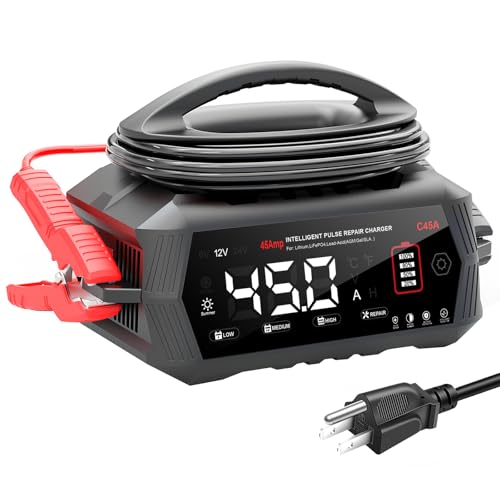
- Charges 6V, 12V, and 24V batteries
- Temperature compensation with LCD monitoring
- Supports maintenance and pulse repair
Best For: Mixed-voltage vehicle, RV, marine, and powersports batteries
Best Two-Bank Choice
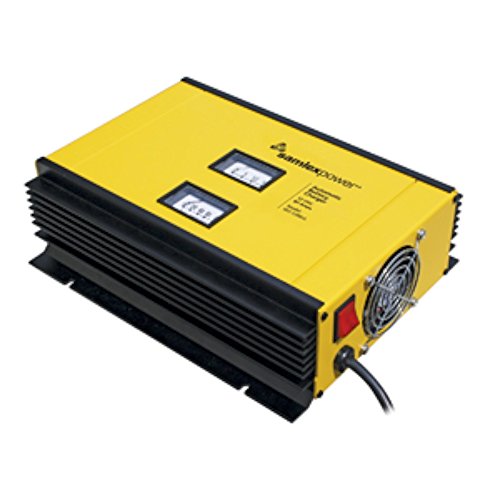
- 80A-rated 12V charging capacity
- Two-bank, three-stage design
- Includes temperature sensor and lug connections
Best For: Permanent or organized 12V battery installations
Best Adjustable Smart Charger

- Selectable 2A to 20A charging levels
- Supports lithium, LiFePO4, and lead-acid
- Temperature compensation with 10-stage charging
Best For: Mixed vehicle and powersports batteries needing adjustable output
Best Sensor Add-On

- Supports 12V and 24V systems
- Includes ring mount and extension cable
- Measures 0°–130°F
Best For: BatteryMINDer charging systems needing temperature feedback
Best All-in-One Charger
12V 10A Temperature-Compensating Charger

- Temperature-adaptive 12V charging
- Digital voltage and temperature display
- Includes pulse repair and safety protections
Best For: Automotive and equipment battery charging and maintenance
Best Wireless Solar Integration

- Senses voltage and temperature wirelessly
- Works with Victron MPPT solar chargers
- Supports 12V, 24V, and 48V banks
Best For: Victron solar charging systems needing remote battery data
Best Winter Maintainer – Corebox 15A Smart Battery Charger
For shoppers seeking battery chargers with temperature sensor functionality, the Corebox 15-amp model combines temperature compensation with automatic charging and maintenance. Its seven-stage program supports 12V lead-acid batteries, including AGM, GEL, SLA, and flooded types, while built-in protections help manage regular and seasonal charging.
Best For: Maintaining 12V lead-acid batteries in cars, trucks, motorcycles, lawn mowers, boats, and other vehicles during winter or storage.
Pros:
- Temperature compensation helps adapt charging for hot or cold conditions.
- Seven-stage charging includes desulfation, reconditioning, float, and pulse maintenance.
- Includes reverse-polarity, overcurrent, overheating, short-circuit, and overcharge protection.
Cons:
- Designed for 12V lead-acid batteries rather than lithium batteries.
- Repair mode cannot restore a totally dead battery.
The Corebox is a practical choice when long-term battery maintenance and seasonal storage are priorities. Its temperature compensation and broad safety feature set add useful protection, while the 15-amp output provides faster charging than a basic trickle maintainer.
Best Dedicated Sensor – Victron Energy Battery Temperature Sensor
Victron Energy Temperature Sensor | For Victron Energy Quattro, MultiPlus and GX Device
Check Price On AmazonThe Victron Energy Temperature Sensor is a dedicated accessory for compatible Victron chargers, inverters, and GX devices. Rather than charging a battery itself, it monitors battery-bank temperature so connected equipment can adjust capacity and charging current more appropriately.
Best For: Victron Quattro, MultiPlus, and compatible GX-device installations that need direct battery-temperature monitoring.
Pros:
- Connects directly to either pole of the battery bank.
- Supports temperature-based adjustments to battery capacity and charge current.
- Measures from -20°C to 60°C with ±1.5% accuracy.
Cons:
- Requires compatible Victron equipment with a dedicated temperature-sensing input.
- It is a sensor accessory, not a standalone battery charger.
This is the most focused option for Victron users who already have compatible charging or inverter equipment. It can improve temperature-aware charging control, but shoppers should verify device compatibility before ordering.
Best High-Output Versatility – YHCHKJ 20A 12V/24V Smart Charger
For buyers comparing battery chargers with temperature sensor features, this YHCHKJ model offers selectable 12V and 24V charging, temperature compensation, and a display that shows charging information. It supports lithium, LiFePO4, and lead-acid batteries, with adjustable current settings for different battery and vehicle applications.
Best For: Fast charging and maintenance of compatible 12V or 24V batteries in trucks, boats, motorcycles, golf carts, tractors, RVs, and similar equipment.
Pros:
- Provides up to 20 amps and supports selectable 12V/24V modes.
- Compatible with lithium, LiFePO4, AGM, gel, SLA, wet, and other lead-acid batteries.
- Includes temperature compensation, a status display, pulse repair, and multiple safety protections.
Cons:
- It is not a jump starter and cannot start a dead battery.
- Charging requires at least 2V to begin.
- Users must select the correct battery voltage, chemistry, and charging current.
The YHCHKJ stands out for users who need one charger for multiple battery types and voltage systems. Its adjustable output and temperature-aware operation offer flexibility, although the broader controls require careful setup.
Best Xantrex Replacement – Xantrex 808-0232-01 Temperature Sensor
The Xantrex 808-0232-01 is a replacement battery temperature sensor for XC chargers. As a dedicated sensor rather than a complete charger, it is intended for installations that need temperature information delivered as an electrical signal to compatible charging equipment.
Best For: Replacing or outfitting a compatible Xantrex XC charger with battery-temperature sensing.
Pros:
- Purpose-built for Xantrex XC charger applications.
- Provides an electrical temperature signal for charging-system monitoring.
- Includes the sensor and manual, with a one-year limited warranty.
Cons:
- Compatibility is focused on Xantrex XC chargers.
- It does not charge or maintain a battery by itself.
- The supplied notes provide a narrower rated temperature range than some competing sensors.
This sensor makes sense when replacing an existing Xantrex component or adding temperature feedback to a compatible XC charger. Confirming the charger model before purchase is essential because it is not a universal battery-charging accessory.
Best High-Output Option – 45A 6/12/24V Smart Charger
If you need battery chargers with temperature sensor support across several battery voltages, this 45A model offers a versatile setup. It supports 6V, 12V, and 24V batteries, uses temperature compensation, and includes charging, maintenance, trickle, and pulse-repair functions. The LCD displays voltage, current, temperature, mode, and charging percentage.
Best For: Users charging a range of lead-acid, AGM, GEL, SLA, lithium, and LiFePO4 batteries in cars, boats, RVs, powersports equipment, and other vehicles.
Pros:
- Supports 6V, 12V, and 24V batteries with up to 45A output on 12V.
- Built-in temperature sensor provides temperature compensation for hot and cold conditions.
- LCD gives at-a-glance charging and temperature information.
- Includes pulse repair, overcharge, reverse-polarity, short-circuit, and overcurrent protection.
Cons:
- Repair mode will not start a battery or restore a completely failed battery; the notes specify at least 2V.
- Its broad feature set may be more than needed for simple maintenance charging.
This is the most flexible choice of the three for mixed-voltage garages and users who want high output plus visible charging data. Confirm your battery type and condition before relying on the repair function.
Best Two-Bank Choice – Samlex 80A 12V Charger
Samlex 80A Battery Charger - 12V - 2-Bank - 3-Stage w/Dip Switch & Lugs - Includes Temp Sensor
Check Price On AmazonFor a 12V installation that benefits from multiple charging connections, this Samlex unit is a two-bank, three-stage charger with an included temperature sensor. Its 80A rating and lug connections suit a more permanent setup than a basic portable maintainer, while DIP switches provide configuration control.
Best For: 12V vehicle or battery systems needing two-bank charging, high rated output, and an included temperature sensor.
Pros:
- 80A output rating provides substantial charging capacity.
- Two-bank design can serve two 12V battery connections.
- Includes a temperature sensor and three-stage charging design.
- CSA and UL specifications are listed in the product details.
Cons:
- Designed for 12V batteries rather than 6V or 24V systems.
- Lug connections and DIP-switch configuration may be less convenient for quick, portable use.
- The supplied details list an input voltage of 240V, so installation requirements should be checked carefully.
This is a specialized option for organized 12V installations rather than casual plug-in charging. Its two-bank layout and temperature-sensor inclusion are the main reasons to choose it over a simpler single-output charger.
Best Adjustable Smart Charger – 20A 12/24V Battery Charger
This adjustable model is one of the more flexible battery chargers with temperature sensor functionality for everyday vehicle and powersports use. It provides up to 20A on 12V and 10A on 24V, offers five selectable current levels, and automatically adjusts its multi-stage process based on battery condition.
Best For: Owners who want one charger for cars, trucks, boats, RVs, motorcycles, and lawn equipment, with selectable current and lithium or lead-acid support.
Pros:
- Supports 12V and 24V batteries with automatic voltage detection.
- Five current settings range from 2A to 20A for smaller and larger batteries.
- Temperature compensation, summer/winter modes, and real-time temperature display help manage charging conditions.
- Includes dedicated modes for lead-acid, lithium, LiFePO4, and 12.6V Li-Ion batteries.
Cons:
- Its 365-day warranty is shorter than the five-year warranty listed for the 45A model.
- Repair mode may require manual selection when the battery voltage is too low.
- It is rated at 20A maximum on 12V, so it is slower than the 45A or 80A options for larger charging demands.
Choose this charger when adjustable output and broad battery compatibility matter more than maximum amperage. The selectable current levels also make it better suited to smaller batteries than a high-output charger used without fine control.
Best Sensor Add-On – ABS-248 Temperature Sensor
The BatteryMINDer ABS-248 is a practical add-on for battery chargers with temperature sensor support. Its ring-mounted probe measures battery temperature and helps a compatible charger automatically adjust output to reduce the risk of overcharging or undercharging.
Best For: BatteryMINDer users who need temperature feedback for 12V or 24V battery charging systems.
Pros:
- Works with 12V and 24V batteries.
- Includes a 2-foot ring-mounted sensor and 6-foot extension cable.
- Measures temperatures from 0° to 130°F with ±1.5°F accuracy.
- Designed to help prevent over- and undercharging.
Cons:
- It is a sensor accessory rather than a complete battery charger.
- Compatibility with your existing charger should be confirmed before purchase.
This is a focused choice when your charger already supports an external temperature sensor. The ring mount and extension cable offer flexible installation, while the broad measurement range supports many charging environments.
Best All-in-One Charger – 12V 10A Temperature-Compensating Charger
This 12V 10A charger combines temperature-adaptive charging with a digital display, pulse repair technology, and multiple safety protections. It is designed for several battery types and can show charging voltage and ambient temperature in real time.
Best For: Users seeking a full 12V charger and maintainer for compatible automotive, marine, motorcycle, and lawn equipment batteries.
Pros:
- Provides up to 10A output for 12V 4Ah–100Ah batteries.
- Adjusts charging voltage according to ambient temperature.
- Displays charging voltage and ambient temperature.
- Includes protection against overcurrent, overvoltage, overheating, short circuits, and reverse polarity.
Cons:
- Pulse repair technology is not suitable for LiFePO4 batteries, despite the listed battery compatibility.
- The supplied specifications list both a 10A current rating and a 6A amperage, so buyers may want to clarify the exact operating output.
- Manufacturer warranty coverage is listed as 180 days.
With temperature adaptation built into the charger, this model is more convenient than pairing a separate sensor with a compatible charging unit. Its display and safety features add useful visibility for routine charging and maintenance.
Best Wireless Solar Integration – Victron Smart Battery Sense
Victron Energy Smart Battery Sense, Voltage and Temperature Sensor | Long Range (up to 10m)
Check Price On AmazonThe Victron Energy Smart Battery Sense is a wireless voltage and temperature sensor for Victron MPPT solar chargers. It shares battery data through the VE.Smart Network so one or more compatible solar chargers can use the information to improve charging efficiency.
Best For: Victron solar setups using 12V, 24V, or 48V battery banks and compatible MPPT chargers.
Pros:
- Provides both battery voltage and temperature sensing.
- Connects wirelessly through Bluetooth Smart and the VE.Smart Network.
- Can share information with one or more compatible solar chargers.
- Installs with two eyelets and a self-adhesive strip.
Cons:
- Designed specifically for Victron Energy MPPT solar chargers.
- Requires setup through the VictronConnect app.
- Wireless sensing distance is listed as up to 10 meters.
This is a strong fit for a tidy Victron installation where running a wired sensor is inconvenient. Its wireless network support allows charging equipment to respond to battery conditions without adding a separate charger-side cable.
How We Picked the Best Battery Chargers with Temperature Sensor
We focused on charging systems and compatible temperature sensors that address real battery-maintenance needs. Key considerations included voltage support, charging output, automatic regulation, temperature compensation, desulfation or repair modes, battery-bank compatibility, and installation requirements. We also separated complete chargers from standalone sensors, since a sensor is useful only when it matches a compatible charger or monitoring system.
Because lead-acid, AGM, gel, and deep-cycle batteries can have different charging requirements, always confirm the manufacturer’s specifications before connecting a charger. Temperature sensing improves control, but it does not replace correct battery-type settings or safe installation.
Quick Comparison
- For basic car maintenance: Choose a compact 10A to 15A automatic charger with temperature compensation.
- For faster or more flexible charging: Consider a 20A or 45A model with 12V/24V support.
- For marine, RV, or larger systems: Look for high-output, multi-bank chargers with included sensors.
- For an existing compatible system: A standalone Victron, Xantrex, or ABS-248 sensor may be the right replacement or upgrade.
Key Buying Factors for Battery Chargers with Temperature Sensor
Voltage and Battery Compatibility
Verify whether the charger supports 12V, 24V, or both, and check that its charging profile matches your battery chemistry. Some models are designed primarily for lead-acid batteries, while others offer settings for AGM, gel, or deep-cycle batteries.
Charging Output
Amperage affects charging speed and suitability. Lower-output chargers are generally convenient for battery maintenance and smaller vehicles, while 20A-or-higher models are better for larger batteries or quicker recovery. Avoid choosing solely by maximum output; the charger must also provide appropriate regulation for the battery.
Sensor Placement and Compatibility
A temperature sensor should make reliable contact with the battery or be installed according to the charger maker’s instructions. Check connector style, cable length, supported charger series, and whether the sensor is included. A mismatched sensor may not work even if the voltage rating appears similar.
Protection and Operating Modes
Look for automatic shutoff, reverse-polarity protection, short-circuit protection, overcharge control, and clear status indicators. Desulfation, trickle, float, and repair modes can be useful, but they should be treated as supporting features rather than guaranteed battery restoration.
Who Should Buy Which Battery Chargers with Temperature Sensor?
Daily drivers and seasonal-vehicle owners should prioritize an easy-to-use automatic maintainer with temperature compensation. RV, boat, and workshop users may benefit from higher output, 24V support, or multi-bank charging. Buyers replacing a failed sensor should match the exact charger family and connector before purchasing. If you need both charging and monitoring, choose a complete system with a documented sensor input rather than combining unrelated components.