Reliable power can make a long backpacking trip more comfortable, especially when your phone, GPS, camera, or emergency device needs a recharge far from an outlet. The best portable solar panels balance useful output with packable designs, weather resistance, and simple USB charging.
We compared 10 portable models across wattage, weight, charging ports, durability, and intended use so you can choose a panel that matches your route, gear, and power demands.
Best 10 Portable Solar Panels for Backpacking Picks for 2026
Best Value Pack Power
SOLUPUP 30W Foldable Solar Charger

- 23%+ claimed monocrystalline conversion efficiency
- USB-A and USB-C dual-device charging
- Carabiners and adjustable stand included
Best For: Backpackers wanting flexible setup options and broad device compatibility
Best Shade-Tolerant Design

- 1.54-pound compact folded design
- USB-C PD25W and USB-A QC18W
- Dual parallel circuits for partial shade
Best For: Multi-device backpackers who value fast charging and low carry weight
Best Ultralight Pick
BigBlue 25W Pocket Solar Charger

- 0.84-pound, iPad-size folded design
- USB-A and USB-C dual-device charging
- IP68-rated outdoor construction
Best For: Ultralight hikers charging small USB devices
Best Midrange Versatility
LUMOPAL 60W Foldable Solar Panel
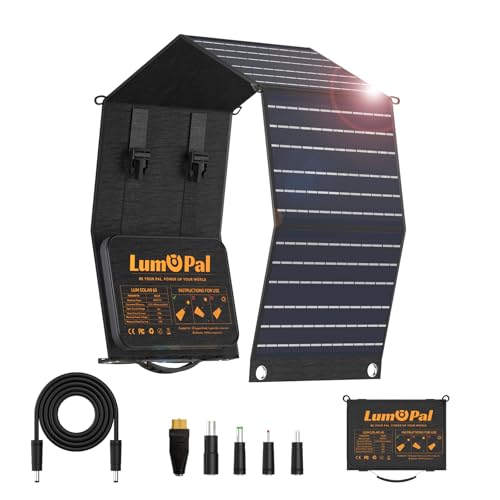
- USB-C PD up to 60W plus USB-A QC3.0
- 18–20V DC output for broader compatibility
- Folds compactly but weighs about 3.42 pounds
Best For: Backpackers needing USB and DC charging options
Best High-Output Option
FlexSolar 100W Portable Solar Panel

- 100W output for compatible power stations
- 4-in-1 cable covers common DC connectors
- IP67-rated ETFE construction
Best For: Gear-heavy trips needing power-station charging
Lightweight Power Pick
BougeRV 50W Foldable Solar Panel

- 50W panel with stated 23% efficiency
- USB-C, USB-A, and DC outputs
- 1.76 lb folded travel-friendly design
Best For: Backpackers charging small devices or compatible power stations
Organized Camp Charger
ELECOM NESTOUT 28W Solar Panel

- Dual USB-A charging ports
- Current-checker LED and adjustable stands
- Water-resistant ripstop nylon with storage pouches
Best For: Campers charging USB-A devices with an organized setup
High-Efficiency Multi-Panel

- Five-panel design rated up to 30W
- USB-C and USB-A dual outputs
- Kickstands, loops, and folding straps
Best For: Hikers needing flexible dual-port USB charging
Best Value Pack Power – SOLUPUP 30W Foldable Solar Charger
For backpackers seeking portable solar panels for backpacking, the SOLUPUP 30W offers a practical balance of charging capacity, portability, and weather resistance. Its monocrystalline cells claim 23%+ conversion efficiency, while USB-A and USB-C outputs support small electronics and power banks in direct sunlight.
Best For: Backpackers who want a versatile 30W panel with included carabiners and an adjustable stand.
Pros:
- 23%+ claimed energy conversion efficiency.
- USB-A and USB-C ports can charge two devices simultaneously under ample sunlight.
- Includes two carabiners, a USB-to-Type-C cable, and an adjustable stand.
- IPX5 waterproof and dustproof design.
Cons:
- At 2.4 pounds, it is heavier than some competing panels.
- Actual output depends on sunlight, temperature, angle, season, and cloud coverage.
- Its stated maximum output is 15W despite the 30W panel rating.
The SOLUPUP is a sensible choice when hanging a panel from a pack or setting it up at camp matters more than minimizing weight. Expect performance to vary substantially with conditions.
Best Lightweight High-Output Option – VTOMAN 40W Foldable Solar Panel
The VTOMAN 40W is a strong candidate among portable solar panels for backpacking when you want a higher rated output without a major weight penalty. It weighs 1.81 pounds, folds compactly, and combines USB-A with a USB-C PD30W port for phones, tablets, cameras, GPS units, and compatible power stations.
Best For: Hikers and mobile campers prioritizing rated wattage, low weight, and durable weather protection.
Pros:
- 40W rating with a lightweight 1.81-pound design.
- USB-C PD30W and USB-A outputs support varied devices.
- 25% claimed conversion efficiency and IP67 weatherproof construction.
- Carabiners and four-corner mounting holes support pack or tent attachment.
Cons:
- Shade or partial coverage may reduce performance by up to 70%.
- Optimal charging requires positioning toward direct sunlight at about a 45-degree angle.
- The panel should not be submerged for more than 30 minutes.
With its favorable weight-to-wattage ratio, the VTOMAN stands out for longer trips where charging opportunities are limited. Its performance still depends heavily on clear, well-positioned sunlight.
Best Shade-Tolerant Design – BigBlue 35W Solar Charger
The BigBlue 35W is designed for backpackers who want portable solar panels for backpacking with fast USB charging and a compact folded footprint. Its dual parallel circuit design is intended to keep one section charging when another is shaded, while the panel provides USB-C PD25W, QC18W USB-A, and an additional Type-C port.
Best For: Backpackers carrying several USB devices and looking for a lightweight panel with shade-tolerant circuit design.
Pros:
- Lightweight 1.54-pound build that folds to 8.29 × 4.84 × 1.89 inches.
- USB-C PD25W with PPS and USB-A QC18W support faster charging for compatible devices.
- 25.4% claimed conversion efficiency and IP68 waterproof protection.
- Dual parallel circuits can improve continuity when part of the panel is shaded.
Cons:
- Type-C1 does not support Apple devices.
- The USB junction box is not waterproof.
- It stores no electricity and only operates in direct sunlight; charging devices should remain shaded.
The BigBlue offers an appealing blend of low weight, fast charging, and thoughtful circuit design. It is especially useful for multi-device kits, provided you protect the junction box and manage device heat.
Best Established Brand Pick – Anker SOLIX PS30 30W Panel
The Anker SOLIX PS30 is a straightforward option for shoppers comparing portable solar panels for backpacking from a familiar accessory brand. Its foldable 30W design includes USB-A and USB-C ports for charging phones, tablets, cameras, and other small devices during outdoor trips.
Best For: Campers and hikers who prefer a simple dual-port panel with weather-resistant construction and included support coverage.
Pros:
- USB-A and USB-C ports support charging multiple devices.
- Foldable design with two included carabiners for carrying or attachment.
- IP65 water- and dust-resistant protection.
- Includes an 18-month warranty and customer service.
Cons:
- At 2.2 pounds, it is not the lightest option in this group.
- Its 30W rating is lower than the VTOMAN’s 40W option.
- The supplied notes do not specify conversion efficiency or detailed USB fast-charging ratings.
The PS30 keeps the feature set uncomplicated and offers useful basic protection for outdoor use. Consider it when brand support and simple dual-device charging matter more than the lowest weight or highest rated wattage.
Best Ultralight Pick – BigBlue 25W Pocket Solar Charger
For backpackers who prioritize low weight and minimal bulk, the BigBlue 25W is a practical choice among portable solar panels for backpacking. It folds to approximately iPad size, weighs 0.84 pounds, and provides both USB-A and USB-C charging for small electronics.
Best For: Ultralight hikers charging phones, lights, watches, and power banks directly from sunlight.
Pros:
- Very compact 0.84-pound foldable design with included carabiners
- USB-A and USB-C ports can charge two devices simultaneously
- IP68 water and dust resistance with ETFE coating
- Up to 25.4% stated power-conversion efficiency
Cons:
- 25W output is intended for smaller USB devices rather than larger power stations
- Solar charging performance depends on direct, unobstructed sunlight
The BigBlue stands out when pack space and carry weight matter most. Its dual-port setup is useful on the trail, while the limited 25W USB-focused output makes it less suitable for powering larger equipment.
Best Midrange Versatility – LUMOPAL 60W Foldable Solar Panel
The LUMOPAL 60W offers a useful middle ground for portable solar panels for backpacking, combining a manageable folded size with multiple output options. It includes USB-A, USB-C PD, and 18–20V DC ports for phones, tablets, cameras, laptops, and compatible power stations.
Best For: Campers and backpackers who need more output flexibility than a basic USB solar charger provides.
Pros:
- USB-C PD supports up to 60W, with USB-A QC3.0 up to 22W
- Includes an 18–20V DC output and connector kit
- 23.5% stated efficiency using monocrystalline silicon
- Folds to 6.7 × 9.5 inches and includes weather-resistant materials
Cons:
- At approximately 3.42 pounds, it is heavier than compact USB-only panels
- Junction ports are not waterproof
- A USB-C cable is not included
This panel is a strong compromise for users carrying several types of electronics. Its DC connectivity expands compatibility, but the added weight and exposed junction ports call for careful packing in wet conditions.
Best High-Output Option – FlexSolar 100W Portable Solar Panel
For trips built around a portable power station, the FlexSolar 100W provides higher capacity than many portable solar panels for backpacking. It folds to a laptop-sized package, includes a 4-in-1 cable for common power stations, and adds direct USB-A and USB-C outputs for smaller devices.
Best For: Backpackers, campers, and emergency-kit users charging compatible power stations alongside phones and laptops.
Pros:
- 100W maximum output with up to 24% stated efficiency
- 4-in-1 cable supports XT60, Anderson, DC5521, and DC8MM connections
- Includes QC3.0 USB-A and 45W PD USB-C outputs
- IP67 protection and ETFE lamination for wet, dusty conditions
Cons:
- Weighs 4.1 pounds, making it less suitable for minimalist backpacking
- Its larger unfolded footprint requires more setup space
- Power-station compatibility still depends on the station’s input connection and requirements
The FlexSolar is the most capable option here for recharging a compatible power station and running multiple device types. Its 4.1-pound weight and larger footprint make it better for vehicle-supported trips or gear-heavy expeditions than ultralight routes.
Lightweight Power Pick – BougeRV 50W Foldable Solar Panel
For portable solar panels for backpacking, the BougeRV 50W model balances useful output with a relatively light 1.76-pound design. Its foldable format, USB-C and USB-A ports, and DC connection make it suitable for charging small devices or a compatible power station away from outlets.
Best For: Backpackers and campers who want to charge multiple small devices or a portable power station.
Pros:
- 50W output with a stated 23% conversion efficiency.
- USB-C, USB-A, and DC7909/5521 outputs support varied charging setups.
- Compact folded size and 1.76-pound weight are practical for travel.
- Includes four attachment carabiners and has two-year technical support.
Cons:
- The listed USB outputs are limited to 5V/3A.
- Compatibility with BougeRV power stations excludes the 173Wh model.
Choose this panel when portability and connection flexibility matter more than having the smallest possible charger. Its direct power-station compatibility is especially useful for longer trips, but confirm your station’s connector and model before buying.
Organized Camp Charger – ELECOM NESTOUT 28W Solar Panel
The ELECOM NESTOUT is one of the more feature-focused portable solar panels for backpacking, with dual USB-A charging, a built-in current-checker LED, and adjustable stands. Its water-resistant ripstop nylon construction and storage pouches also make it convenient for organized camp setups.
Best For: Campers and hikers charging USB-A devices who value easy positioning and built-in storage.
Pros:
- Uses SunPower MAXEON cells with claimed efficiency advantages over traditional cells.
- Dual USB-A ports can charge phones, tablets, earbuds, and similar devices.
- Built-in LED current checker shows solar power generation.
- Adjustable stands, hanging loops, and mesh storage pouches aid setup.
Cons:
- It does not list a USB-C output port; the included cable is USB-A to USB-C.
- The supplied details list maximum power as 14W, despite the product title identifying it as 28W.
- At 535 grams, it is not the lightest option in this group.
This panel stands out for practical campsite usability rather than maximum connection variety. The current indicator and adjustable stands can simplify solar placement, while the water-resistant fabric adds reassurance for routine outdoor use.
High-Efficiency Multi-Panel – 30W Five-Panel Solar Charger
This five-panel 30W charger is a flexible choice among portable solar panels for backpacking, combining a foldable nylon design with USB-C and USB-A outputs. Hanging loops, folding straps, and adjustable kickstands give you several ways to position it around a campsite or trail stop.
Best For: Hikers and campers who want dual-port charging and flexible panel positioning.
Pros:
- Five-panel design claims up to 30W output and 25%+ conversion efficiency.
- USB-C and USB-A ports support phones, lights, cameras, and GPS devices.
- Rated total output is up to 5V/6A, with up to 5V/3A per port.
- Kickstands, hanging loops, and folding straps support convenient setup.
Cons:
- Actual output depends on sunlight conditions.
- The supplied dimensions are limited and do not clearly state the folded footprint.
- Its outputs are designed for USB devices rather than a listed DC power-station connection.
This model makes sense when charging ordinary USB gear is the priority and you want more positioning flexibility than a simple flat charger provides. As with any solar charger, expect performance to vary with sun exposure and placement.
How We Picked the Best Portable Solar Panels for Backpacking
We focused on practical field requirements rather than headline wattage alone. The comparison considers rated power, folded size, portability, charging interfaces, weather resistance, build quality, and compatibility with phones, battery banks, and small power stations. We also separated compact panels suited to personal electronics from larger models that make more sense for base camps or heavier loads.
Solar output varies with sun angle, shade, clouds, temperature, and cable losses, so advertised wattage is a maximum rather than a guaranteed charging rate. A well-designed lower-wattage panel can be more useful on the trail if it is easier to position and carry.
Quick Comparison
- Best for ultralight trips: Pocket-size 25W and compact 28W–30W panels are convenient for phones and smaller power banks.
- Best all-around range: Foldable 35W–40W models offer a useful balance between charging speed and packability.
- Best for larger batteries: The 50W–60W options provide more potential output without reaching the bulk of a full 100W panel.
- Best for small power stations: The 100W FlexSolar model is better suited to extended camping, group trips, and higher-capacity battery systems.
Key Buying Factors for Portable Solar Panels for Backpacking
Wattage and Intended Devices
For a phone, GPS, headlamp, or earbuds, roughly 25W–35W is generally the most practical range. Choose 40W–60W if you routinely charge several devices or a larger power bank. A 100W panel can recharge small power stations more effectively, but its extra weight and footprint may be excessive for solo backpacking.
Weight, Folded Size, and Mounting
Check the packed dimensions and listed weight, not just the unfolded panel area. Attachment points, kickstands, and integrated loops can make it easier to angle the panel on a backpack or at camp. Remember that a larger surface may need more space and stronger support in wind.
Ports and Charging Compatibility
USB-C is valuable for newer phones and power banks, while USB-A remains useful for older cables and accessories. PD or QC support may improve charging with compatible devices. If you plan to use a power station, verify whether the panel includes the required DC output, adapters, or cable.
Weather Resistance and Durability
Water-resistant construction, reinforced fabric, protected ports, and sturdy hinges matter on exposed trails. Water resistance does not necessarily mean the panel should be left in heavy rain, so keep connectors covered and follow the manufacturer’s care instructions.
Who Should Buy Which Portable Solar Panels for Backpacking?
Choose a compact 25W–30W panel if minimizing pack weight is your top priority and you mainly need phone or GPS charging. A 35W–40W model is the best middle ground for most backpackers who want faster recovery for a power bank without excessive bulk. Select a 50W–60W panel for longer trips, multiple travelers, or frequent camera and battery-bank charging. The 100W option is best for car camping, group base camps, or anyone carrying a small power station rather than pursuing an ultralight setup. Regardless of size, pair the panel with a quality power bank so intermittent sunlight can be stored and used after dark.