Reliable solar charging can make camping trips more comfortable, especially when you need to keep phones, lights, cameras, refrigerators, or power stations running away from the grid.
These 10 portable solar panels for camping cover a wide range of needs, including compact USB charging, foldable power-station panels, waterproof designs, and higher-output setups for extended off-grid use.
Best 10 Portable Solar Panels for Camping Picks for 2026
Best Universal 100W Option
ZOUPW 100W Foldable Solar Panel

- 23.5% efficient monocrystalline cells
- Five-in-one cable for many power stations
- IP67 panel with direct USB charging
Best For: Car campers and RV users needing broad connector compatibility
Best Lightweight Pick
FlexSolar 40W Foldable Solar Charger

- Only 1.76 pounds and highly compact
- USB-C, USB-A, and 19V DC outputs
- 24% efficiency with ETFE weather-resistant coating
Best For: Backpacking and charging phones or small devices
Best High-Output Choice
Renogy 200W Portable Solar Panel

- 200W output with 25% efficient N-Type cells
- 45W USB-C PD plus dual USB-A ports
- Four kickstands with multiple angle options
Best For: RV and car campers charging compatible high-input power stations
Best Ultralight 100W Panel
FlexSolar 100W Foldable Charger

- About 4.1 pounds with up to 100W output
- 45W USB-C PD, USB-A, and DC outputs
- Four-in-one cable for common power-station inputs
Best For: Travelers wanting lightweight 100W charging for camping and road trips
Most Power in a Compact Blanket
Renogy 400W Portable Solar Panel
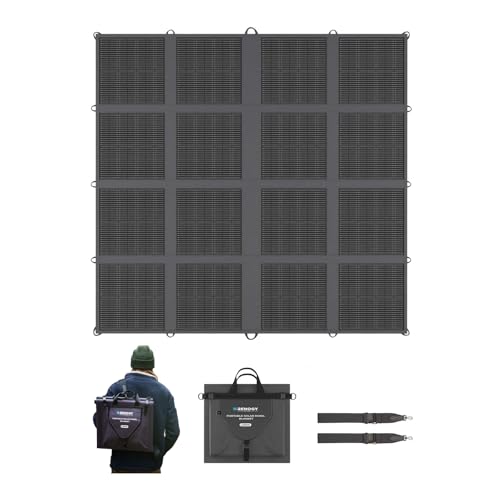
- 400W output with claimed 25% efficiency
- 16-fold, 16.1-pound design for easier storage
- MC4 output; adapter sold separately
Best For: Campers and RV users needing high solar input in a foldable format
Rugged Flexible Charging
BougeRV 200W Fiberglass Solar Panel

- 200W output with claimed 25% efficiency
- Fiberglass layer helps resist cracking and abrasion
- Includes 8.2-foot cable and XT60/DC7909 connectors
Best For: Campers wanting reinforced construction and flexible panel placement
Lightest Quick-Setup Pick
HQST 200W Portable Solar Panel

- About 11 pounds with a compact 1.97-inch folded thickness
- Up to 25% efficiency and adjustable kickstands
- Includes 3-in-1 cable for common power-station inputs
Best For: Campers prioritizing low weight and fast, stable setup
Best Compact 200W Option
Ecosonique 200W Foldable Solar Panel
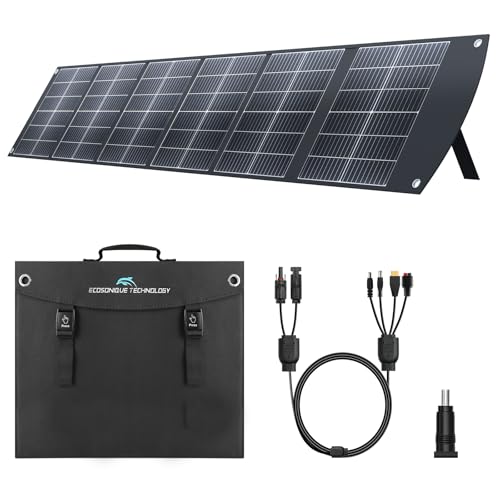
- Six-fold, 11-pound design for easier transport
- Up to 23.5% efficiency with four kickstands
- MC4, USB-C, USB-A, and multiple adapter cables
Best For: Campers wanting a compact 200W panel with flexible connections
Best High-Capacity Choice

- 400W maximum power rating for compatible stations
- 23.4% efficiency with monocrystalline cells
- ETFE surface, kickstands, and IP65 waterproof rating
Best For: RV and off-grid users seeking higher rated solar capacity
Best Device-Charging Features
Twelseavan 200W ETFE Solar Panel

- 60W USB-C PD plus QC3.0 and USB output
- 24% efficiency with ETFE lamination
- 8-in-1 adapters and 9.8-foot MC4 cable
Best For: Campers charging both power stations and USB devices
Best Universal 100W Option – ZOUPW 100W Foldable Solar Panel
For campers who need flexible power-station compatibility, the ZOUPW 100W is a practical choice among portable solar panels for camping. Its 23.5% efficient monocrystalline cells, adjustable kickstands, and included five-connector cable make it easier to position and connect at camp.
Best For: Campers using multiple brands of portable power stations, including Jackery, EcoFlow, Anker, and Bluetti.
Pros:
- Five-in-one cable supports a broad range of power-station inputs.
- IP67-rated panel with durable ETFE coating for outdoor use.
- Built-in USB-C and USB-A ports can charge devices directly.
- Adjustable kickstands help angle the panel toward the sun.
Cons:
- At about 9.5 pounds, it is less backpack-friendly than smaller panels.
- Actual charging is limited by the connected power station’s input rating.
The ZOUPW stands out when connector flexibility matters. It is a well-equipped 100W kit for car camping, RV trips, and emergency backup, though its weight favors vehicle-based use.
Best Lightweight Pick – FlexSolar 40W Foldable Solar Charger
The FlexSolar 40W is a compact option for portable solar panels for camping when low weight and direct device charging are priorities. It folds to a small size, weighs 1.76 pounds, and offers USB-C, USB-A, and DC outputs for phones, tablets, power banks, and small stations.
Best For: Backpackers, mobile campers, and emergency kits where portability matters more than maximum wattage.
Pros:
- Lightweight 1.76-pound design fits easily in a pack or emergency kit.
- USB-C and USB-A ports support simultaneous device charging.
- 24% conversion efficiency and ETFE construction suit outdoor use.
- IP67-rated panel includes carabiners for convenient setup.
Cons:
- Its 40W output is less suitable for larger power stations.
- The junction box should be kept indoors during heavy rain.
- Shade or partial coverage can significantly reduce performance.
This is a sensible small-panel choice for keeping personal electronics topped up away from outlets. Its limited output makes it better for lightweight trips than for powering larger camp appliances.
Best High-Output Choice – Renogy 200W Portable Solar Panel
For campers who want faster replenishment of a compatible power station, the Renogy 200W offers one of the higher outputs in this portable solar panels for camping roundup. Its 25% efficient N-Type cells, four kickstands, and multiple positioning angles are designed for campsite, RV, and blackout-backup use.
Best For: RV campers and car campers with power stations that can accept a 200W solar input.
Pros:
- 200W maximum output and 25% efficiency provide strong charging potential.
- USB-C PD up to 45W and dual USB-A ports charge devices directly.
- Four kickstands support 40°, 50°, and 60° positioning.
- Magnetic closure and a foldable 13.9-pound design simplify storage.
Cons:
- It is heavier than the smaller panels in this selection.
- MC4 output only; the 4-in-1 adapter is sold separately.
- Performance depends on the connected power station meeting the required input specifications.
The Renogy is the strongest fit for users who can take advantage of its higher wattage. Check your power station’s input requirements and plan for the additional weight and separate adapter purchase.
Best Ultralight 100W Panel – FlexSolar 100W Foldable Charger
The FlexSolar 100W combines a high stated output with an unusually low 4.1-pound weight, making it a compelling option among portable solar panels for camping. It includes USB-C PD, USB-A, and DC outputs, plus a four-in-one cable for connecting to many portable power stations.
Best For: Campers and road-trippers who want 100W capability without carrying a heavier folding panel.
Pros:
- Weighs about 4.1 pounds while providing up to 100W of power.
- Includes 45W USB-C PD, USB-A, and 100W DC outputs.
- Four-in-one cable supports DC5521, DC7909, Anderson, and XT60 connections.
- IP67-rated construction and E-Film lamination are designed for outdoor weather.
Cons:
- The supplied details do not specify a separate kickstand system for angle adjustment.
- Actual output varies with sunlight and connected equipment.
- The compact folded form still unfolds to a relatively large 45.47-by-26.18-inch panel.
This panel is appealing when carrying comfort is a priority but 40W is not enough. Its combination of 100W output, direct charging ports, and broad adapter coverage suits flexible campsite and road-trip setups.
Most Power in a Compact Blanket – Renogy 400W Portable Solar Panel
For campers who want substantial charging capacity without hauling a rigid panel, the Renogy 400W is a high-output option among portable solar panels for camping. Its 16-fold design weighs about 16.1 pounds and packs down for easier storage in SUVs, vans, campers, and other tight spaces.
Best For: RV owners, van travelers, and campers who need up to 400 watts of solar input and have a compatible power station.
Pros:
- 400W output and claimed 25% efficiency from 16BB N-Type cells.
- 16-fold design with shoulder straps for easier transport and storage.
- Can be placed on the ground, across a windshield, or hung from trees or racks.
- UL 61730 certified, with a 2-year material and workmanship warranty.
Cons:
- MC4 output only; the 4-in-1 adapter is sold separately.
- At about 16.1 pounds, it is heavier than the 200W alternatives here.
- Actual output depends on shade, sun angle, temperature, cable length, and power-station limits.
The Renogy stands out when maximum rated output and compact folding matter more than the lightest carry weight. Confirm your power station’s input requirements and plan for tie-downs, stakes, or weights in windy campsites.
Rugged Flexible Charging – BougeRV 200W Fiberglass Solar Panel
The BougeRV 200W is a practical choice among portable solar panels for camping when you want a foldable charger with added surface reinforcement. Its fiberglass layer is designed to resist cracking and abrasion, while the included 8.2-foot extension cable helps you position the panel in sun while keeping your power station in a more convenient or shaded spot.
Best For: Campers, RV travelers, and off-grid users who value reinforced construction, flexible placement, and straightforward connector options.
Pros:
- Claimed 25% conversion efficiency from N-Type solar cells.
- Fiberglass-reinforced construction helps resist cracking and surface abrasion.
- Includes XT60 and DC7909 connectors for compatible devices.
- IP65 water and dust resistance plus an 8.2-foot extension cable.
Cons:
- At 13.8 pounds, it is not the lightest 200W model listed.
- Compatibility still depends on the power station’s connector and input limits.
- IP65 protection is intended for water and dust exposure, not unrestricted submersion.
Choose the BougeRV if repeated transport and outdoor abrasion are concerns, or if a longer cable will make campsite setup easier. Check your device’s connector requirements before relying on the included cables.
Lightest Quick-Setup Pick – HQST 200W Portable Solar Panel
The HQST 200W is one of the easier portable solar panels for camping to carry and position. It weighs about 11 pounds, folds to roughly 1.97 inches thick, and uses adjustable kickstands so you can angle the rigid panel quickly on uneven ground.
Best For: Solo campers and road travelers who prioritize low carry weight, fast setup, and broad power-station compatibility.
Pros:
- About 11 pounds, making it notably light for a 200W panel.
- 16BB N-Type cells are rated for up to 25% efficiency.
- Includes a 4.9-foot 3-in-1 cable for XT60, DC7909, and DC5521 connections.
- IP67 waterproof construction, adjustable 40°–60° kickstands, and a laminated design.
Cons:
- The included cable is shorter than the BougeRV’s 8.2-foot extension.
- Compatibility and safe multi-panel connections still depend on power-station limits.
- It carries a 12-month limited warranty rather than the Renogy’s 2-year warranty.
The HQST is a strong fit when portability and setup speed are more important than maximum wattage. Its included adapter cable covers several common input types, but verify voltage and power limits before connecting it to your generator.
Best Compact 200W Option – Ecosonique 200W Foldable Solar Panel
The Ecosonique 200W is a practical choice among portable solar panels for camping when packability and connection flexibility matter. Its six-fold design weighs 11 pounds, includes four adjustable kickstands, and provides MC4, USB-C, and USB-A outputs for power stations and smaller devices.
Best For: Campers, RV travelers, and emergency-preparedness buyers who want a compact 200W panel with broad connector compatibility.
Pros:
- Six-fold design packs down to approximately 18 by 16.3 inches and weighs 11 pounds.
- Includes MC4-to-XT60, Anderson, DC7909, and DC5525 cables.
- Offers up to 23.5% conversion efficiency plus USB-C PD3.0 and USB-A QC3.0 charging.
- Four kickstands and grommets support flexible positioning or hanging.
Cons:
- The 200W maximum output depends on available sunlight and setup conditions.
- Its many cable and output options may require checking connector compatibility before a trip.
Choose this model if a relatively light, compact panel and versatile charging connections are more important than maximum panel capacity. The included cables and 12-month warranty add convenience for general outdoor use.
Best High-Capacity Choice – 400W Foldable Solar Panel
This 400W foldable panel is suited to shoppers comparing portable solar panels for camping who need more rated capacity for compatible power stations. It uses monocrystalline cells, ETFE lamination, adjustable kickstands, and MC4 connectivity for outdoor and off-grid use.
Best For: RV campers and off-grid users prioritizing a higher 400W rated output for compatible power stations.
Pros:
- Provides a 400W maximum power rating with stated 23.4% conversion efficiency.
- MC4 connectors are designed for compatibility with most portable power stations.
- Foldable construction and adjustable kickstands simplify transport and positioning.
- ETFE-laminated, dust-resistant, high-temperature-resistant construction is rated IP65 waterproof.
Cons:
- The supplied notes do not provide the panel’s folded dimensions or weight.
- It is listed with MC4 connectivity, so buyers should verify their power station’s connector requirements.
This is the capacity-focused option in the group, but its usefulness depends on matching the 40V DC output and MC4 connection to your power station. Consider it when higher rated wattage is worth potentially greater carrying demands.
Best Device-Charging Features – Twelseavan 200W ETFE Solar Panel
The Twelseavan 200W combines portable solar panels for camping with direct device charging. Alongside MC4 connectivity and several adapters, it provides 60W USB-C PD, QC3.0, and standard USB output, while four kickstands and a 9.8-foot cable support flexible campsite placement.
Best For: Campers who want to charge a power station and smaller electronics directly from one foldable panel.
Pros:
- 24% conversion efficiency and ETFE lamination with stated light transmission above 95%.
- Includes an 8-in-1 connection setup with MC4-to-Anderson, XT60, 8020, 7909, and 5521 options.
- Provides USB-C PD up to 60W, QC3.0 up to 18W, and standard USB output.
- Four adjustable kickstands, a magnetic handle, and a 24-month warranty support travel use.
Cons:
- At 15.7 pounds, it is heavier than the Ecosonique 200W model.
- The 23-by-22-inch folded size requires more storage space than a more compact six-fold design.
This model stands out when direct charging for phones, cameras, tablets, or other USB devices is part of the camping plan. Its longer cable and extensive adapter set also make placement easier, provided the extra weight and folded size fit your gear storage.
How We Picked the Best Portable Solar Panels for Camping
We focused on panels that balance useful output, portability, charging compatibility, durability, and value. The selection includes compact 40W models for personal electronics, midrange 100W and 200W options for common camping power stations, and 400W systems for demanding loads or faster recharging.
We also considered practical specifications such as rated efficiency, IP water-resistance ratings, foldable construction, connector options, and compatibility with popular portable power stations. Because real-world solar output varies with weather, angle, shade, and temperature, wattage ratings should be treated as maximum laboratory output rather than a guaranteed result.
Quick Comparison
| Panel class | Best suited for | Main advantage | Typical trade-off |
|---|---|---|---|
| 40W | Phones, tablets, lights | Lightweight and easy to carry | Slow for large power stations |
| 100W | Weekend camping and small power stations | Good portability-to-output balance | Limited performance for high-demand loads |
| 200W | Extended trips and medium power stations | More practical daily energy production | Heavier and bulkier when folded |
| 400W | Large power stations and base camps | Fastest charging potential | Requires more space and careful positioning |
Key Buying Factors for Portable Solar Panels for Camping
Power Output and Efficiency
Choose the panel size according to your power station and daily energy needs. A 100W panel can suit phones, lights, cameras, and small stations, while 200W or 400W panels are more appropriate for refrigerators, induction appliances, heated gear, or multi-day trips. Higher efficiency can help a panel produce more power in limited space, but direct sunlight and proper positioning matter just as much.
Connectors and Compatibility
Check the panel’s voltage, current, and connector type before buying. MC4, DC, XT60, Anderson, USB-A, and USB-C connections are not automatically interchangeable. Confirm that the panel’s output falls within your power station’s solar-input limits; exceeding voltage limits can damage equipment, while insufficient voltage may prevent charging.
Portability and Setup
Foldable panels are easier to transport and store, but larger models can be awkward to position. Look for integrated kickstands, handles, protective covers, and manageable folded dimensions. For car camping, extra weight may be acceptable; for backpacking, a smaller panel is usually the better compromise.
Weather Resistance and Durability
Water-resistant construction is useful for dew, light rain, and outdoor storage, but an IP rating does not mean every panel should be left exposed during storms. ETFE surfaces, reinforced hinges, and fiberglass construction can improve durability. Always follow the manufacturer’s guidance for wet conditions and storage.
Who Should Buy Which Portable Solar Panels for Camping?
Choose a 40W panel if you mainly need to top up phones, tablets, lights, or small USB devices. Choose 100W for a versatile option that remains relatively easy to carry and works well with compact power stations.
Choose 200W if you camp for several days, use more than one device, or need dependable solar input for a medium-capacity power station. Choose 400W for base camping, large battery stations, or faster recovery after substantial power use—but make sure you have sufficient ground space and compatible solar-input hardware.
Before ordering, compare the panel’s folded size, weight, included cables, output limits, and your power station’s accepted solar range. Those details usually matter more than the headline wattage alone.