The best reciprocating saws under $100 can handle demolition, pruning, remodeling, and routine home repairs without requiring a professional-grade budget. The right choice depends on whether you prioritize cordless convenience, corded power, compact handling, or included accessories.
This roundup compares 10 affordable saw and blade options, with attention to power source, cutting control, compatibility, and overall value.
Best 10 Reciprocating Saws Under 100 Picks for 2026
Best Cordless Value
BLACK+DECKER 20V MAX Reciprocating Saw

- Includes battery, charger, and blade
- Tool-free blade change
- Pivoting shoe and variable-speed trigger
Best For: DIY users needing a ready-to-use cordless saw
Best Corded Power
Makita JR3051T 12 Amp Reciprocating Saw

- 12-amp motor with 3,000 SPM
- Long 1-3/16-inch stroke
- Includes wood and metal blades
Best For: Users wanting sustained corded cutting power
Best Compact Bare Tool
CRAFTSMAN V20 Reciprocating Saw
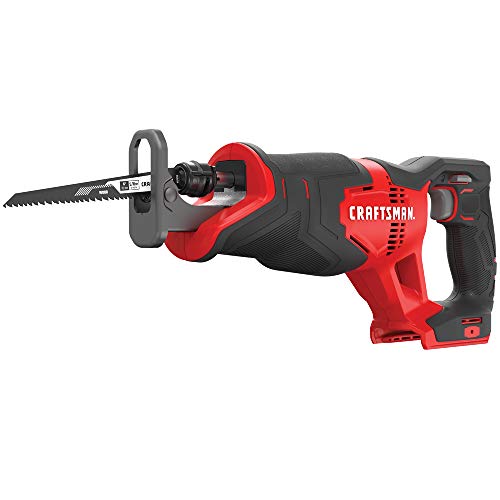
- Compact 14.5-inch design
- Variable speed up to 3,000 RPM
- Battery and charger sold separately
Best For: Existing CRAFTSMAN V20 system owners
Best Vibration Control
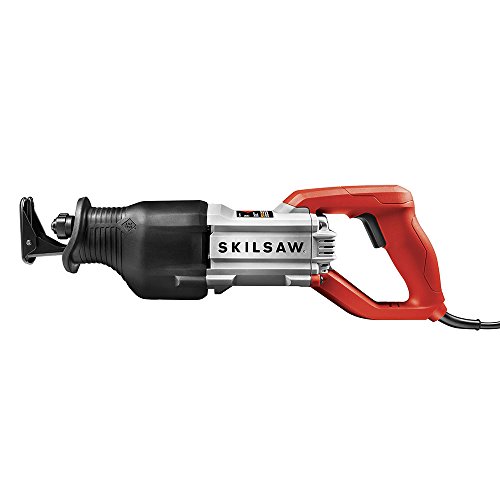
- 13-amp corded motor
- BUZZKILL vibration suppression
- Variable-speed trigger and tool-less clamp
Best For: Power-focused users who value vibration control
Best Cordless Pick
Makita XRJ04Z 18V LXT Recipro Saw

- Up to 2,800 SPM with a 1-1/4-inch stroke
- Tool-less blade changes
- Bare tool; battery and charger sold separately
Best For: Makita 18V LXT users needing cordless cutting
Best Heavy-Duty Value
DEWALT DWE305 12-Amp Reciprocating Saw

- 12-amp motor for demanding applications
- Four-position blade clamp for flush cuts
- Corded 120-volt operation
Best For: Demolition and workshop cutting near an outlet
Best One-Handed Design
Makita XRJ08Z Compact Recipro Saw

- Brushless motor reaches 3,100 SPM
- Compact one-handed design with reduced vibration
- Includes wood, general-purpose, and metal blades
Best For: Compact maintenance and one-handed cutting
Heavy-Duty Metal Cutting Pick

- Carbide teeth rated for up to 50x longer life
- Cuts cast iron, stainless steel, rebar, and alloy steel
- Universal 1/2-inch shank; 10-pack
Best For: Tough metal cutting and demolition work
Premium Cordless Tool Pick
Milwaukee M18 Fuel Sawzall Bare Tool

- Brushless 18-volt cordless design
- Fast lever-actuated blade clamp and LED light
- Bare tool; battery and charger sold separately
Best For: Existing Milwaukee M18 battery owners
Precision Metal Blade Pick

- 8% cobalt bi-metal teeth rated for up to 2x life
- 14 TPI profile for sheet metal and pipe
- Universal 1/2-inch shank; five-pack
Best For: Sheet metal, pipe, and profiles under 100 mm
Best Cordless Value – BLACK+DECKER 20V MAX Reciprocating Saw
For shoppers comparing reciprocating saws under 100, the BLACK+DECKER BDCR20C is a convenient cordless kit that includes the saw, a 20V lithium-ion battery, charger, and blade. Its variable-speed trigger and pivoting shoe support controlled cutting for common projects.
Best For: DIY users who want a ready-to-use cordless saw for wood cutting and general home projects.
Pros:
- Includes a 20V battery, charger, and reciprocating blade
- Tool-free blade change simplifies blade installation
- Pivoting shoe and variable-speed trigger improve control
Cons:
- Supplied details list a wood surface recommendation
- Battery-powered operation requires charging
At 4.5 pounds, this compact kit is relatively easy to handle. It is a practical choice when cordless convenience matters more than the continuous runtime of a corded model.
Best Corded Power – Makita JR3051T 12 Amp Reciprocating Saw
The Makita JR3051T is a corded option for buyers comparing reciprocating saws under 100 who prioritize sustained power. Its 12-amp motor, 3,000 strokes per minute, and 1-3/16-inch stroke are designed for efficient cutting across demanding applications.
Best For: Workshop and jobsite users who prefer continuous corded power for wood and metal cutting.
Pros:
- 12-amp motor delivers up to 3,000 strokes per minute
- Long 1-3/16-inch stroke supports faster cutting performance
- Includes wood- and metal-cutting blades
- Tool-less blade changes and variable-speed control add convenience
Cons:
- Corded design requires access to a power outlet
- At 7.3 pounds, it is heavier than the listed cordless models
The included wood and metal blades make this a versatile starting setup. Its tool hook and rubber handle are useful practical touches for regular project work.
Best Compact Bare Tool – CRAFTSMAN V20 Reciprocating Saw
The CRAFTSMAN CMCS300B is a compact cordless bare tool for shoppers seeking reciprocating saws under 100 within the V20 system. It offers a 1-inch stroke, variable-speed control up to 3,000 RPM, and a tool-free blade release, but the battery and charger are sold separately.
Best For: Existing CRAFTSMAN V20 owners who need a compact saw for cutting in tight spaces.
Pros:
- Compact 14.5-inch design suits tight spaces
- Variable-speed trigger provides control from 0 to 3,000 RPM
- Tool-free blade release enables quick changes
- Contoured overmolded handle supports comfort during use
Cons:
- Battery and charger are sold separately
- Bare-tool purchase is less convenient for new users without V20 batteries
Weighing 4.4 pounds, this model is easy to position and carry. Its main value is strongest for buyers already invested in the CRAFTSMAN V20 cordless platform.
Best Vibration Control – SKIL 13 Amp Reciprocating Saw
For buyers comparing corded reciprocating saws under 100, the SKIL SPT44A-00 combines a 13-amp motor with BUZZKILL Technology. The design is focused on strong cutting performance while suppressing vibration, and its variable-speed trigger helps adapt the tool to different materials.
Best For: Users who want a powerful corded saw with enhanced vibration control for demanding projects.
Pros:
- 13-amp motor provides substantial corded power
- BUZZKILL Technology suppresses vibration by up to 35% better than the competition
- Variable-speed trigger supports specialized-material cutting
- Tool-less blade clamp and oversize trigger improve usability
Cons:
- At 9 pounds, it is the heaviest model in this selection
- Corded operation limits mobility
- Supplied details list a one-year limited warranty
The ergonomic handle and oversize trigger accommodate multiple cutting positions. Choose this model when vibration reduction and corded power are more important than low weight or cordless portability.
Best Cordless Pick – Makita XRJ04Z 18V LXT Recipro Saw
Makita XRJ04Z 18V LXT Lithium-Ion Cordless Recipro Saw, Tool Only, Blue | Tool only
Check Price On AmazonIf you want reciprocating saws under 100 that offer cordless mobility, the Makita XRJ04Z is a practical bare-tool option. Its 18V motor reaches up to 2,800 strokes per minute, while the 1-1/4-inch stroke length supports quick cutting. The battery and charger are not included.
Best For: DIYers and homeowners already invested in Makita’s 18V LXT battery platform.
Pros:
- Variable-speed motor and trigger provide useful cutting control.
- Tool-less blade changes help speed up blade installation and removal.
- Compact 19-1/8-inch design and rubber handle help reduce fatigue.
Cons:
- Battery and charger must be purchased separately.
- At 8.3 pounds with a battery, it is not the lightest cordless setup.
The XRJ04Z balances cutting speed, stroke length, and portability well. It makes the most sense when you already own compatible Makita batteries and need a versatile saw for renovation or maintenance work.
Best Heavy-Duty Value – DEWALT DWE305 12-Amp Reciprocating Saw
Among reciprocating saws under 100, the corded DEWALT DWE305 stands out for users who want steady power without managing batteries. Its 12-amp motor delivers up to 2,900 strokes per minute, and the variable-speed trigger helps match the cutting pace to the task.
Best For: Heavy-duty demolition, remodeling, and workshop projects near a 120-volt outlet.
Pros:
- Powerful 12-amp motor is designed for heavy-duty applications.
- Four-position blade clamp supports flush cuts and added versatility.
- Lever-action, keyless clamp enables quick blade changes.
- Variable-speed trigger allows immediate speed adjustment.
Cons:
- Corded design limits mobility compared with cordless models.
- At about 8 pounds, it may feel substantial during extended overhead work.
The DWE305 is a straightforward choice when cutting power and continuous operation matter more than portability. Its four-position clamp is especially useful for flush-cutting applications.
Best One-Handed Design – Makita XRJ08Z Compact Recipro Saw
Makita XRJ08Z 18V LXT® Lithium-Ion Brushless Cordless Compact One-Handed Recipro Saw, Tool Only
Check Price On AmazonFor reciprocating saws under 100 with a compact one-handed format, the Makita XRJ08Z is designed for maneuverability. Its brushless motor reaches up to 3,100 strokes per minute, and the low-vibration design is intended to make controlled cutting more comfortable. This is a tool-only model.
Best For: Quick one-handed cuts in wood, metal, and general maintenance work where compact handling is important.
Pros:
- Brushless motor provides up to 3,100 strokes per minute.
- Compact one-handed grip is designed to transmit force firmly to the workpiece.
- Low-vibration design is rated for up to 40% less vibration.
- Includes wood, all-purpose, and metal-cutting blades.
Cons:
- Battery and charger are not included.
- The 7/8-inch stroke length is shorter than the XRJ04Z’s 1-1/4-inch stroke.
The XRJ08Z prioritizes compact control over maximum stroke length. Its one-handed layout, brushless motor, and included blade selection make it a convenient option for users already equipped with Makita 18V LXT batteries.
Heavy-Duty Metal Cutting Pick – EZARC Carbide 6-Inch Blades
For shoppers comparing reciprocating saws under 100, the EZARC Carbide 6-Inch Blades are a practical choice when the main task is cutting demanding metal. This 10-pack uses carbide teeth designed for cast iron, stainless steel, alloy steel, rebar, and car beams, with an 8 TPI profile for thick-metal work.
Best For: Heavy-duty metal cutting and demolition work involving tough metals, rebar, or automotive components.
Pros:
- Carbide technology is rated for up to 50 times longer life than comparable bi-metal blades.
- Designed for cast iron, stainless steel, high-alloy steel, rebar, and car beams.
- Six-inch blades with a universal 1/2-inch shank fit major Sawzall-style tools.
Cons:
- Optimized for tough metal rather than general-purpose wood cutting.
- These are replacement blades, not a complete reciprocating saw.
Choose this set when durability and compatibility matter more than versatility across softer materials. Its carbide construction and individually welded teeth are aimed at demanding applications.
Premium Cordless Tool Pick – Milwaukee M18 Fuel Sawzall Bare Tool
Among reciprocating saws under 100, the Milwaukee M18 Fuel Sawzall stands out as a brushless cordless bare tool for users already invested in the M18 battery platform. It includes a lever-actuated blade clamp, reinforced battery connection, and built-in LED lighting, but does not include a battery or charger.
Best For: M18 users who need a cordless reciprocating saw for cutting work and already own a compatible battery and charger.
Pros:
- Brushless 18-volt design provides cordless operation.
- Lever-actuated clamp supports fast, easy blade changes.
- Built-in LED light helps illuminate the work surface.
- Metal-reinforced battery connection improves battery retention and durability.
Cons:
- Sold as a bare tool with no battery or charger.
- At 6.8 pounds, it may feel substantial during extended overhead use.
This is a platform-focused option rather than a complete starter kit. It makes the most sense for Milwaukee M18 owners who value brushless operation, tool durability, and convenient blade changes.
Precision Metal Blade Pick – EZARC Bi-Metal 6-Inch Blades
For reciprocating saws under 100 used on sheet metal and pipe, the EZARC Bi-Metal 6-Inch Blades offer a focused five-piece replacement set. Their 14 TPI, 8% cobalt bi-metal teeth are designed for medium- to thick-gauge metal and pipes or profiles under 100 mm in diameter.
Best For: Cutting sheet metal, metal pipe, and profiles where a finer 14 TPI tooth pattern is useful.
Pros:
- 8% cobalt bi-metal construction is rated for up to twice the life of standard bi-metal blades.
- 14 TPI design suits sheet metal and metal pipe cutting.
- Thin 0.9 mm profile helps reduce heat buildup.
- Universal 1/2-inch shank fits reciprocating saws from brands including Bosch, DeWalt, Milwaukee, Makita, and Ryobi.
Cons:
- Five-blade pack offers fewer replacements than a 10-pack.
- Designed for metal rather than broad multi-material use.
This set is a sensible match for controlled metal work where tooth life and a finer cutting profile are priorities. Verify the material thickness and pipe diameter before choosing it for a particular project.
How We Picked the Best Reciprocating Saws Under 100
We focused on products that offer useful performance for DIY projects, maintenance, light remodeling, and occasional demolition. The selection includes corded and cordless saws, compact one-handed designs, and replacement blade packs because the saw is only part of the cutting system.
We considered motor output, speed control, blade-changing convenience, vibration management, cutting capacity, battery-platform compatibility, and whether the listing includes a battery, charger, or blades. Bare tools can be a good value for shoppers who already own compatible batteries, but their total cost may be higher for first-time buyers.
Quick Comparison
| Type | Best for | Main advantage | Watch for |
|---|---|---|---|
| Corded saw | Extended cutting sessions | Consistent power | Needs an outlet and cord management |
| Battery saw | Outdoor work and quick repairs | Portable operation | Battery and charger may cost extra |
| Compact saw | Overhead or confined cuts | Improved maneuverability | Usually less suited to heavy demolition |
| Replacement blades | Matching materials to the tool | Better cut quality and blade life | Tooth count and material must be appropriate |
Key Buying Factors for Reciprocating Saws Under 100
Power Source and Total Cost
Corded models are often the strongest value when you have reliable access to an outlet. They can run continuously and avoid battery downtime. Cordless models are easier to carry and safer around unfinished spaces, but check whether the package includes a battery and charger. A bare tool is most economical when it matches batteries you already own.
Speed, Stroke, and Control
Variable-speed triggers help you start cuts cleanly and adjust performance for different materials. Higher speed is useful for wood and fast demolition, while slower operation can improve control in metal or delicate materials. Look for tool-free blade changes and an adjustable shoe if you expect to make frequent cuts.
Vibration and Handling
Reciprocating saws produce substantial movement by design. Anti-vibration features, a balanced body, and a comfortable grip can reduce fatigue during longer jobs. Compact or one-handed models are convenient for pruning and tight spaces, but they may not replace a full-size saw for thick framing or demanding demolition.
Blade Selection
Use wood blades for lumber and pruning blades for branches. Metal requires finer teeth, while carbide blades are better suited to especially tough or thick metal. Match the blade length and tooth pattern to the material, and keep spare blades available because dull teeth make the saw work harder.
Who Should Buy Which Reciprocating Saws Under 100?
Choose a corded 12- or 13-amp saw if you want dependable power for renovation, framing, or repeated cutting near an outlet. Choose a cordless model if portability matters most or you already use the same battery platform for other tools. A compact cordless saw is a practical choice for electricians, plumbers, landscapers, and anyone working in cramped areas. If you own a compatible saw but need better results, investing in purpose-built metal or carbide blades may deliver the biggest improvement.