If you’re looking to enhance your home’s comfort while improving energy efficiency, smart HVAC sensors can make a significant difference. These devices adapt to your lifestyle, ensuring ideal heating and cooling. From advanced features to seamless integration with smart home systems, the right sensor can transform your living environment. But with so many options available, which ones truly stand out? Let’s explore the top contenders that could change the way you manage your home’s climate.
ecobee Smart Thermostat Premium with Smart Sensor

If you’re looking to boost your home’s energy efficiency while keeping your space comfortable, the ecobee Smart Thermostat Premium with Smart Sensor is the ideal choice. This ENERGY STAR certified device can save you up to 26% annually on heating and cooling costs. With SmartSensor technology, it adjusts temperature in key rooms, eliminating hot or cold spots. Plus, the built-in air quality monitor alerts you to poor air quality, offering tips for improvement. Integrate it with Siri, Alexa, or Google Assistant for voice control, and enjoy its security features like smoke alarm alerts and notifications for open windows or doors.
Best For: Homeowners looking to enhance energy efficiency and comfort while integrating smart technology into their living spaces.
Pros:
- Energy savings of up to 26% on heating and cooling costs, making it cost-effective.
- Smart home integration with voice control via Siri, Alexa, and Google Assistant for easy management.
- Air quality monitoring with alerts and tips to maintain a healthy home environment.
Cons:
- Requires Apple Home Hub for full Siri functionality, which may be an additional expense.
- Some features, like SmartSensor for doors and windows, require a subscription for full access.
- Installation may be complicated for homes without a C-Wire, even with the Power Extender Kit.
ecobee Smart Sensor 2 Pack for Smart Home

The ecobee Smart Sensor 2 Pack is an ideal choice for homeowners seeking enhanced comfort and energy savings, especially in larger spaces. These sensors detect room occupancy and communicate temperature data to your ecobee Smart Thermostat from up to 60 feet away, prompting automatic adjustments for maximum comfort. You’ll save energy by avoiding heating or cooling empty rooms. Installation is quick and easy; you can mount them or place them on a stand. With real-time alerts for unexpected motion via the ecobee app, you’ll have peace of mind. Plus, backed by a 3-year warranty, it’s a reliable addition to your smart home.
Best For: Homeowners seeking enhanced comfort and energy savings in larger spaces through smart home technology.
Pros:
- Automatic temperature adjustments based on room occupancy enhance comfort and save energy.
- Quick and easy installation, allowing for versatile placement options.
- Real-time alerts for unexpected motion provide added security.
Cons:
- Requires a subscription for full functionality of real-time alerts via the ecobee app.
- Maximum range of 60 feet may not be sufficient for very large homes.
- Battery-powered operation may require periodic battery replacements.
ecobee Smart Thermostat Enhanced – Programmable Wifi Thermostat
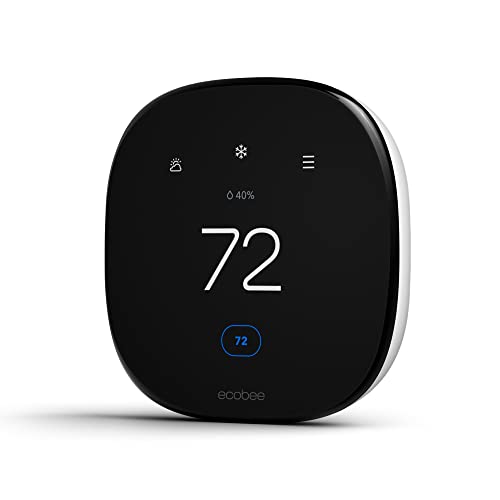
For homeowners looking to maximize energy efficiency and comfort, the ecobee Smart Thermostat Enhanced stands out as a top choice. You can save up to 26% annually on heating and cooling costs, thanks to its ability to learn your temperature preferences and schedules. It adjusts automatically when you’re away, ensuring you never cool or heat an empty home. With remote control via your smartphone or smart assistant, comfort is always within reach. Plus, its compatibility with most HVAC systems and easy installation with the included Power Extender Kit means you can enjoy instant benefits without hassle.
Best For: Homeowners seeking to enhance energy efficiency and comfort while reducing heating and cooling costs.
Pros:
- Saves up to 26% on energy costs annually by optimizing temperature settings.
- Compatible with most HVAC systems and includes a Power Extender Kit for easy installation.
- Remote control and integration with smart assistants provide convenience and flexibility.
Cons:
- Initial setup may require some technical knowledge for certain HVAC systems.
- Additional SmartSensors for room occupancy detection are sold separately.
- May have a higher upfront cost compared to traditional thermostats.
Honeywell Home Smart Room Sensor (RCHTSENSOR-2PK)

Looking to enhance your home’s climate control? The Honeywell Home Smart Room Sensor (RCHTSENSOR-2PK) is your perfect companion for optimizing comfort. Compatible with T9/T10 Wi-Fi Smart Thermostats, it monitors temperature and humidity across multiple rooms. With motion detection, it prioritizes occupied spaces, ensuring a cozy environment. Plus, it can be set to create the ideal sleeping conditions by monitoring bedroom temperatures. Installation is a breeze—no tools needed! Control everything remotely through the Resideo app. With a solid 4.5-star rating from 991 reviews, this sensor is a smart investment for any home.
Best For: Homeowners looking to optimize temperature and humidity management in multiple rooms for enhanced comfort.
Pros:
- Double Comfort: Monitors both temperature and humidity, ensuring a balanced environment.
- Easy Installation: No tools required for setup, making it user-friendly for all.
- Remote Control: Allows users to manage settings from anywhere using the Resideo app.
Cons:
- Requires Wi-Fi: Dependency on a Wi-Fi connection for functionality may be a limitation for some users.
- Battery Operated: Runs on batteries, which may require regular replacement and maintenance.
- Limited Compatibility: Works only with T9/T10 Wi-Fi Smart Thermostats, restricting its use with other systems.
ecobee Smart Sensor for Doors & Windows (2 Pack)

If you’re seeking a smart solution to enhance your home security and optimize energy savings, the ecobee Smart Sensor for Doors & Windows (2 Pack) stands out as an excellent choice. These WiFi contact sensors send real-time notifications directly to your ecobee app whenever doors or windows open, keeping you informed. You can pair them with the ecobee Smart Thermostat Premium to enjoy chime alerts, too. Installation’s a breeze, and with a battery life of up to three years, maintenance is minimal. Plus, you get peace of mind with a three-year warranty, ensuring reliable monitoring for your home.
Best For: Homeowners looking to enhance security and energy efficiency with easy-to-install smart technology.
Pros:
- Real-time notifications for openings provide peace of mind and enhance security.
- Easy installation and minimal maintenance with a long battery life of up to 3 years.
- Compatible with ecobee Smart Thermostat Premium for added features like chime alerts.
Cons:
- Requires a smartphone for app notifications, which may not be suitable for all users.
- Basic features are limited without the ecobee Smart Security subscription for enhanced functionality.
- May need multiple units for larger homes, which can increase costs.
Sensi Touch 2 Smart Thermostat (ST76)

The Sensi Touch 2 Smart Thermostat (ST76) is an ideal choice for homeowners seeking energy efficiency and convenience, thanks to its ability to save about 23% on HVAC energy costs. Its vibrant touchscreen color display makes navigation easy, while compatibility with Sensi Room Sensors guarantees balanced temperatures throughout your home. You can control the thermostat using Alexa for added convenience. Installation is a breeze with the top-rated app and universal Bluetooth technology. Plus, smart maintenance features like performance monitoring and usage reports keep you informed. Enjoy peace of mind knowing Sensi protects your privacy and won’t sell your information.
Best For: Homeowners looking for an energy-efficient and user-friendly thermostat that offers smart features and voice control.
Pros:
- Energy savings of approximately 23% on HVAC costs.
- Easy installation with a user-friendly app and universal Bluetooth technology.
- Smart maintenance features such as performance monitoring and usage reports.
Cons:
- Requires a C-Wire for installation, which may not be available in all homes.
- Sensi Room Sensors are sold separately, adding to the overall cost.
- Limited compatibility with some older HVAC systems.
TempTouch WiFi Pipe Clamp Temperature & Humidity Sensor

For homeowners worried about frozen or burst pipes, the TempTouch WiFi Pipe Clamp Temperature & Humidity Sensor stands out as an essential tool. This smart thermometer easily installs with a Velcro pipe strap, offering 24/7 WiFi monitoring. You’ll receive real-time alerts via push notifications, emails, and SMS when temperatures near freezing, ensuring peace of mind even when you’re away. Powered by long-lasting AA lithium batteries, it performs reliably in extreme cold. Plus, it logs data locally during WiFi outages, maintaining protection. With the SafeSense app, you can monitor and share access with family or maintenance teams effortlessly.
Best For: Homeowners looking to prevent frozen or burst pipes with a reliable and easy-to-install temperature and humidity monitoring solution.
Pros:
- Provides 24/7 WiFi monitoring with real-time alerts for temperature changes.
- Long-lasting battery life of up to a year, even in extreme cold conditions.
- Easy installation with a Velcro pipe strap and remote management via the SafeSense app.
Cons:
- Only supports 2.4GHz WiFi networks, limiting compatibility with newer dual-band routers.
- Requires battery replacements every year, which may be inconvenient for some users.
- Alerts may not be received during prolonged WiFi outages if the local data storage is exceeded.
ecobee Smart Thermostat Essential – Energy Star Certified

With the ecobee Smart Thermostat Essential, homeowners can enjoy significant energy savings and enhanced comfort year-round. You can save up to 23% on heating and cooling costs as it automatically adjusts to your schedule, enhancing comfort when you’re home and saving energy when you’re away. It’s compatible with 85% of HVAC systems and integrates seamlessly with smart home ecosystems like Apple HomeKit and Alexa. The intuitive touchscreen and ecobee app let you control temperatures and track energy consumption remotely. Plus, free software upgrades keep your thermostat performing efficiently, ensuring you stay comfortable and efficient throughout the seasons.
Best For: Homeowners looking to optimize energy efficiency and comfort with a smart thermostat that integrates with existing smart home systems.
Pros:
- Energy Savings: Can save up to 23% annually on heating and cooling costs.
- Compatibility: Works with 85% of HVAC systems and integrates with major smart home ecosystems like Apple HomeKit, Google Assistant, and Alexa.
- User-Friendly: Features a color touchscreen and a mobile app for easy control and monitoring of energy consumption.
Cons:
- SmartSensor Sold Separately: Enhanced monitoring requires additional purchase of SmartSensors.
- DIY Installation May Not Suit Everyone: While designed for easy installation, some users may prefer professional installation.
- Limited Features Without SmartSensor: Basic functionality may not fully leverage the thermostat’s capabilities without additional sensors.
Honeywell Home T9 WiFi Smart Thermostat with Smart Room Sensor

Honeywell Home T9 WiFi Smart Thermostat, paired with its Smart Room Sensor, stands out as an ideal choice for homeowners seeking precise climate control across multiple rooms. Its touchscreen display and ENERGY STAR certification guarantee efficiency, while compatibility with various heating systems makes it versatile. You can easily adjust settings remotely via the Resideo app or voice commands through Alexa, Apple HomeKit, and Google Assistant. The Smart Room Sensors detect occupancy, optimizing comfort where it matters most. Plus, the T9 supports energy savings through local utility rebates and Demand Response Programs, enhancing your home’s efficiency effortlessly.
Best For: Homeowners seeking efficient and customizable climate control across multiple rooms with smart technology integration.
Pros:
- Touchscreen display for easy navigation and user-friendly interface.
- Smart Room Sensors optimize comfort by detecting occupancy and adjusting temperatures accordingly.
- Remote control via the Resideo app and compatibility with voice assistants like Alexa, Apple HomeKit, and Google Assistant.
Cons:
- Requires a C-Wire for installation, which may necessitate additional electrical work in some homes.
- Not compatible with electric baseboard heating systems (120-240V).
- Battery-powered sensors may require occasional battery replacements for optimal performance.
Sensi Smart Thermostat (ST55)

The Sensi Smart Thermostat (ST55) stands out as an excellent choice for homeowners seeking energy efficiency and convenience. With over 100 years of HVAC expertise, it’s Energy Star certified, helping you save about 23% on HVAC energy costs. You’ll love its easy DIY installation—no common wire needed—and the app guides you through each step. Plus, it fits standard thermostat spaces without requiring wall modifications. Sensi prioritizes your privacy, never selling your personal information. With smart maintenance alerts and usage reports, you’ll stay informed about your HVAC performance, ensuring peak comfort while reducing energy consumption.
Best For: Homeowners looking for an energy-efficient thermostat that is easy to install and offers smart features for managing HVAC performance.
Pros:
- Easy DIY installation with step-by-step app guidance and no common wire required.
- Potential to save approximately 23% on HVAC energy costs, enhancing overall energy efficiency.
- Smart maintenance alerts and usage reports keep homeowners informed about HVAC performance.
Cons:
- May not be compatible with all HVAC systems, limiting options for some users.
- Remote access features require a stable internet connection, which may be a limitation for some households.
- Initial setup through the app may be challenging for users who are not tech-savvy.
Factors to Consider When Choosing a Smart HVAC Sensor
When you’re choosing a smart HVAC sensor, it’s essential to contemplate its compatibility with your existing systems. You’ll also want to look at energy efficiency features and how easy it is to install and set up. Don’t forget about smart home integration and the sensor’s monitoring and alerts capabilities to enhance your overall experience.
Compatibility With Existing Systems
Choosing the right smart HVAC sensor can greatly enhance your home’s comfort, but it’s essential to ascertain compatibility with your existing heating and cooling systems. First, verify the sensor works with your HVAC setup, like furnaces or heat pumps, typically needing a 24VAC system. Check if it integrates with your current thermostat, as some sensors only support specific brands or require additional wiring. You’ll also want to confirm the sensor communicates effectively within your home’s range, as distance limitations can affect performance. Additionally, consider compatibility with smart home platforms like Apple HomeKit or Google Assistant for seamless control. Finally, look for features like occupancy detection or humidity monitoring that may necessitate further integration with your thermostat.
Energy Efficiency Features
Smart HVAC sensors not only need to be compatible with your existing systems but also offer energy efficiency features that can greatly lower your utility bills. By optimizing temperature settings based on occupancy and personal preferences, these sensors can save you up to 26% annually on heating and cooling costs. Many smart sensors automatically adjust temperatures when your home is unoccupied, reducing energy waste. Look for models that include humidity detection and scheduling assistance to enhance comfort while conserving energy. Some sensors even communicate across multiple rooms for average temperature calculations, boosting overall savings. Plus, integration with smart home ecosystems allows real-time monitoring and remote adjustments, further supporting your energy efficiency efforts.
Installation and Setup Ease
While many features of smart HVAC sensors can enhance your home’s comfort and efficiency, the installation and setup process shouldn’t be overlooked. Look for sensors that offer quick installation options, like wireless connectivity or magnetic placements, to save time. Confirm compatibility with your existing HVAC system, as some may need specific wiring or C-wires.
User-friendly installation guides and mobile app support can make DIY setup a breeze, so check for those. Opt for devices that allow flexible mounting options, such as wall brackets or adhesive strips, to simplify placement. Finally, choose sensors with battery power and long-lasting performance to minimize maintenance and battery replacement efforts, making your setup as hassle-free as possible.
Smart Home Integration
As you explore options for HVAC sensors, considering their ability to integrate with your smart home ecosystem is essential. Look for sensors compatible with popular platforms like Apple HomeKit, Google Assistant, or Amazon Alexa. This compatibility allows for seamless voice control and the convenience of adjusting temperature settings remotely via mobile apps. Many smart sensors also connect with existing home security systems, enhancing both comfort and security by providing alerts for unexpected motion or temperature changes. Additionally, sensors that communicate with smart thermostats help optimize heating and cooling based on room occupancy. Ultimately, choosing sensors that work well with other home automation devices can create a cohesive experience tailored to your habits and preferences, maximizing comfort and efficiency.
Monitoring and Alerts Capabilities
When you’re choosing HVAC sensors, monitoring and alerts capabilities are key factors to evaluate. Look for sensors that provide real-time notifications for changes in temperature, humidity, and occupancy, allowing you to respond quickly to any environmental shifts. Alerts for unexpected motion or activity can enhance your home security and offer peace of mind. Many smart sensors also enable remote monitoring via dedicated apps, so you can check conditions and receive updates from anywhere. Advanced features like local data logging during WiFi outages make certain you stay informed even without internet access. Finally, choose sensors that integrate seamlessly with your existing HVAC system, offering actionable insights like filter replacement reminders and maintenance alerts to optimize performance.