Standing water can damage flooring, walls, appliances, and stored belongings quickly. The right utility pump helps remove floodwater faster, but flow rate is only part of the decision.
This roundup compares 10 utility pumps for flooded basements, from compact transfer pumps to high-flow models with long hoses. Use the guide below to match pump capacity, discharge setup, and operating features to your cleanup needs.
Best 10 Utility Pumps for Flooded Basements Picks for 2026
Reliable Mid-Range Utility Pump

- 1,800 GPH flow and 25-foot lift
- Handles solids up to 1/8 inch
- Includes 10-foot cord and hose adapter
Best For: Moderate basement flooding and general household water removal
High-Flow Basement Drainage

- 4,500 GPH flow at a 5-foot lift
- 30-foot maximum lift with 1/5-inch low suction
- Includes multiple discharge adapters
Best For: Rapid removal from flooded basements and window wells
Extended-Reach Hose Kit
1.5 HP Submersible Pump with 25-Foot Hose

- 4,000 GPH flow and 31-foot maximum lift
- Includes 25-foot cord and discharge hose
- Suction capability down to 1/5 inch
Best For: Flooded basements needing long electrical and discharge reach
Low-Level Water Removal
WAYNE WaterBUG Submersible Pump

- Removes water down to 1/16 inch
- Top and side discharge options
- Pumps up to 1,350 GPH
Best For: Shallow basement water and tight or flat drainage areas
Compact Basement Drainer

- 2,450 GPH flow and 31-foot lift
- Metal debris filter and oil-filled motor
- Compact design with 10-foot cord
Best For: Portable household drainage and moderate basement flooding
High-Flow Flood Response

- 4,755 GPH flow with 36-foot lift
- 23-foot hose and 25-foot cord included
- Filter helps reduce clogging
Best For: Fast basement flooding response and long-distance drainage
Dirty-Water Workhorse
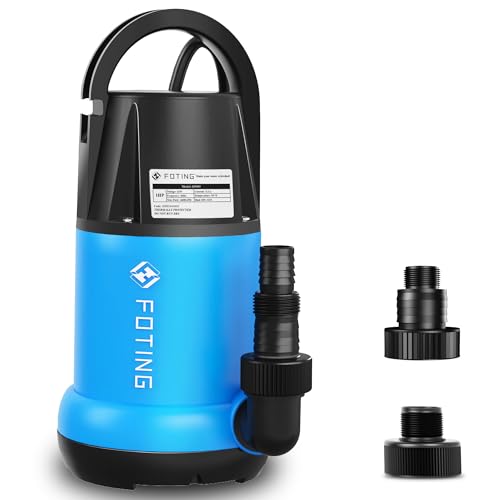
- 4,600 GPH flow and 31-foot lift
- Handles solids up to 1/5 inch
- Manual operation with multiple adapters
Best For: Basements and outdoor drainage involving clean or dirty water
Best Automatic Option
Acquaer 1/3 HP Automatic Submersible Pump

- Automatic sensor starts at 1-1/2 inches and stops below 1/4 inch
- Moves up to 2,160 GPH with bottom suction
- Includes 10-foot cord, adapter, check valve, and 3-year warranty
Best For: Automatic shallow-water cleanup
Best Complete Drainage Kit

- Includes a 25-foot lay-flat hose, clamps, and adapters
- Switches between low-water and high-flow modes
- Removes water down to 1/25 inch from the floor
Best For: Ready-to-use basement drainage
Reliable Mid-Range Utility Pump – Superior Pump 91250
Superior Pump 91250 1800GPH Thermoplastic Submersible Utility Pump with 10-Foot Cord, 1/4 HP
Check Price On AmazonFor homeowners comparing utility pumps for flooded basements, the Superior Pump 91250 offers a practical balance of capacity, portability, and lift height. Its 1/4 HP motor moves up to 1,800 gallons per hour and can lift water up to 25 feet.
Best For: Routine basement flooding, emergency water removal, irrigation, and other residential pumping tasks where moderate flow is sufficient.
Pros:
- Moves up to 1,800 gallons per hour with a 25-foot maximum lift.
- Removable suction screen handles solids up to 1/8 inch.
- Includes a 10-foot cord and 3/4-inch garden hose adapter.
- Compact thermoplastic housing and a 1-year limited warranty.
Cons:
- Lower capacity than the 1 HP and 1.5 HP alternatives in this roundup.
- The included power cord is shorter than the 25-foot cords on some competing models.
The Superior Pump 91250 is a sensible choice when you need dependable general-purpose pumping without the larger size or higher output of a heavy-duty sump pump. Verify that its 1,800 GPH capacity meets the demands of your flooding situation.
High-Flow Basement Drainage – AQUASTRONG 1 HP Sump Pump
Among utility pumps for flooded basements, the AQUASTRONG 1 HP model stands out for high water-removal capacity. It pumps up to 4,500 gallons per hour at a 5-foot lift, reaches a 30-foot maximum lift, and uses a bottom-suction design for low-level drainage.
Best For: Fast removal from flooded basements, window wells, hot tubs, ponds, and other areas where high flow and low suction are useful.
Pros:
- 1 HP motor delivers up to 4,500 GPH at a 5-foot lift.
- Can lift water up to 30 feet and remove water down to 1/5 inch.
- Handles solids up to 1/5 inch and includes several adapter options.
- Built-in thermal overload protection helps protect the motor from overheating.
Cons:
- Its 10-foot power cord offers less reach than the 25-foot cord on the hose-kit model.
- Higher output may be more than needed for small, occasional water-removal jobs.
The AQUASTRONG is a strong fit when speed matters. Its high flow rate, 30-foot lift, and low suction capability make it particularly useful for substantial flooding, provided you have a suitable discharge setup.
Extended-Reach Hose Kit – 1.5 HP Submersible Pump with 25-Foot Hose
This 1.5 HP submersible pump is a convenient option for utility pumps for flooded basements when the water outlet is far from the pump location. It includes both a 25-foot power cord and a 25-foot discharge hose, while providing up to 4,000 gallons per hour at a 5-foot lift.
Best For: Basement flooding and other water-removal jobs that require extended electrical and discharge reach with a ready-to-use hose kit.
Pros:
- 1.5 HP motor pumps up to 4,000 GPH at a 5-foot lift.
- Offers a 31-foot maximum lift and suction down to 1/5 inch.
- Includes a 25-foot cord and 25-foot discharge hose.
- Built-in thermal overload protection and corrosion-resistant thermoplastic construction.
Cons:
- At 10.8 pounds, it is heavier than the other listed pumps.
- Its 66.66 GPM flow is slightly lower than the AQUASTRONG’s stated 75 GPM.
- Users must angle the pump during initial submersion to release trapped air bubbles.
The main advantage here is convenience: the long cord and included hose reduce the need to buy extra accessories. It is a well-equipped choice for larger residential water-removal tasks and locations with limited outlet or drain proximity.
Low-Level Water Removal – WAYNE WaterBUG Submersible Pump
The WAYNE WaterBUG is designed for homeowners who want to remove standing water close to the surface. For utility pumps for flooded basements, its Multi-Flo design provides top or side discharge, and it can pump up to 1,350 gallons per hour while removing water down to 1/16 inch.
Best For: Shallow standing water in flooded basements, window wells, buckets, yards, boats, and other tight or flat areas.
Pros:
- Removes water down to 1/16 inch, minimizing residual standing water.
- Top discharge suits tight spaces, while side discharge suits flat surfaces.
- Multi-ring suction strainer helps filter debris and prevent blockages.
- Non-corrodible outlets fit standard garden hoses, and the pump is assembled in the USA.
Cons:
- Its 1,350 GPH capacity is lower than the other pumps in this selection.
- It must be unplugged once the water is gone to prevent dry running.
The WaterBUG prioritizes versatility and shallow-water cleanup rather than maximum pumping speed. Its dual discharge options make it especially practical for basements, window wells, and other spaces where positioning the outlet is difficult.
Compact Basement Drainer – Lanchez 1/2 HP Utility Pump
For utility pumps for flooded basements, the Lanchez 1/2 HP model is a compact option designed for portable water removal. It delivers up to 2,450 GPH, lifts water up to 31 feet, and includes a debris-resistant metal filter and multi-use hose adapter.
Best For: Homeowners who want a portable pump for basements, hot tubs, ponds, pools, and other moderate water-removal jobs.
Pros:
- Moves up to 2,450 gallons per hour with a 31-foot maximum lift.
- Oil-filled motor technology is designed to help manage overload and extend operating life.
- Compact thermoplastic housing, metal filter, and included hose adapter support convenient setup and storage.
Cons:
- The 1/2 HP motor has less flow capacity than the higher-powered pumps in this roundup.
- The supplied power cord is 10 feet long.
The Lanchez is a practical choice when portability and compact storage matter. Its low-water removal capability and 31-foot lift make it useful for routine basement and household drainage, though larger floods may call for a higher-flow model.
High-Flow Flood Response – SEESII 1 HP Submersible Pump
Among utility pumps for flooded basements, the SEESII stands out for its high stated flow rate and long-distance drainage capability. Its 1 HP motor can move up to 4,755 GPH, lift water 36 feet, and comes with a 23-foot hose and adapters for faster setup.
Best For: Rapidly removing clean or lightly dirty water from flooded basements, pools, hot tubs, ponds, yards, and other areas where extra lift is useful.
Pros:
- High-flow 1 HP motor delivers up to 4,755 GPH.
- Offers a 36-foot maximum lift for elevated or longer-distance discharge.
- Includes a 23-foot hose, adapters, a 25-foot power cord, and an anti-clogging filter.
Cons:
- Designed for clean and lightly dirty water rather than heavily debris-filled water.
- The larger 1 HP setup may be more pump than needed for small, occasional drainage jobs.
The SEESII is the strongest match here for users prioritizing fast removal and discharge flexibility. The included hose kit and long cord reduce setup friction, while the filter helps limit clogging during lightly dirty-water applications.
Dirty-Water Workhorse – FOTING 1 HP Sump Pump
For utility pumps for flooded basements that may encounter small debris, the FOTING 1 HP pump offers a practical balance of flow and filtration. It is rated for up to 4,600 GPH, lifts water 31 feet, and can remove water down to about 1/5 inch from the surface.
Best For: Manual draining of flooded basements, window wells, ponds, pools, hot tubs, and other areas containing clean or dirty water with solids up to 1/5 inch.
Pros:
- 1 HP motor provides up to 4,600 GPH flow and a 31-foot lift.
- Handles clean or dirty water and small solids up to 1/5 inch.
- Includes multiple hose adapters, a removable bottom for cleaning, and a 10-foot power cord.
Cons:
- Manual mode only; it does not support automatic start/stop.
- The 10-foot cord may limit placement in larger or awkward spaces.
The FOTING is a versatile pick when water may contain modest debris and easy maintenance is important. Its removable bottom and multiple adapters are useful, but users must monitor operation manually because automatic cycling is not supported.
Best Automatic Option – Acquaer 1/3 HP Automatic Submersible Pump
For homeowners comparing utility pumps for flooded basements, the Acquaer 1/3 HP model is a convenient choice when automatic operation and low-level water removal matter. Its sensor starts the pump at 1-1/2 inches and shuts it off below 1/4 inch, while the bottom-suction design moves up to 2,160 GPH.
Best For: Automatic removal of shallow water from flooded basements, pools, hot tubs, and pool covers.
Pros:
- Automatic sensor operation reduces the need for constant monitoring.
- Removes water down to 1/4 inch and filters debris through its strainer base.
- Includes a 10-foot power cord, garden-hose adapter, check valve, and three-year warranty.
Cons:
- Its 2,160 GPH flow rate is lower than the higher-powered pumps in this roundup.
- The automatic start point is 1-1/2 inches, so it will not activate for very shallow water.
This pump is a practical fit for routine cleanup and unattended draining where water levels may fluctuate. Choose a higher-capacity model if you need faster removal or greater lift.
Best High-Flow Choice – 1.5 HP Stainless Steel 6500 GPH Pump
Among utility pumps for flooded basements, this 1.5 HP stainless steel model stands out for high-volume drainage and substantial lift. It can move up to 6,500 GPH, lift water 26 feet, and includes three hose adapters for matching the outlet to the desired flow rate.
Best For: Large or deep flooding in basements, sump pits, cellars, pools, ponds, and reservoirs.
Pros:
- High 6,500 GPH flow rate and 26-foot maximum lift support demanding drainage jobs.
- 304 stainless steel housing, corrosion-resistant plastic, and thermal overload protection support durability.
- Adjustable float switch offers automatic or locked manual operation.
Cons:
- Automatic mode starts at 17.7 inches and stops sucking at 5.5 inches, leaving more residual water than low-level models.
- It is not intended for corrosive or flammable liquids.
- The pump does not include a discharge hose.
With its powerful motor and stainless steel construction, this is the strongest choice here for quickly moving a large volume of water. Its higher automatic operating levels make it less suited to final shallow-water pickup.
Best Complete Drainage Kit – 1 HP 5000 GPH Pump with Hose
For shoppers seeking utility pumps for flooded basements, this 1 HP kit combines a 5,000 GPH submersible pump with a 25-foot, 1-1/2-inch lay-flat discharge hose. Its adjustable base provides a low-water mode for final pickup or a high-flow mode for deeper water, making it a flexible cleanup setup.
Best For: Homeowners who want a ready-to-use pump and hose package for basement, cellar, rain-barrel, or flat-roof drainage.
Pros:
- Includes a 25-foot lay-flat hose, clamps, and multiple adapters.
- Adjustable base switches between low-water and high-flow modes without tools.
- Can draw water down to 1/25 inch and pass clean-water grains up to 1/5 inch.
Cons:
- The plastic housing may be less robust than the stainless steel construction of the high-flow model.
- It is intended for clean water and is not suitable for corrosive or flammable liquids.
- The 10-foot power cord is shorter than the 16-foot cord on the 1.5 HP model.
This kit offers a strong balance of flow, low-water capability, and included accessories. It is especially convenient when you need to start draining quickly without purchasing a hose separately.
How We Picked the Best Utility Pumps for Flooded Basements
We focused on practical specifications for emergency water removal: advertised gallons per hour (GPH), motor horsepower, discharge-hose length and diameter, power-cord reach, portability, and whether the pump is designed for clean, dirty, or mixed water. We also considered features that affect real-world cleanup, such as automatic activation, low-water operation, included accessories, and the ability to handle a basement, sump pit, pool, hot tub, or other large water source.
Because manufacturer flow ratings are usually measured under ideal conditions, treat them as a comparison point rather than a guaranteed result. Actual performance depends on lift height, hose length, bends, outlet power, debris, and the pump’s placement.
Quick Comparison
- Compact cleanup: Lower-capacity pumps are easier to carry and store for small spills, shallow water, and occasional transfer jobs.
- General basement use: Midrange models balance useful flow, manageable size, and lower power demands.
- Major flooding: High-flow 1 HP and 1.5 HP pumps can move more water quickly, provided the electrical circuit and discharge route are suitable.
- Long-distance drainage: Models with 23- or 25-foot hoses reduce setup time when the nearest safe discharge point is far away.
Key Buying Factors for Utility Pumps for Flooded Basements
Flow Rate and Lift
Higher GPH can shorten cleanup, but maximum ratings typically decline as water must travel uphill or through a long hose. Check the pump’s maximum head height and choose a discharge route with as little elevation and restriction as possible.
Water Type and Debris
Clean-water pumps suit seepage, appliance leaks, and shallow standing water. For floodwater containing grit or small debris, choose a model specifically rated for dirty water and keep the intake clear. Never rely on a pump to handle large solids unless the manufacturer says it can.
Automatic Operation and Shutoff
An automatic pump can be useful in a sump pit or recurring seepage situation because it can start when water rises. For one-time emergency pumping, a manual model may offer a simpler, more portable setup. Confirm whether automatic operation requires a particular water depth.
Hose, Cord, and Electrical Safety
A longer hose improves placement flexibility, while a longer cord can reduce the need for extension cords. Keep electrical connections dry, use a grounded outlet protected by a GFCI, and follow the manufacturer’s instructions. Do not operate a portable pump in conditions that create an electric-shock hazard.
Who Should Buy Which Utility Pumps for Flooded Basements?
Choose a compact utility pump if you need an easy-to-store backup for minor basement leaks, tanks, tubs, or shallow water. Choose a midrange 1/3- to 1/2-horsepower model for routine household water removal and a balance of portability and output.
Choose a 1 HP high-flow pump when a flooded basement, pool, or large pit must be drained quickly and you have a suitable discharge path. Choose the highest-capacity option only when your drainage setup, outlet, and hose can support it; extra power does not compensate for a blocked hose or excessive lift.
Before an emergency, test the pump briefly, inspect the cord and fittings, confirm where water will discharge, and store the unit where it is easy to reach. If flooding involves sewage, chemicals, structural damage, or rising water near electrical equipment, leave the area and contact qualified professionals.