Choosing among today’s water purifiers depends on more than filtration claims. Capacity, installation, filter costs, contaminant reduction, and countertop or refrigerator space can make a major difference in daily use.
This roundup compares pitcher, faucet, dispenser, gravity, and reverse-osmosis options so you can match the filtration approach to your water quality, household size, and budget.
Best 10 Water Purifiers Picks for 2026
Best Countertop RO Water Purifier
DREO 7-Stage Countertop RO Filter

- Install-free countertop reverse osmosis design
- Built-in TDS and filter-life monitoring
- Includes two autofill pitchers
Best For: Renters and households wanting advanced filtration without plumbing
Best Simple Pitcher Water Purifier
Brita Large 10-Cup Filter Pitcher

- 10-cup refrigerator-friendly capacity
- Reduces chlorine taste and select metals
- No installation or electricity required
Best For: Everyday household drinking water and easy tap-water improvement
Best High-Capacity Water Purifier
Waterdrop G3P600 Tankless RO System

- 600 GPD tankless reverse-osmosis system
- Smart faucet shows TDS and filter life
- 2:1 pure-to-drain ratio
Best For: Busy kitchens needing high-volume under-sink filtration
Best TDS-Tracking Water Purifier
ZeroWater 10-Cup 5-Stage Pitcher
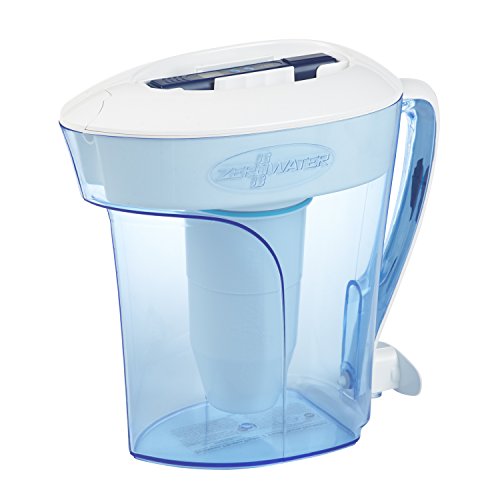
- Five-stage ion-exchange filtration
- Includes a TDS meter for monitoring
- IAPMO-certified reduction of listed contaminants
Best For: Users wanting measurable dissolved-solids tracking in a pitcher
Deep-Cleaning Gravity Pick
Purewell 3-Stage Ultra-Filtration System

- 0.01-micron UF membrane with three-stage filtration
- 2.25-gallon non-electric countertop design
- Includes two replaceable filters and a stand
Best For: Households wanting high-capacity gravity filtration without electricity
Family-Size Refrigerator Pick
Waterdrop 35-Cup Filter Dispenser

- 35-cup capacity with a slim refrigerator-friendly design
- NSF 42 and 372-certified carbon fiber filter
- Filters water in about five minutes
Best For: Families wanting convenient chilled water storage and quick filtration
Fast Faucet-Mount Pick
PUR Plus Lead-Reducing Faucet Filter

- Tool-free installation on most standard faucets
- WQA-certified lead reduction and NSF-certified filtration
- Up to 100 gallons or three months per filter
Best For: Renters and sink users needing direct, easy-install filtration
Best Long-Life Pitcher

- 10-cup non-electric pitcher with activated-carbon filtration
- Up to 200-gallon or three-month filter life
- Does not reduce TDS
Best For: Apartments, dorms, offices, and everyday refrigerator storage
Best Countertop RO System
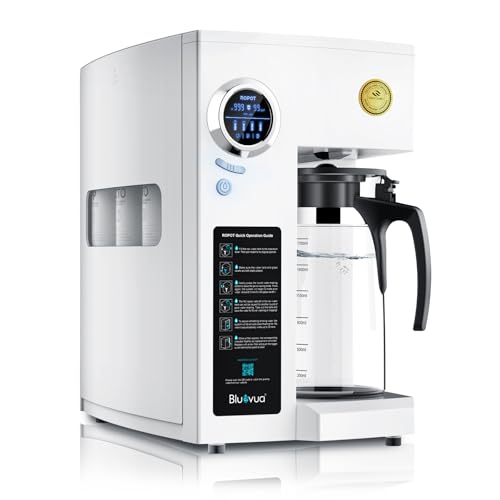
- Six-stage RO filtration with UV and remineralization
- No plumbing required; includes a glass carafe
- Reduces TDS but requires electricity
Best For: Countertop TDS reduction without permanent installation
Best Compact Pitcher
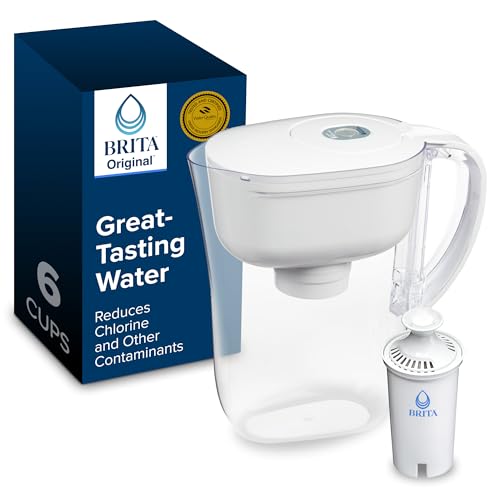
- Six-cup BPA-free design for mini-fridges
- Certified filtration for chlorine taste and several metals
- SmartLight reminder supports timely filter changes
Best For: Dorm rooms, mini-fridges, and small households
Best Countertop RO Water Purifier – DREO 7-Stage Countertop RO Filter
If you want comprehensive filtration without a plumbing project, this DREO countertop water purifier uses reverse osmosis and installs without permanent setup. Its 5-liter capacity, built-in TDS meter, and two autofill pitchers make it practical for everyday drinking water.
Best For: Renters, apartments, and households seeking high-level countertop filtration with minimal installation.
Pros:
- 7-in-1 RO filtration is designed to reduce 99.9% of possible contaminants, including PFOA, PFOS, chlorine, and fluoride.
- Countertop, install-free design requires no under-sink plumbing.
- Built-in TDS monitoring, filter-life indication, and self-cleaning operation add convenience.
- Includes two autofill pitchers and uses a 3:1 pure-to-drain ratio.
Cons:
- Its 5-liter capacity may require refilling for larger households.
- At 15.7 inches tall, it needs dedicated counter space.
The DREO is a strong choice when reverse-osmosis filtration matters but permanent installation does not. Its monitoring features and included pitchers make it more convenient than a basic countertop dispenser.
Best Simple Pitcher Water Purifier – Brita Large 10-Cup Filter Pitcher
This Brita pitcher is a straightforward water purifier for improving everyday tap-water taste without electricity or installation. Its 10-cup capacity, refrigerator-friendly shape, and replaceable carbon filters suit routine household use.
Best For: Families and individuals who want portable, low-maintenance filtration for drinking water.
Pros:
- 10-cup capacity can fill three 24-ounce reusable water bottles.
- Granular activated carbon filtration reduces chlorine taste and odor, mercury, copper, zinc, and cadmium.
- Space-efficient design includes an easy-fill locking lid and works on refrigerator shelves.
- Compatible with Brita Standard and Longlast replacement filters.
Cons:
- Standard filters need replacement about every two months, depending on use.
- It is designed for taste and select contaminant reduction rather than reverse-osmosis-level filtration.
Choose this Brita when convenience and familiar pitcher-style filtration are the priority. It is an affordable, non-powered option for keeping chilled filtered water ready in the refrigerator.
Best High-Capacity Water Purifier – Waterdrop G3P600 Tankless RO System
The Waterdrop G3P600 is an under-sink water purifier for households that need fast, high-volume reverse-osmosis filtration. Its tankless design saves cabinet space, while the smart faucet displays TDS and filter-life information.
Best For: Larger households that want continuous filtered water from a dedicated under-sink system.
Pros:
- 600-gallon-per-day capacity and a stated 0.42 gpm flow rate support frequent use.
- Eight-stage filtration is tested to reduce TDS, PFAS, fluoride, arsenic, chlorine, and other listed substances.
- NSF/ANSI 58, NSF/ANSI 372, and NSF 42 certifications cover specified filtration and material claims.
- Tankless design saves 70% of under-sink space, with a 2:1 pure-to-drain ratio.
Cons:
- Requires under-sink electricity and plumbing installation.
- Its 31-pound system and 18.12-inch length require careful cabinet measurements.
This Waterdrop system is better suited to homeowners or dedicated installations than renters. Its high output, compact tankless format, and informative smart faucet make it a compelling upgrade for a busy kitchen.
Best TDS-Tracking Water Purifier – ZeroWater 10-Cup 5-Stage Pitcher
This ZeroWater pitcher stands out among water purifiers for its included TDS meter and five-stage ion-exchange filter. The 10-cup ready-pour design is useful for monitoring dissolved solids and producing highly filtered water without electricity.
Best For: Users who want measurable TDS readings and strong pitcher-based filtration for drinking water.
Pros:
- Five-stage ion-exchange filtration is designed to remove virtually all dissolved solids.
- Included TDS meter helps track water quality and determine when to replace the filter.
- IAPMO-certified filter reduces PFOA/PFOS, lead, chromium, and mercury.
- BPA-free pitcher is compatible with ZeroWater and Culligan ZeroWater replacement filters.
Cons:
- As a non-powered pitcher, it relies on manual filling and filtration.
- The 10-cup format may be less convenient for very large households.
ZeroWater is a practical pick if you prefer a pitcher but want more feedback than a standard filter indicator provides. The TDS meter makes filter replacement decisions more data-driven, while the compact design remains easy to use.
Deep-Cleaning Gravity Pick – Purewell 3-Stage Ultra-Filtration System
For shoppers comparing water purifiers without electrical requirements, the Purewell 3-Stage system uses gravity filtration and a 0.01-micron hollow fiber UF membrane. Its stainless-steel countertop design suits households seeking high-capacity filtration for indoor or outdoor use.
Best For: Households wanting a non-electric countertop water purifier with a large 2.25-gallon capacity and replaceable filters.
Pros:
- Three-stage filtration combines a hollow fiber UF membrane, silver ion membrane, and activated carbon block.
- NSF/ANSI 42 and 372 certifications support chlorine reduction and material-safety claims.
- Two filters are included, with each rated for up to 3,000 gallons under stated conditions.
- Includes a 304 stainless-steel housing, spigot, and non-slip stand.
Cons:
- It does not lower TDS values.
- The system requires filter replacement about every six months for optimum performance.
- Users must avoid filling the upper chamber when the lower chamber is full to prevent leaks.
Purewell is a strong option when filtration depth and capacity matter more than compactness. Its gravity-fed operation avoids electricity, though the two-chamber design requires careful filling and countertop space.
Family-Size Refrigerator Pick – Waterdrop 35-Cup Filter Dispenser
The Waterdrop WFD-40L is one of the more convenient water purifiers for refrigerator storage, combining an 8.2-liter capacity with a slim footprint. Its gravity-fed carbon filtration and filter-life indicator make it practical for everyday household drinking water.
Best For: Families seeking a large, refrigerator-friendly water purifier with quick filling and a filter replacement reminder.
Pros:
- 35-cup capacity provides substantial filtered water storage while the slim body measures about 5.5 inches wide.
- NSF 42 and 372-certified replacement filters reduce chlorine, with third-party testing reporting up to 97.4% residual chlorine reduction.
- Carbon fiber filtration is designed to complete filtration within five minutes.
- Food-grade, lead-free, and BPA-free materials are used.
Cons:
- The system does not lower TDS values.
- The two-month or 200-gallon filter life is shorter than some larger gravity systems.
- Its dimensions should be checked against the refrigerator before purchase.
This Waterdrop dispenser prioritizes convenience and accessible storage over advanced multi-stage purification. It is a sensible choice for chilled, filtered water when refrigerator fit and fast flow are key considerations.
Fast Faucet-Mount Pick – PUR Plus Lead-Reducing Faucet Filter
For shoppers who want water purifiers that dispense directly from the sink, the PUR Plus faucet-mount system installs without tools and uses a 3-in-1 filter. It is designed for standard faucets and provides up to 100 gallons or three months of filtration.
Best For: Renters and households wanting an easy-install faucet filter for reducing lead, chlorine, microplastics, and other listed substances.
Pros:
- Tool-free installation takes minutes on most standard faucets.
- WQA-certified lead reduction and NSF certification for reducing microplastics, chlorine, and 70 chemical and physical substances.
- Filter lasts up to three months or 100 gallons.
- A filter-change light indicates when replacement is needed.
Cons:
- It is not designed for pull-out or handheld faucet models.
- The plastic faucet-mount format offers only 100 gallons of stated capacity.
- The supplied details identify ion exchange as the purification method, rather than a multi-stage countertop setup.
PUR Plus is a practical choice when immediate, point-of-use access matters. Confirm faucet compatibility first, especially if your sink uses a pull-out or handheld design.
Best Long-Life Pitcher – Waterdrop PT-07B
The Waterdrop PT-07B is a practical choice for everyday water purifiers use when you want a countertop pitcher with a generous 10-cup capacity. Its activated-carbon filtration is designed to improve taste and reduce several listed contaminants, while the compact shape suits many refrigerators.
Best For: Apartments, dorms, offices, and households wanting a non-electric pitcher with a longer filter cycle.
Pros:
- NSF/ANSI 42 and 372 certified filtration performance from a third-party-tested system.
- Filter lasts up to 200 gallons or three months, with an LED replacement indicator.
- Hands-free lid and compact 10 x 5 x 10.1-inch design support convenient refrigerator storage.
Cons:
- It does not reduce TDS.
- Replacement filters must be matched to the PT-07 model.
Choose this Waterdrop pitcher if low-maintenance daily filtration and improved-tasting water matter more than TDS reduction. Confirm refrigerator clearance and purchase compatible PF-01A filters when needed.
Best Countertop RO System – Bluevua RO100ROPOT
The Bluevua RO100ROPOT is a countertop water purifiers option for shoppers who want reverse-osmosis filtration without plumbing. Its six-stage system combines a 0.0001μm RO membrane, UV light, and remineralization in a portable electric unit with a glass carafe.
Best For: Households seeking TDS reduction and broad filtration in a no-installation countertop system.
Pros:
- Six-stage filtration is designed to reduce TDS, PFOA/PFOS, chlorine, fluoride, arsenic, lead, and more.
- Includes UV treatment, remineralization, and a built-in TDS meter.
- Requires no plumbing and uses a borosilicate glass carafe, with a stated 2:1 pure-to-drain ratio.
Cons:
- Requires a power source and occupies more counter space than a pitcher.
- Its 1,700 mL capacity and 0.26-liter-per-minute flow rate may require patience for larger quantities.
This system is the more advanced pick for buyers prioritizing reverse osmosis and TDS reduction. Its larger footprint, electric operation, and filter monitoring make it better suited to a dedicated countertop setup than casual pitcher use.
Best Compact Pitcher – Brita Metro 6-Cup
The Brita Metro is a compact entry in water purifiers for small spaces, offering a six-cup BPA-free pitcher that fits most mini-fridges. Its included Standard filter is WQA NSF/ANSI certified and targets chlorine taste and odor, copper, mercury, cadmium, and more.
Best For: Dorm rooms, mini-fridges, and individuals who want a space-efficient pitcher with a clear replacement reminder.
Pros:
- Compact 9.1 x 4.6 x 9.7-inch design fits most mini-fridges.
- SmartLight indicator tracks when the Standard filter needs replacement.
- Standard filters last about 40 gallons or two months and are compatible with most Brita pitchers and dispensers.
Cons:
- Its six-cup capacity is smaller than larger household pitchers.
- The Standard filter requires replacement about every two months; Elite-filter timing differs.
The Metro is a straightforward choice when storage space and simple filtration matter most. It is especially convenient for smaller living arrangements, while its filter compatibility gives you flexibility for future replacements.
How We Picked These Water Purifiers
We selected models across several common categories rather than treating one design as best for every home. The lineup includes compact pitchers, faucet-mounted filters, large dispensers, gravity systems, and reverse-osmosis units. We considered stated filtration capabilities, capacity, usability, installation requirements, monitoring features, replacement-filter needs, and the space each system requires.
Certification language matters, but it should be read alongside the exact contaminant claims for each filter. If you have a known water-quality problem, verify that the product is certified or specifically rated for that contaminant instead of relying on broad terms such as “purified.”
Quick Comparison
- Best for simple, low-cost filtering: Pitchers from Brita, Waterdrop, and ZeroWater are easy to set up and move.
- Best for stronger contaminant reduction: Reverse-osmosis systems generally provide more extensive filtration, but they cost more and may produce wastewater.
- Best for high-volume households: Dispensers and larger countertop systems reduce the need for frequent refilling.
- Best for renters: Pitchers and faucet-mounted filters avoid permanent plumbing changes.
- Best for off-grid or power-free use: Gravity-fed systems can operate without electricity or a water connection.
Key Buying Factors for Water Purifiers
Filtration Method and Contaminants
Activated carbon can improve taste and reduce certain chemicals, chlorine, and odors. Reverse osmosis can address a broader range of dissolved contaminants, while ultrafiltration and specialty media vary by model. Check the performance sheet for lead, PFAS, fluoride, arsenic, cysts, minerals, and other concerns relevant to your water.
Capacity and Daily Convenience
A small pitcher suits one person or a compact refrigerator, but families may prefer a 10-cup pitcher, dispenser, or high-output RO system. Look at filtered-water capacity—not just the advertised reservoir size—and consider refill time, pitcher clearance, autofill functions, and whether the unit fits beneath cabinets.
Operating Cost and Maintenance
Compare replacement-filter prices and recommended intervals before buying. RO systems may use multiple cartridges and require periodic membrane replacement, while pitchers and faucet filters are simpler but need regular cartridge changes. A filter-life indicator can help prevent overdue replacements.
Installation and Water Waste
Faucet filters require a compatible faucet, and plumbed RO systems need room, connections, and often a drain. Countertop RO units are easier to install but still need refilling and electrical power. If water conservation is important, review the system’s pure-to-drain ratio.
Who Should Buy Which Water Purifiers?
Choose a pitcher if you want the lowest-friction option for an apartment, office, dorm, or small household. Choose a faucet-mounted model for immediate access to filtered water while cooking and drinking. Choose a dispenser when frequent refills are inconvenient or several people share the system.
Choose reverse osmosis when you want more comprehensive reduction of dissolved contaminants and can accept higher cost, maintenance, and possible wastewater. Choose a gravity system for a power-free setup or emergency preparedness. Whichever option you select, replace filters on schedule and test your water when you need contaminant-specific guidance.