Hard water can leave scale on fixtures, make soap less effective, and shorten the life of water-using appliances. The right softener can address those problems without taking over a small utility room or exceeding your household’s needs.
We selected 10 options ranging from portable compact softeners to smart, metered whole-house systems. Use the guide below to compare capacity, installation requirements, features, and ongoing maintenance before choosing.
Best 10 Water Softeners for Small Homes Picks for 2026
Best RV Pick
OTG4-VM-DBLSOFT Portable Softener

- 16,000-grain capacity
- Compact 10 x 10 x 24-inch design
- Drinking-water-safe brass fittings
Best For: RV owners needing portable water softening
Best DIY Option

- Easy DIY installation
- Quiet, high-efficiency operation
- Built-in iron and sediment filters
Best For: Small homes needing convenient DIY installation
Best for 1–2 Bathrooms

- Sized for 1–2 bathrooms
- 32,000-grain capacity
- Automatic digital metered controls
Best For: Small homes needing whole-house softening
Best High-Capacity System

- 40,000-grain whole-house capacity
- Certified to NSF/ANSI 44
- Metered salt- and water-saving operation
Best For: Households needing higher-capacity whole-house softening
Best Compact Metered System
Aquasure Harmony 30,000-Grain Softener

- Sized for 1–2 bathrooms
- Programmable metered control valve
- Multi-purpose pre-filter included
Best For: Small homes seeking metered whole-house softening
Best All-in-One Upgrade
EcoPure EPH130 Softener and Filter

- Softening and filtration in one cabinet
- AutoSense technology adapts to usage
- Designed for up to five people
Best For: Homes wanting combined treatment and better-tasting water
Best for Condos and Townhomes
Aquasure Harmony Lite 34,000-Grain

- Sized for 1–3 bathrooms
- 34,000-grain softening capacity
- Includes sediment pre-filter and digital controls
Best For: Compact homes, condos, and townhomes
Smart Whole-Home Pick
GE Smart 35,000-Grain Softener
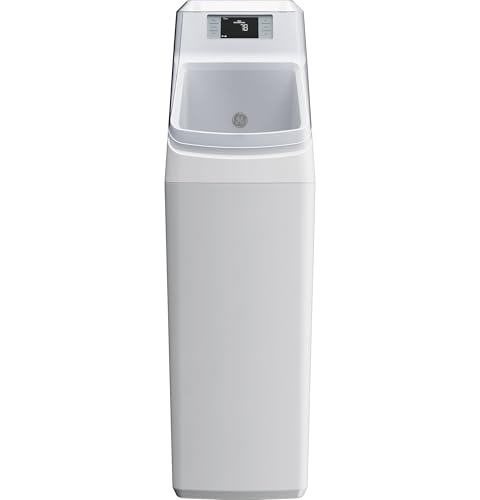
- WiFi water-flow and low-salt alerts
- 35,000-grain capacity for up to six people
- Adjustable bypass blending control
Best For: Households wanting app-based monitoring and flexible whole-home softening
Compact Filtration Alternative
3-Stage Whole-Home Filter System

- Three-stage sediment and contaminant filtration
- Includes nine filters for up to two years
- Compact design with bypass and shut-off valves
Best For: Small homes prioritizing broad filtration and retained natural minerals
Small-Household Value Pick
Kenmore 350 32,000-Grain System

- Sized for one to four people
- Adaptive regeneration helps manage salt use
- Compact design with long tank warranty
Best For: Small households wanting programmable, traditional ion-exchange softening
Best RV Pick – OTG4-VM-DBLSOFT Portable Softener
For shoppers comparing water softeners for small homes, the On The Go OTG4-VM-DBLSOFT is a compact portable option designed specifically for RV use. Its 16,000-grain capacity and drinking-water-safe brass fittings make it practical for mobile setups, but its stated limitations are important: it is not intended for apartments, condos, house showers, or under-sink installation.
Best For: RV owners who need a portable water softener rather than a residential whole-house unit.
Pros:
- Compact 10 x 10 x 24-inch design.
- 16,000-grain softening capacity.
- Includes drinking-water-safe brass fittings.
- Assembled by U.S. workers in Indiana.
Cons:
- Not made for apartment, condo, or house showers.
- Will not fit under a kitchen sink.
- Its RV-focused design limits residential versatility.
This is a sensible choice when portability is the priority, but small-home shoppers should look elsewhere if they need a permanent whole-house or under-sink system.
Best DIY Option – WaterBoss 74011 Softener
The WaterBoss 74011 is a compact-minded choice for shoppers evaluating water softeners for small homes and prioritizing do-it-yourself installation. It combines high-efficiency operation with built-in iron and sediment filters, while its corded-electric design requires an available power source.
Best For: Small-home owners seeking a quiet, efficient softener with DIY installation and added filtration.
Pros:
- Designed for easy do-it-yourself installation.
- Quiet and highly efficient operation.
- Built-in iron and sediment filters.
- Includes a warranty.
Cons:
- Requires corded electrical power.
- The supplied notes do not specify a grain-capacity rating.
- Its plastic construction may not appeal to shoppers seeking a more premium tank material.
The WaterBoss stands out for convenience and integrated filtration, making it worth considering when straightforward installation matters more than a clearly stated high-capacity rating.
Best for 1–2 Bathrooms – Aquasure Harmony 32,000
The Aquasure Harmony Series is sized for homes with one or two bathrooms, making it a strong whole-house candidate among water softeners for small homes. Its 32,000-grain capacity, automatic metered control head, and programmable digital display are designed to manage regeneration according to water use and incoming water quality.
Best For: Small homes with one or two bathrooms that need whole-house softening and programmable controls.
Pros:
- Designed specifically for 1–2 bathrooms.
- 32,000-grain hardness-treatment capacity.
- Programmable automatic digital metered control head.
- Includes a 5-year extended manufacturer warranty and lifetime free U.S.-based tech support when activated as specified.
Cons:
- At 52 inches tall and 67 pounds, it may require significant installation space.
- Requires corded-electric power.
- Whole-house installation is more involved than a portable unit.
For a smaller household that wants automated whole-house treatment, the Harmony offers a useful balance of capacity, controls, and stated support coverage, provided there is room for its tall tank and brine system.
Best High-Capacity System – Aquasana SimplySoft 40K
The Aquasana SimplySoft 40,000-grain system is a larger whole-house option for shoppers comparing water softeners for small homes that may have up to five people and four bathrooms. It uses ion exchange, metered regeneration, and an LCD control system, with a stated maximum flow rate of 15.5 gallons per minute.
Best For: Small-to-medium households wanting certified whole-house softening, higher capacity, and salt-saving operation.
Pros:
- 40,000-grain capacity for homes up to five people and four bathrooms.
- IAPMO certified to NSF/ANSI Standard 44 and CSA B483.1.
- Metered mode is designed to use 50% less salt and 28% less water than standard time-based regeneration.
- 15.5-gpm maximum flow rate and LCD controls.
Cons:
- Large 30 x 16 x 43-inch footprint may be excessive for very compact spaces.
- Installation support and an optional pre-filter are separate considerations.
- It is a corded-electric whole-house system, not a portable unit.
SimplySoft is the most capacity-oriented choice here, particularly for a small home with several occupants or bathrooms. Verify available space and installation requirements before choosing this larger tank-and-cabinet system.
Best Compact Metered System – Aquasure Harmony 30,000-Grain Softener
For households comparing water softeners for small homes, the Aquasure Harmony 30,000-grain system is sized for homes with one or two bathrooms. Its metered control head helps manage regeneration according to water use, while the included sediment, GAC, and zinc pre-filter is designed to reduce chlorine, odors, sediment, and other listed contaminants.
Best For: Small homes with one or two bathrooms that want metered operation and whole-house scale reduction.
Pros:
- Rated for 30,000 grains and 1–2 bathrooms.
- Programmable, backlit digital metered control valve.
- Includes a multi-purpose pre-filter for sediment, chlorine, odors, and other listed contaminants.
- Includes a corrosion-resistant bypass valve, prefilled resin, and advertised five-year extended warranty after activation.
Cons:
- Its stated capacity and sizing are aimed at smaller households rather than larger homes.
- The system is 48 inches tall, so installation space should be measured carefully.
- Requires access to a suitable whole-house installation point and maintenance of the pre-filter and resin system.
This is a practical choice when compact-home sizing and programmable water-use management matter more than maximum household capacity. Confirm your water conditions and available installation space before choosing it.
Best All-in-One Upgrade – EcoPure EPH130 Softener and Filter
The EcoPure EPH130 combines softening and filtration in one cabinet, making it a space-conscious option for shoppers evaluating water softeners for small homes. Its AutoSense AI Technology is designed to adapt to usage patterns and use up to 40% less salt than traditional systems, while the integrated filtration aims to improve water clarity and taste.
Best For: Households that prioritize an all-in-one cabinet design, improved-tasting tap water, and lower stated salt use.
Pros:
- Combines water softening and filtration in a single system.
- AutoSense AI Technology adapts to water-use patterns.
- Advertised to use up to 40% less salt than traditional systems.
- Designed for up to five people and multiple bathrooms.
Cons:
- Its stated sizing is for larger households, so it may offer more capacity than a very small home needs.
- The one-year parts-and-labor warranty is shorter than some competing products’ advertised coverage.
- The cabinet measures 20.63 by 17.25 by 42.75 inches, which may require more floor space than a narrow tank-style system.
Choose the EPH130 if you want softening and filtration without managing separate tanks. Its larger household rating and cabinet footprint make it worth comparing carefully with your available space and actual water demand.
Best for Condos and Townhomes – Aquasure Harmony Lite 34,000-Grain
For compact residences, the Aquasure Harmony Lite is a strong contender among water softeners for small homes because it is specifically positioned for mobile homes, condos, and townhomes with one to three bathrooms. The all-in-one unit combines 34,000-grain softening with a pleated sediment pre-filter and a programmable digital control head.
Best For: Mobile homes, condos, and townhomes with up to three bathrooms that need whole-house softening in a compact format.
Pros:
- Designed for 1–3 bathrooms and compact residential settings.
- 34,000-grain rating provides more stated capacity than the smaller Harmony model.
- Includes sediment, carbon, and zinc pre-filter media for listed contaminants and taste concerns.
- Programmable backlit digital control head supports automatic flushing and monitoring.
Cons:
- Its listed maximum flow rate is 3.13 gpm, which may be limiting during simultaneous water use.
- At 80 pounds and 43 inches tall, it may be difficult to position in tight spaces.
- The pre-filter and softener require ongoing maintenance.
The Harmony Lite balances higher capacity with a design aimed at smaller properties. It is especially appealing where whole-house treatment is needed but space and bathroom count remain modest; verify flow requirements before installation.
Smart Whole-Home Pick – GE Smart 35,000-Grain Softener
For shoppers comparing water softeners for small homes, the GE Smart Water Softener combines a 35,000-grain capacity with app-based monitoring. It is designed for households of up to six people and can help reduce hard-water effects throughout the home.
Best For: Small-to-medium households wanting WiFi alerts, adjustable softness, and whole-home ion-exchange treatment.
Pros:
- Built-in WiFi provides water-flow alerts, low-salt reminders, and Vacation Mode through the SmartHQ app.
- Its bypass blending valve lets you adjust softness or select a complete bypass.
- One-inch connections and included quick connectors accommodate 3/4-inch and 1-1/4-inch plumbing.
Cons:
- The optional remote shutoff valve for leak detection is sold separately.
- At 118 pounds and 46 inches tall, it may require careful planning in a compact utility area.
- It requires corded electric power.
The GE is a strong choice when connected monitoring matters as much as mineral reduction. Its larger capacity and smart alerts may be more capability than a very small household needs, but the adjustable bypass control adds useful flexibility.
Compact Filtration Alternative – 3-Stage Whole-Home Filter System
Although it is a filter system rather than a traditional ion-exchange softener, this compact option deserves consideration among water softeners for small homes. Its three stages target sediment, chlorine, odors, iron, scale, lead, and other impurities while retaining natural minerals.
Best For: Small homes needing compact whole-house filtration with replacement cartridges included.
Pros:
- Includes three complete sets of cartridges, with the manufacturer estimating 1.5–2 years of filtration.
- Built-in bypass and two shut-off valves simplify installation and filter changes.
- The 14-by-13-by-10-inch footprint can fit under sinks or in utility rooms.
Cons:
- It does not lower TDS and is not a conventional salt-based water softener.
- Filters need changing on a stated six-month cycle.
- It is designed for 3/4-inch plumbing, which may limit compatibility.
This system makes sense if your priority is cleaner-tasting water and reduction of several common contaminants rather than maximum hardness removal. Confirm the plumbing size and remember to remove each cartridge’s protective outer wrap before installation.
Small-Household Value Pick – Kenmore 350 32,000-Grain System
The Kenmore 350 is sized specifically for one- to four-person households, making it a practical contender among water softeners for small homes. Its IntelliSoft technology learns household water use and regenerates when needed to help manage salt consumption.
Best For: One- to four-person households seeking compact, programmable ion-exchange softening.
Pros:
- Smart regeneration adapts to household water use and monitors salt levels.
- Helps reduce calcium, magnesium, clear-water iron, scale, stains, and soap scum.
- Compact footprint and a 3/4-inch high-flow valve support installation in tighter spaces.
- Includes a one-year full warranty, three years on electronics, and ten years on the tank.
Cons:
- The 32,000-grain capacity is intended for smaller households rather than larger families.
- Its listed maximum flow rate is 7.2 gallons per minute.
- The unit is freestanding and measures 48 inches high, so vertical clearance matters.
With household-size targeting, adaptive regeneration, and a sediment shield, the Kenmore 350 offers a balanced setup for a small family with hard water. Check the available height and plumbing access before installation.
How We Picked the Best Water Softeners for Small Homes
We focused on systems that can serve smaller households without unnecessary capacity, complexity, or space requirements. The lineup includes portable and whole-house models, with grain capacities from approximately 16,000 to 40,000 grains. We considered regeneration control, installation format, filtration features, smart monitoring, salt and water efficiency, and the needs of households ranging from one to four people.
Because water conditions vary by location, product capacity alone does not determine performance. A proper hardness test and an estimate of daily water use are essential when sizing any system.
Quick Comparison
| Best For | What to Look For |
|---|---|
| Smallest spaces or RV use | Portable design, simple connections, and manageable regeneration |
| One to two people | Lower grain capacity and metered regeneration |
| Three to four people | Approximately 30,000 to 40,000 grains, depending on hardness |
| Better-tasting water | Integrated filtration or a compatible prefilter |
| Low-maintenance monitoring | Digital controls, flow alerts, or Wi-Fi features |
Key Buying Factors for Water Softeners for Small Homes
Capacity and Household Size
Grain capacity indicates how much hardness a softener can remove between regeneration cycles. A smaller household may not need a high-capacity unit, but very hard water can increase demand. Avoid choosing solely by the largest number; oversized systems can use more salt and water than necessary if they are not configured correctly.
Metered Versus Scheduled Regeneration
Metered systems regenerate according to actual water use, which is generally more efficient for homes with changing occupancy. Time-based systems may be simpler, but they can regenerate when demand is low. Look for adjustable settings so the system can match your water hardness and household consumption.
Installation and Available Space
Confirm the unit’s dimensions, inlet and outlet sizes, drain requirements, power needs, and clearance for adding salt. Portable models are useful where permanent plumbing is difficult, while whole-house systems typically require a bypass valve and a suitable drain connection.
Filtration and Water Quality
A softener reduces hardness minerals; it does not automatically remove every contaminant. If chlorine, sediment, iron, lead, or taste is a concern, consider a model with integrated filtration or install appropriate prefiltration based on a water test.
Operating Costs
Compare salt use, regeneration water, replacement filters, electricity, and installation. A more feature-rich system may cost more initially but provide useful monitoring or reduce waste over time.
Who Should Buy Which Water Softeners for Small Homes?
- Choose a portable compact model if you rent, travel, have limited installation options, or need a softener for a very small water supply.
- Choose a 22,000- to 30,000-grain system for many one- to three-person homes, provided its capacity matches your water hardness.
- Choose a 32,000- to 40,000-grain system for a four-person household, especially with hard water or multiple bathrooms.
- Choose a filtered or combination system if you also want help with sediment, chlorine, taste, or selected contaminants.
- Choose a smart model if water-use alerts, remote monitoring, and leak awareness are worth the added cost.
Before buying, test your water, verify the installation space, and check local plumbing requirements. Proper sizing and setup usually matter more than selecting the highest-capacity model.