Hard water can leave scale on fixtures, make soap less effective, and shorten the service life of water-using appliances. The right softener can address those problems while matching your household size, plumbing setup, and maintenance preferences.
We compared 10 water softeners across capacity, control systems, installation flexibility, filtration features, and intended use to help you choose a practical fit for your home, RV, boat, or mobile setup.
Best 10 Water Softeners Picks for 2026
Best Overall Whole-Home Pick
Aquasure Harmony 48,000-Grain Softener

- 48,000-grain capacity for 3–4 bathroom homes
- Programmable digital metered control head
- Triple-purpose sediment, carbon, and zinc pre-filter
Best For: Homes seeking automatic softening with added pre-filtration
Best Chlorine-Resistant Resin

- 10% crosslink resin for chlorinated municipal water
- Fleck 5600SXT control valve
- Includes bypass and drain fittings
Best For: Residential systems needing enhanced chlorine resistance
Best Pre-Filtered Upgrade
Aquasure Harmony 50,000-Grain System
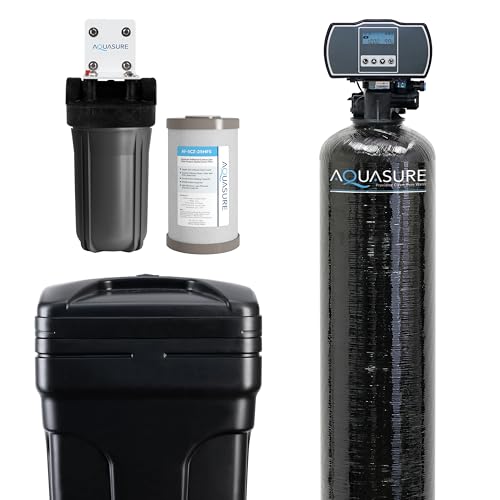
- 50,000-grain capacity for 3–4 bathrooms
- Triple-purpose sediment, GAC, and zinc pre-filter
- Automatic programmable digital metered valve
Best For: Homes wanting added filtration alongside whole-house softening
Best Portable Option
16,000-Grain RV Water Softener

- Compact portable design for RVs and boats
- Manual table-salt regeneration
- 3/4-inch GHT fittings and NSF-certified resin
Best For: Traveling RV, marine, spa, and mobile washing applications
Best All-in-One Water Softener

- Combines softening and filtration
- AutoSense AI helps reduce salt use
- Compact design for up to five people
Best For: Homes seeking integrated whole-house softening and filtration
Best for 3-4 Bathrooms

- Sized for three to four bathrooms
- Programmable digital metered control
- Includes sediment, GAC, and zinc pre-filter
Best For: Medium-sized homes wanting automated softening and pre-filtration
Best for Large Homes

- Designed for five-plus people and four-plus bathrooms
- 16.6 GPM maximum flow rate
- Metered operation supports salt and water savings
Best For: Large households needing high-capacity whole-house softening
High-Capacity Pick
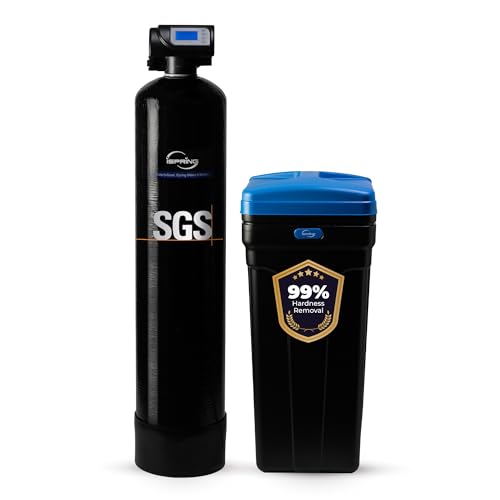
- 45,000-grain whole-house capacity
- Automatic regeneration and digital monitoring
- Tested to reduce 99.71% of water hardness
Best For: Larger homes and light commercial use
Well-Water Specialist

- 40,000-grain capacity for 1–5 people
- Reduces hardness and clear-water iron
- Learns usage patterns for demand-based regeneration
Best For: Families using well water with iron or sediment concerns
Compact Home Choice

- Sized for homes with 1–2 bathrooms
- Automatic digital metered control
- Corrosion-resistant tank and premium resin
Best For: Smaller homes needing whole-house softening
Best Overall Whole-Home Pick – Aquasure Harmony 48,000-Grain Softener
For households with three to four bathrooms, the Aquasure Harmony is a well-equipped water softener with a 48,000-grain capacity, metered controls, and a multi-purpose pre-filter. Its automatic programming and included resin make it a practical whole-house option for reducing hardness and scale.
Best For: Homes with 3–4 bathrooms that want automatic metered operation and added sediment, carbon, and zinc filtration.
Pros:
- 48,000-grain capacity is sized for a typical 3–4 bathroom home.
- Programmable backlit digital control head supports metered regeneration and monitoring.
- Triple-purpose pre-filter targets chlorine, odors, sediment, rust, and other listed contaminants.
- Includes premium resin, a corrosion-resistant tank, and a 5-year extended warranty when activated as specified.
Cons:
- At 120 pounds, it is not an especially lightweight installation.
- The system requires space for both the resin tank and brine tank.
The Harmony 48,000-grain model stands out for combining whole-house softening with pre-filtration and programmable controls. It is a strong fit when appliance scale protection and simplified maintenance are priorities.
Best Chlorine-Resistant Resin – AFWFilters 48K Fleck 5600 SXT
The AFWFilters 48K water softener uses 10% crosslink resin designed to provide improved chlorine resistance compared with standard 8% media. With a Fleck 5600SXT valve, standard 1-inch connections, and included fittings, it is built for integration into typical residential plumbing.
Best For: Homes on chlorinated municipal water that want a conventional whole-house softener with a Fleck control valve.
Pros:
- 10% crosslink resin is intended to handle chlorinated municipal water.
- Includes a 10-by-54-inch mineral tank with 1.5 cubic feet of resin.
- Fleck 5600SXT valve, bypass, drain fittings, and 1-inch NPT connections are included.
- USA-assembled system with a 5-year control-head warranty.
Cons:
- It does not include the multi-purpose pre-filter featured on some competing systems.
- The 120-pound unit may require planning for delivery and installation.
With its upgraded resin and familiar Fleck valve, this AFWFilters system is a practical choice for buyers focused on long-term softening performance in chlorinated water. Its standard plumbing connections can also simplify compatibility checks.
Best Pre-Filtered Upgrade – Aquasure Harmony 50,000-Grain System
The Aquasure Harmony 50,000-grain system is designed for three to four bathrooms and adds a triple-purpose sediment, GAC, and zinc pre-filter to whole-house softening. Its automatic digital metered valve lets homeowners program flush intervals based on water quality and usage.
Best For: 3–4 bathroom homes wanting higher capacity than a 48,000-grain unit plus integrated pre-filtration.
Pros:
- 50,000-grain rating provides substantial softening capacity for a medium-size home.
- Pre-filter is designed to reduce chlorine, odors, taste, sediment, rust, VOCs, and other listed contaminants.
- Backlit digital metered control supports programmable operation and maintenance monitoring.
- Includes premium-grade resin and a 5-year extended warranty when activated as specified.
Cons:
- The whole-house tank and pre-filter require installation space and plumbing connections.
- The product notes list reverse osmosis as the purification method, although the system is presented primarily as a water softener with pre-filtering.
This model is a compelling upgrade for shoppers who want soft water and additional treatment in one setup. Its 50,000-grain capacity and programmable controls make it well suited to households with moderate whole-home demand.
Best Portable Option – 16,000-Grain RV Water Softener
This portable 16,000-grain water softener is designed for RVs, trailers, boats, spas, and mobile washing applications rather than permanent whole-house installation. Its 3/4-inch GHT fittings, manual regeneration, and compact freestanding design make it convenient for travel and temporary hookups.
Best For: RV owners, boaters, and mobile washing users who need portable ion-exchange softening.
Pros:
- Compact design measures approximately 9.44 by 9.45 by 19.68 inches.
- Regenerates manually with table salt and is described as ready to use within four to six minutes.
- Uses NSF-certified food-grade resin and includes 3/4-inch GHT fittings.
- Limited lifetime warranty is listed in the product details.
Cons:
- Its 16,000-grain capacity is intended for portable applications, not large whole-house demand.
- Manual regeneration requires more hands-on involvement than metered systems.
- The listed maximum supported TDS level is 350 ppm.
For mobile use, this RV softener prioritizes portability and quick regeneration over automation and large capacity. It is a sensible choice when you need flexible softening at campsites, marinas, or job sites.
Best All-in-One Water Softener – EcoPure EPH130
The EcoPure EPH130 is a practical choice for shoppers who want water softeners and filtration in one compact whole-house system. Its 2-in-1 design combines ion-exchange softening with integrated filtration, while AutoSense AI technology adjusts to household usage and can use up to 40% less salt than traditional systems.
Best For: Households of up to five people with multiple bathrooms that want softer water and better-tasting drinking water from a single cabinet-style unit.
Pros:
- Combines whole-house water softening and filtration in one system.
- AutoSense AI technology adapts to water usage and may reduce salt consumption.
- Compact cabinet design helps reduce the installation footprint.
- Designed for consistent performance during higher-demand household use.
Cons:
- Its stated capacity is aimed at households of up to five people, so larger homes may need a higher-capacity option.
- Includes a one-year parts-and-labor warranty.
Choose the EPH130 if convenience, compact installation, and integrated drinking-water filtration matter as much as hardness reduction. It is especially appealing when you prefer one cabinet rather than separate softening and filtration equipment.
Best for 3-4 Bathrooms – Aquasure Harmony 40,000 Grain
The Aquasure Harmony Series 40,000-grain system is one of the more targeted water softeners for medium-sized homes. Its automatic digital metered control head supports programmable operation, while the included sediment, GAC, and zinc pre-filter is designed to reduce chlorine, odors, taste, and several other unwanted contaminants.
Best For: Homes with three to four bathrooms that need hardness reduction, appliance protection, and programmable whole-house water treatment.
Pros:
- 40,000-grain capacity is sized for homes with three to four bathrooms.
- Automatic digital metered control allows customizable flush intervals.
- Pre-filter targets sediment, chlorine, VOCs, PFAs, odors, taste, rust, and related contaminants.
- Includes a corrosion-resistant stainless steel bypass valve and premium-grade resin.
Cons:
- The 55-inch-tall tank may require more vertical installation clearance.
- Its included treatment features may be more than needed if you only want basic hardness reduction.
The Harmony Series stands out for buyers who want automated controls and broader pre-filtration alongside softening. Its capacity and bathroom rating make it a sensible middle-ground option for a typical family home.
Best for Large Homes – Aquasana SimplySoft 60K Grain
The Aquasana SimplySoft 60,000-grain system is built for larger households and high-demand whole-house use. It uses ion exchange to reduce hard-water minerals, offers a maximum flow rate of 16.6 gallons per minute, and can be configured for salt-saving and water-saving metered operation.
Best For: Homes with five or more people and four or more bathrooms that need high-capacity softening throughout the property.
Pros:
- 60,000-grain capacity is designed for larger homes.
- Supports flow rates up to 16.6 gallons per minute.
- Metered operation can use 50% less salt and 28% less water than standard time-based regeneration, according to the supplied specifications.
- IAPMO certified to NSF/ANSI Standard 44 and CSA B483.1.
Cons:
- The system has a larger 30-by-16-by-43-inch footprint.
- An optional pre-filter is recommended and sold separately.
- Its larger capacity may be unnecessary for smaller households.
For large homes, the SimplySoft offers a strong combination of capacity, flow rate, certification, and metered efficiency. Consider the optional pre-filter if your incoming city or well water contains sediment or other particles that need additional treatment.
High-Capacity Pick – iSpring WCSTB45KG
The iSpring WCSTB45KG is a 45,000-grain whole-house option for households, schools, businesses, and light commercial settings. Its ion-exchange system is designed for city or well water, while automatic regeneration and a programmable digital control help simplify ongoing operation.
Best For: Larger homes and light commercial applications needing automatic, whole-house hardness reduction.
Pros:
- 45,000-grain capacity for whole-house coverage
- Third-party tested to reduce 99.71% of water hardness
- Automatic backwash and regeneration with programmable controls
- Includes a 1-year warranty and lifetime free technical support
Cons:
- Requires corded electrical power
- Its 75.6-pound system may require planning for installation
- Maximum supported TDS is listed as 300 ppm
With its high capacity, durable fiberglass tank, and automatic controls, this iSpring is a practical choice when broad coverage and lower-maintenance operation matter most.
Well-Water Specialist – Kenmore 420 Water Softener
The Kenmore 420 is a 40,000-grain water softener designed for households of one to five people. It combines ion-exchange softening with clear-water iron reduction, a sediment pre-filter, and IntelliSoft technology that learns water-use patterns to regenerate only when needed.
Best For: Families with tough water or well-water concerns, including hardness, sediment, and clear-water iron.
Pros:
- Reduces hardness and clear-water iron
- IntelliSoft technology can reduce unnecessary salt use
- Built-in sediment screen adds protection for pipes and appliances
- Includes a bypass valve and installation kit
Cons:
- At 102 pounds, it is heavier than the other listed options
- Maximum flow rate is 7.7 gallons per minute
- Listed maximum supported TDS is 10 ppm
The Kenmore 420 stands out for well-water applications and households that want smart regeneration plus added sediment and iron handling in one compact system.
Compact Home Choice – Aquasure Harmony 32,000
The Aquasure Harmony Series is a 32,000-grain whole-house water softener sized for homes with one or two bathrooms. Its automatic digital metered control head lets you program flush intervals based on water quality and usage, while the resin tank and brine tank support point-of-entry softening.
Best For: Smaller homes with one or two bathrooms seeking automatic hardness reduction and appliance protection.
Pros:
- Designed specifically for one- to two-bathroom homes
- Programmable backlit digital metered control head
- Helps reduce scale buildup in plumbing and appliances
- Includes a 5-year extended warranty when activated as specified
Cons:
- 32,000-grain capacity is lower than the other options here
- Designed for smaller homes rather than larger households
- Requires corded electrical power
For a smaller household, the Harmony offers a balanced combination of appropriate capacity, automatic metering, and a corrosion-resistant tank without stepping up to a larger system.
How We Picked the Best Water Softeners
We focused on the specifications that matter most after installation: grain capacity, metered or demand-based regeneration, resin and control-head design, included components, and the type of water each system is built to handle. The lineup includes conventional salt-based whole-house units, combination softener-and-filtration systems, compact models, and a portable RV softener.
Capacity alone does not determine performance. A correctly sized 32,000- or 40,000-grain system may be a better choice than an oversized unit if it regenerates efficiently for your household. We also considered whether a product is best suited to DIY installation, professional installation, limited space, or mobile water connections.
Quick Comparison
- Best for many average homes: A 40,000- to 50,000-grain metered system offers a useful balance of capacity and efficiency.
- Best for larger households or harder water: Consider a 48,000- to 60,000-grain model, provided your plumbing and salt-storage space can accommodate it.
- Best for drinking-water improvement: A combination softener and filtration system may be more convenient than adding separate equipment.
- Best for RVs and boats: Choose a portable unit with compatible garden-hose fittings and a capacity suited to your travel schedule.
- Best for value-focused buyers: Look for a dependable metered control head and serviceable replacement media rather than paying for unnecessary features.
Key Buying Factors for Water Softeners
Capacity and Water Hardness
Estimate daily consumption and check your local hardness level before choosing a grain rating. Higher hardness, more occupants, and greater water use increase the required capacity. An undersized softener may regenerate too often, while an oversized one can cost more upfront and may not operate as efficiently.
Regeneration and Controls
Demand-initiated or metered controls regenerate according to actual water use instead of a fixed schedule. Digital programming can simplify setup, but verify that the controls support your preferred regeneration time, salt settings, and household water-use pattern.
Installation, Space, and Maintenance
Confirm inlet and outlet sizes, drain requirements, electrical needs, bypass-valve configuration, and available height for the resin tank and brine tank. Salt-based systems require periodic salt additions and occasional cleaning. Also check replacement resin, valves, and manufacturer support before buying.
Softening Versus Filtration
A softener reduces hardness minerals such as calcium and magnesium; it is not automatically a complete drinking-water filter. If sediment, chlorine taste, or other contaminants are concerns, select a combined system or plan for separate filtration and testing.
Who Should Buy Which Water Softeners?
Families with moderate-to-high water use should generally start with a metered whole-house model in the 40,000- to 50,000-grain range. Larger homes or areas with very hard water may benefit from a higher-capacity option such as a 60,000-grain system. Smaller households should avoid buying more capacity than they can efficiently use.
Choose a compact system when installation space is limited, and choose a portable RV model when you need temporary softening at campsites, marinas, or mobile work locations. If better-tasting drinking water is a priority, consider a two-in-one softener and filtration system—but confirm which contaminants it actually addresses. Finally, test your water and compare the system’s installation and ongoing salt requirements with your budget before ordering.