Choosing the right dust collector can make a woodworking shop cleaner, safer, and easier to work in. The best setup depends on your tools, shop size, and how much dust you generate.
Below, we break down 10 strong options across mobile, wall-mount, cyclone, and air-filtration styles so you can match performance to your workspace and budget.
Best 10 Workshop Dust Collector for Woodworking Picks for 2026
High-Capacity Shop Pick
WEN DC1300 1,300 CFM Dust Collector

- 1,300 CFM airflow for larger shop pickup
- Dual 4-inch inlets support two tools
- 50-gallon bag and swivel-caster base
Best For: Home workshops and garages needing high airflow and easy mobility
Premium Filtration Upgrade
JET DC-1100VX-CK Vortex Cone Collector

- 2-micron canister filter for finer dust capture
- Vortex Cone improves chip separation
- Continuous-duty motor with caster mobility
Best For: Woodshops that want finer filtration and industrial-style durability
Quiet Air Cleanup Pick
WEN 3410 Remote Air Filtration System
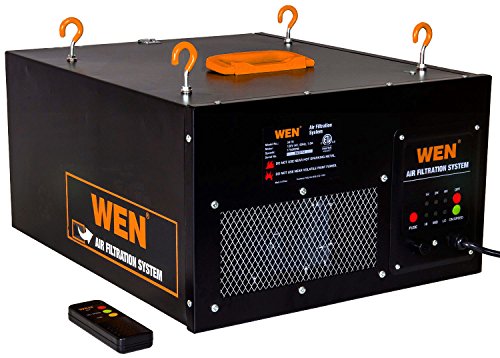
- 1-micron filter with 5-micron pre-filter
- Up to 400 CFM for room air cleanup
- Remote control and programmable timer
Best For: Small woodshops needing quieter airborne dust filtration
Auto-Start Compact Pick
BUCKTOOL 1.2 HP 750CFM Dust Collector

- 750 CFM from a 1.2 HP motor
- Auto-start outlet for connected tools
- Portable base with caster wheels
Best For: Compact woodworking shops that want auto-start convenience
Cyclone Separator Pick
DEWALT 6-Gallon Dust Separator

- 99.5% cyclonic separation
- 6-gallon easy-empty poly tank
- Fits 1-7/8" and 2-1/2" ports
Best For: Woodworkers who want to protect a vacuum from clogging
Wall-Mount Power Pick
VEVOR 1HP 560 CFM Dust Collector

- 560 CFM with 1HP motor
- 2.5-micron dust filtration
- 21-gallon bag with bottom zipper
Best For: Woodworkers who want wall-mounted suction and fine dust capture
Mobile Shop Pick
WEN 660 CFM Rolling Dust Collector
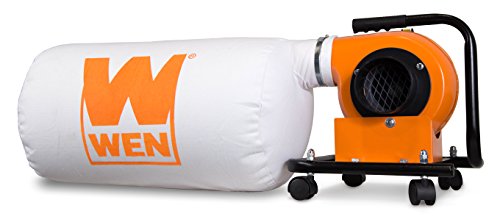
- 660 CFM airflow from 5.7-amp motor
- Lockable casters and carry handle
- 12-gallon zippered bag plus wall mount option
Best For: Woodworkers who want mobility with strong airflow
Compact Wall-Mount Shop Pick
POWERTEC 1 HP, 560 CFM Wall Mount Dust Collector

- Wall-mounted design saves floor space.
- 1 HP motor moves up to 560 CFM.
- 1-micron reusable bag helps catch fine dust.
Best For: Small shops needing a compact wall-mounted collector.
Flexible Mobile Dust Picker
WEN Woodworking Dust Collector with 15-Gallon Bag

- Up to 600 CFM with a 7.4-amp induction motor.
- Swivel casters and handle support easy mobility.
- Optional wall mount adds layout flexibility.
Best For: Woodworkers who want mobility with wall-mount option.
High-Volume Vortex Collector
VEVOR 1100 CFM 1.5HP Dust Collector

- 1100 CFM suction with 1.5HP induction motor.
- 42-gallon bag supports longer collection runs.
- 2.5-micron filtration captures fine dust.
Best For: Busy small to medium shops needing higher airflow.
High-Capacity Shop Pick – WEN DC1300 1,300 CFM Dust Collector
If you need a workshop dust collector for woodworking that can move a lot of air in a small shop, the WEN DC1300 is built for volume. It pushes up to 1,300 CFM, supports two tools at once with dual 4-inch inlets, and uses a 50-gallon collection bag to handle bigger cleanup sessions before emptying.
Best For: Busy home workshops and garage woodshops that want high airflow and a mobile setup.
Pros:
- Up to 1,300 CFM for strong air movement
- Dual 4-inch inlets let you attach two tools at a time
- 50-gallon vertical bag gives you plenty of collection capacity
- Mobile base with four swivel casters makes repositioning easier
Cons:
- Uses a 5-micron filtration setup, so it is not the finest in this group
- Single-speed operation offers no airflow adjustment
- Bag-style collection may be less convenient than a canister for some users
Overall, this WEN model is a practical choice if airflow and capacity matter more than premium filtration. It is a straightforward, mobile dust collector for woodworking shops that want a high-volume unit without overcomplicating the setup.
Premium Filtration Upgrade – JET DC-1100VX-CK Vortex Cone Collector
For woodworkers who want a workshop dust collector for woodworking with better filtration and bag efficiency, the JET DC-1100VX-CK stands out. Its vortex cone design helps improve chip separation, and the included 2-micron canister filter is aimed at finer dust capture and steadier performance over time.
Best For: Shops that prioritize finer filtration, smoother chip separation, and an industrial-duty build.
Pros:
- 2-micron canister filter supports finer dust collection
- Vortex Cone technology improves chip separation and bag packing efficiency
- Totally-enclosed, fan-cooled motor is rated for continuous duty
- Includes casters for portability
Cons:
- 80-decibel noise level may be loud for smaller spaces
- Single-stage design is simpler, but not the most advanced configuration
- Heavier industrial build may be more than casual users need
This JET model is a strong fit when you want more refined filtration and a collector that is designed for long-term shop use. It is a serious woodworking dust collector for users who value performance, durability, and cleaner air handling.
Quiet Air Cleanup Pick – WEN 3410 Remote Air Filtration System
If your workshop dust collector for woodworking needs are more about airborne cleanup than chip collection, the WEN 3410 is worth a look. It circulates 300/350/400 CFM, covers up to 400 sq ft, and uses a 1-micron filter with a 5-micron pre-filter to help capture fine particles in the shop air.
Best For: Woodshops and garages that want ceiling-style air filtration with remote control convenience.
Pros:
- 1-micron filter plus 5-micron pre-filter for finer airborne dust control
- Three airflow speeds up to 400 CFM
- Remote control and programmable timer add convenience
- Quiet 50 to 60 dB noise rating
Cons:
- It is an air filtration system, not a chip-collecting dust collector
- Best suited for rooms up to 400 sq ft
- 120V, 1A design is made for ambient dust cleanup rather than tool hookup
For finishing spaces or smaller shops, this WEN unit is a useful complement to a main collector. It is best understood as a room-air cleaner for woodworking dust, not a primary collector for machines.
Auto-Start Compact Pick – BUCKTOOL 1.2 HP 750CFM Dust Collector
For a workshop dust collector for woodworking that adds convenience without taking up too much space, the BUCKTOOL 1.2 HP unit is a compact option. It delivers 750 CFM, includes an auto-start outlet for your power tools, and uses caster wheels plus a portable base to work as a mobile or stationary setup.
Best For: Smaller shops that want an auto-start dust collector with flexible placement.
Pros:
- 750 CFM airflow from a 1.2 HP, 120V motor
- Auto-start outlet helps tie the collector to your tools
- Portable base and caster wheels support mobile or stationary use
- Includes reducers and multiple bags for setup flexibility
Cons:
- 7A max tool connection limit may not suit every machine
- 750 CFM is lower than higher-capacity shop collectors
- Bag-based design may require more maintenance than canister systems
This BUCKTOOL model makes sense if you want a practical collector with built-in convenience features. It is a good fit for compact woodworking spaces that need decent airflow and easy tool integration.
Cyclone Separator Pick – DEWALT 6-Gallon Dust Separator
If you want a workshop dust collector for woodworking that helps keep vacuum filters from clogging, this DEWALT dust separator is a practical add-on for dust capture before debris reaches the vacuum. Its cyclonic design is built for wood chips and other common shop debris, and the 6-gallon poly tank makes emptying straightforward.
Best For: Woodworkers who want a compact separator to reduce filter clogs and extend vacuum cleanup intervals.
Pros:
- 99.5% efficient cyclonic separation helps capture wood chips and debris before they hit the vacuum.
- 6-gallon poly tank is easy to empty and comes on a stable four-caster base.
- Compatible with 1-7/8″ or 2-1/2″ ports for use with many vacuums.
- Durable, heat-resistant parts are designed for workshop use.
Cons:
- Vacuum cleaner is not included.
- Lower-capacity tank than full-size dust collectors.
- Best suited as a separator system rather than a standalone collector.
For shops that already rely on a vacuum setup, this separator is a smart way to cut down on clogged filters and bag changes. It focuses on keeping larger debris out of the vacuum, which can make everyday cleanup more efficient.
Wall-Mount Power Pick – VEVOR 1HP 560 CFM Dust Collector
For a workshop dust collector for woodworking that aims at higher airflow and cleaner air, this VEVOR wall-mount unit combines 560 CFM suction with 2.5-micron filtration. It is built for medium and small woodworking projects where you want strong pickup, a larger bag, and simple wall-mounted storage.
Best For: Woodworkers who want a wall-mounted collector with strong airflow and fine dust filtration.
Pros:
- 560 CFM airflow provides strong suction for coarse sawdust and fine sanding dust.
- 2.5-micron filtration helps capture smaller dust particles.
- 21-gallon non-woven collection bag reduces how often you need to stop and empty it.
- Bottom zipper makes dust cleanup faster and easier.
Cons:
- Wall-mount design may not suit users who need a highly mobile unit.
- Larger than a small separator-style setup.
- Best matched to medium and small woodworking projects rather than very heavy-duty shop dust loads.
This model is a solid choice if airflow and filtration matter more than portability. The combination of a 1HP motor, large bag, and simple emptying design makes it a practical fit for steady workshop use.
Mobile Shop Pick – WEN 660 CFM Rolling Dust Collector
If you need a workshop dust collector for woodworking that can move around the shop, this WEN unit pairs a 660 CFM motor with a mobile base and optional wall mount. It is designed for tool connection, easy storage, and flexible positioning in smaller to mid-size workshops.
Best For: Woodworkers who want a portable collector with strong airflow and flexible mounting options.
Pros:
- Moves up to 660 CFM of air with a 5.7-amp motor and 6-inch impeller.
- 4-inch dust port connects to woodworking tools.
- Lockable swivel casters and an onboard carrying handle improve mobility.
- 12-gallon zippered collection bag and optional wall mount add flexibility.
Cons:
- 5-micron bag is less fine than the VEVOR’s 2.5-micron filtration.
- Brush motor design may not appeal to everyone.
- Compact size means it is not built like a larger shop-wide system.
This WEN collector stands out when you want good airflow without giving up portability. The rolling base, wall-mount option, and easy-to-manage bag make it a versatile choice for many woodshops.
Compact Wall-Mount Shop Pick – POWERTEC 1 HP, 560 CFM Wall Mount Dust Collector
If you need a workshop dust collector for woodworking that fits a smaller shop, this POWERTEC wall-mount unit is built around space-saving convenience and solid airflow. The 1 HP motor moves up to 560 CFM, and the included 1-micron bag helps capture fine dust while the vortex base is designed to improve airflow efficiency.
Best For: Small pro shops or hobby woodworkers who want a compact wall-mounted collector with fine filtration.
Pros:
- Wall-mounted design helps save floor space in tight shops.
- 1 HP motor delivers up to 560 CFM with dual-voltage flexibility.
- 1-micron reusable bag includes a viewing window and dust zipper.
- 4-inch inlet makes it easy to connect to woodworking machines.
Cons:
- Requires regular port checks to prevent clogging from collected debris.
- Single-bag setup is better suited to smaller dust loads.
This is a practical choice if your priority is compact dust collection with fine filtration rather than maximum capacity. It looks especially appealing for small shops that want a simple wall-hung system with straightforward machine hookup.
Flexible Mobile Dust Picker – WEN Woodworking Dust Collector with 15-Gallon Bag
The WEN woodworking dust collector is a versatile workshop dust collector for woodworking if you want both mobility and the option to mount it on the wall. Its 7.4-amp induction motor and 9-inch impeller are rated to move up to 600 CFM, and the 15-gallon zippered bag gives you a practical balance of capacity and convenience.
Best For: Woodworkers who want a dust collector they can roll around or mount for flexible shop layouts.
Pros:
- Moves up to 600 CFM for strong airflow in a compact footprint.
- Swivel casters and carrying handle make it easy to reposition.
- Optional wall mount adds setup flexibility.
- 15-gallon 5-micron zippered bag and two-year warranty add value.
Cons:
- 5-micron bag is less fine than 1-micron filtration options.
- Size and 41.1-pound weight may still feel bulky in very small shops.
Overall, this model stands out for shop flexibility more than specialization. If you want one dust collector that can adapt as your workspace changes, the WEN is an easy one to consider.
High-Volume Vortex Collector – VEVOR 1100 CFM 1.5HP Dust Collector
If you need a workshop dust collector for woodworking with more airflow and bigger collection capacity, this VEVOR system is built for heavier shop use. It delivers 1100 CFM suction, uses a 1.5HP induction motor, and pairs a 42-gallon filter bag with 2.5-micron filtration to handle coarse sawdust and fine debris.
Best For: Small to medium woodworking shops that want higher airflow and larger dust capacity.
Pros:
- 1100 CFM suction offers the highest airflow in this group.
- 42-gallon bag supports longer runs before emptying.
- 2.5-micron filtration helps trap fine particles.
- Clip-style bag access makes maintenance quicker.
Cons:
- Larger footprint and 68.1-pound weight require more shop space.
- Under 90dB noise level is still substantial for a workshop machine.
This is the strongest pick here when airflow and capacity matter most. For a busier woodworking setup, the VEVOR offers a more industrial-style solution without getting overly complicated to maintain.
How We Picked These Workshop Dust Collector for Woodworking Options
We focused on practical specs that matter in real shops: airflow, filtration efficiency, bag or bin capacity, motor power, mobility, and mounting flexibility. We also looked for models that suit different woodworking layouts, from compact garages to larger dedicated shops.
Quick Comparison
In general, higher CFM models are better for capturing chips and dust from larger machines, while finer filtration is important for reducing the amount of respirable dust left in the air. Mobile units are easier to move between tools, while wall-mount systems save floor space. Cyclone-style designs usually help keep filters cleaner for longer, and smaller air filtration units are useful as a supplement, not a replacement, for source capture.
Key Buying Factors for a Workshop Dust Collector for Woodworking
Airflow and Tool Match
Match CFM to the tools you use most. Table saws, planers, jointers, and larger sanders usually need stronger airflow than small benchtop tools. If you run multiple machines or long duct runs, prioritize a stronger blower and efficient duct design.
Filtration Quality
Finer filters capture smaller particles that are more likely to stay airborne. For a Workshop Dust Collector for Woodworking, look closely at micron ratings and whether the system uses a bag, canister, or cyclone separator.
Capacity and Cleanup
Larger bags or bins reduce how often you empty the system. That matters if you generate a lot of shavings from planing, jointing, or sanding. Quick-empty designs can save time and help keep the shop routine simple.
Shop Layout and Installation
Consider whether you need a mobile base, wall mount, or stationary setup. Small shops often benefit from compact or wall-mounted units, while larger shops may prefer a heavier collector with better airflow and more capacity.
Who Should Buy Which Workshop Dust Collector for Woodworking?
If you want strong whole-shop collection, choose a high-CFM collector with larger capacity. If floor space is tight, a wall-mount model is usually the better fit. If your biggest problem is fine airborne dust, prioritize better filtration and consider adding an air cleaner. For small shops or lighter-duty use, a compact collector may be enough, especially when paired with good hose placement and regular cleanup.
The best Workshop Dust Collector for Woodworking is the one that fits your tools, space, and maintenance habits—not just the one with the biggest motor on paper.