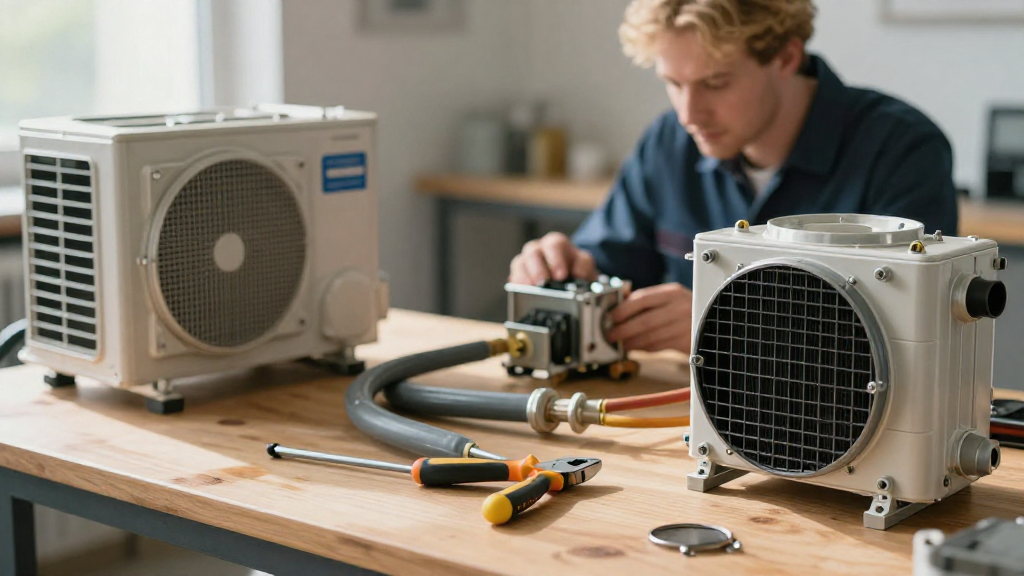
Understanding your air conditioning components is essential for ensuring optimal performance and maintenance of your cooling system.
In this comprehensive guide, we will explore the various components that make up an air conditioning system and provide tips on how to identify them effectively.
What Are the Primary Air Conditioning Components?
Air conditioning systems are intricate machines composed of several key components working in unison to provide cooling. To make it easier to identify these components, let’s break them down into main categories:
-
Compressor
– The compressor is often referred to as the heart of the air conditioning system.
– It pumps refrigerant through the system, compressing it and raising its temperature and pressure.
– Visible aspects of the compressor are usually its cylindrical shape and location in the outdoor unit. -
Condenser Coil
– The condenser coil helps dissipate heat from the refrigerant.
– It’s typically located outside and appears as a series of finned metal tubes.
– You can identify it by its arrangement in the outdoor condenser unit. -
Evaporator Coil
– Located inside the air handler or furnace, the evaporator coil absorbs heat from the indoor air.
– It looks similar to the condenser coil, often covered in insulation or located within a duct.
– Identifying it can be tricky, as it’s usually less accessible. -
Expansion Valve
– This component regulates the flow of refrigerant into the evaporator coil.
– It can be recognized by its small size and the presence of insulation around it. -
Blower Fan
– The blower fan circulates indoor air over the evaporator coil.
– It is easily identified by its rotating blades and motor assembly inside the indoor unit. -
Ductwork
– Ductwork is the network of conduits that moves cooled air throughout a building.
– These are metal or flexible tubes visible in ceilings, walls, or attics.
– Inspecting ductwork can help identify any air leaks or blockages. -
Refrigerant Lines
– These insulated copper lines carry refrigerant between the indoor and outdoor units.
– They are identifiable by their small but insulated appearance. -
Thermostat
– The thermostat monitors and controls the temperature of your indoor environment.
– Look for a wall-mounted device that allows temperature adjustment.
How to Visually Inspect Your Air Conditioning Components?
Performing a visual inspection of your air conditioning components can help you understand their condition and functionality. Here are steps to successfully identify and inspect key components:
-
Turn Off the System
– Always start by turning off the power to your air conditioning unit to avoid any electrical hazards. -
Locate the Outdoor Unit
– Identify the outdoor condenser unit, usually positioned away from the building.
– Inspect the compressor, looking for any visible signs of damage or wear. -
Check the Condenser Coil
– Examine the condenser coil for dirt or debris.
– Ensure that the fins are straight and not clogged, as this affects heat dissipation. -
Access the Indoor Unit
– Open the access panel of your air handling unit or furnace.
– Identify the evaporator coil and check for dust build-up that can affect efficiency. -
Inspect the Blower Fan
– Observe the blower fan for any obstructions.
– Ensure that it spins freely without any noise or resistance. -
Examine Thermostat Settings
– Check if the thermostat is functioning accurately by adjusting the settings and observing system response. -
Assess Ductwork and Refrigerant Lines
– Look for any visible connection points and examine for insulation integrity.
– Inspect ductwork for any signs of leaks, which can lead to inefficiency.
Why is It Important to Know Your Air Conditioning Components?
Understanding the air conditioning components is crucial for several reasons:
- Maintenance and Repair: Familiarity with components allows for easier troubleshooting and repairs.
- Energy Efficiency: Identifying malfunctioning parts can lead to improved energy efficiency and lower utility bills.
- Longevity of the System: Regular knowledge of system components helps maintain the unit, prolonging its lifespan.
- Safety: Understanding your system reduces the risk of accidents due to mishandling of electrical or refrigerant components.
When Should You Call a Professional for Air Conditioning Components?
While basic inspections can be done by homeowners, certain situations require professional expertise:
-
Strange Noises
– If you hear unusual sounds like banging or squealing, it’s time to call a professional. -
Insufficient Cooling
– If your system is not cooling adequately, there may be an issue with airflow or refrigerant levels. -
Frequent Cycling
– If your AC keeps turning off and on frequently, this may indicate a malfunction in the thermostat or compressor. -
Visible Damage
– Any noticeable signs of damage on components like the compressor or coil should prompt a professional evaluation. -
Electrical Issues
– Problems with electrical components, such as fuses or wiring, should always be handled by a qualified technician.
How to Maintain Your Air Conditioning Components?
To ensure longevity and effectiveness, regular maintenance of your air conditioning components is necessary. Here’s how to maintain your system:
-
Regular Filter Changes
– Change or clean HVAC filters every 1-3 months to ensure optimal airflow. -
Scheduled Professional Inspections
– Have your AC system inspected and serviced annually by a certified technician. -
Clean the Condenser and Evaporator Coils
– Remove debris and dirt from coils to ensure efficient heat exchange. -
Inspect Ductwork for Leaks
– Conduct inspections or hire professionals for duct sealing to prevent energy loss. -
Clear Around the Outdoor Unit
– Keep the area around the outdoor condenser clear of debris, plants, or furniture.
Conclusion
Identifying the various air conditioning components is vital for any homeowner looking to maintain and optimize their cooling system.
By understanding the function of each part, performing regular inspections, and knowing when to call for professional help, you can ensure that your air conditioning system operates efficiently and effectively.
Investing time and effort into knowing your air conditioning components pays off with improved cooling performance and energy savings.