Choosing the best moisture meter for dehydrated food can help you verify drying results, reduce spoilage risk, and produce more consistent batches. The products in this roundup include water activity meters, grain-focused testers, and laboratory-style moisture analyzers.
Because these tools measure different properties, the right choice depends on your food types, required precision, testing volume, and whether you need simple spot checks or recorded quality-control data.
Best 10 Moisture Meter for Dehydrated Food Picks for 2026
Best for Connected Batch Tracking

- 0–1.000aw range with ±0.02aw accuracy
- Bluetooth and USB data export
- Five-minute readings with temperature display
Best For: Jerky, freeze-dried food, dehydrated products, and organized batch testing
Best for Grain Variety
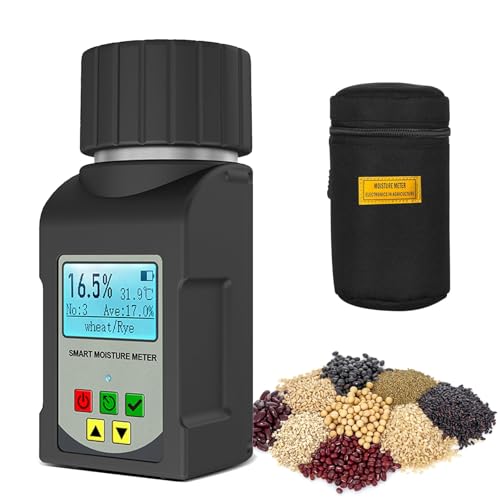
- Supports 25 grain types
- ±0.5% stated measurement accuracy
- Temperature compensation and voice broadcast
Best For: Grains, seeds, coffee, and agricultural ingredient testing
Best Lightweight Water-Activity Pick

- 100-gram portable design
- 0–1.0aw range with ±0.02aw accuracy
- Backlit display shows aw and temperature
Best For: Portable water-activity checks for dried and fresh food
Best for Direct Moisture Percentage
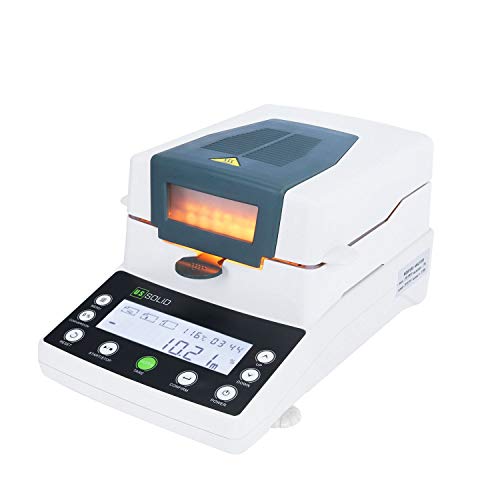
- 110g capacity with 5mg readability
- 40–199°C halogen drying range
- Stores 15 methods and exports by RS-232
Best For: Benchtop moisture-content testing for food, grain, herbs, and lab samples
Field Grain Specialist
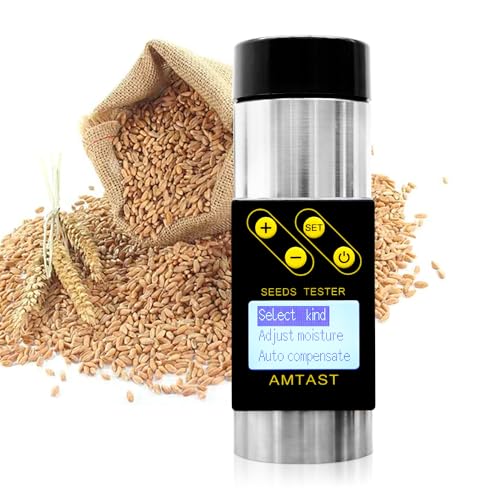
- Tests 18 listed grain and seed types
- Compact stainless steel construction
- Automatic and manual temperature compensation
Best For: Portable crop moisture checks in field or lab settings
Food Dryness Monitor

- Measures 0–1.0 aw water activity
- Designed for dehydrated foods and dried fruit
- Includes sample plate and carrying case
Best For: Checking free water and stability in processed foods
High-Capacity Crop Tester
25-Grain Cup-Type Moisture Meter

- Supports 25 grain types
- Offers ±0.5% accuracy and temperature compensation
- Portable LCD design for field and storage use
Best For: Multi-crop moisture testing for farms and food processors
Best Water Activity Meter
Smart Food Water Activity Meter

- Tests water activity in about five minutes
- Backlit display shows Aw and temperature
- Lightweight option for dehydrated foods
Best For: Quick water-activity checks for dehydrated and baked foods
Best Grain Moisture Tester
Antstone 43-in-1 Grain Moisture Tester

- Covers 43 grain and crop varieties
- Offers ±0.5% precision with averaging
- Includes temperature compensation and a backlit display
Best For: Multi-crop grain checks on farms and in food processing
Best Compact Food AW Tester

- Designed for dehydrated and baked foods
- Tests Aw in approximately five minutes
- Compact 100-gram body with backlit LCD
Best For: Portable water-activity checks for everyday food preservation
Best for Connected Batch Tracking – GY1 Pro Water Activity Meter
If you need a moisture meter for dehydrated food that supports repeat testing and organized records, the GOYOJO GY1 Pro measures water activity from 0–1.000aw with ±0.02aw accuracy. It delivers readings in about five minutes and adds Bluetooth and USB data export for easier documentation.
Best For: Jerky, freeze-dried food, dehydrated products, and users who want digital batch records.
Pros:
- Bluetooth and USB connectivity support app viewing and PC data export.
- Measures water activity and sample temperature together on the display.
- Compact, portable design with approximately five-minute testing.
Cons:
- Measures water activity rather than direct moisture percentage.
- Bluetooth and software features may be unnecessary for occasional testing.
Choose this model when data management matters as much as portability. Its connectivity and repeat-testing workflow make it more suitable for structured quality control than simple one-off checks.
Best for Grain Variety – 25-Grain Moisture Tester
For buyers seeking a moisture meter for dehydrated food ingredients or grain-based materials, this tester is designed around moisture readings for 25 grain types. Its built-in sensor offers stated ±0.5% accuracy, while automatic temperature compensation helps maintain consistency across changing conditions.
Best For: Wheat, corn, coffee, lentils, soybeans, seeds, and other supported grains.
Pros:
- Supports measurements for 25 different grains.
- Automatic temperature compensation helps with indoor and outdoor use.
- Backlit display, fast readings, and voice broadcast make results easier to access.
Cons:
- Designed for supported grains rather than general dehydrated foods.
- Its stated ±0.5% accuracy is less precise than the water-activity meters in this roundup.
This is the practical choice when your testing involves multiple grain varieties. If you need water-activity data for finished jerky or fruit, a dedicated aw meter may be a better fit.
Best Lightweight Water-Activity Pick – WA-60 Food Tester
The WA-60 is a lightweight option for anyone comparing a moisture meter for dehydrated food with a water-activity tester. Weighing 100 grams, it measures 0–1.0aw with ±0.02aw accuracy and produces results in about five minutes for dried and fresh food testing.
Best For: Portable food-safety checks where low weight and straightforward aw readings are priorities.
Pros:
- Very light, at approximately 3.53 ounces.
- Displays water activity and temperature together on a backlit six-digit LCD.
- Includes automatic and manual shut-off plus a low-battery indicator.
Cons:
- Does not provide direct moisture-percentage readings.
- No Bluetooth or USB export features are listed in the supplied details.
Its low weight makes it especially convenient for on-the-go checks. Consider it for simple, rapid aw testing; choose the GOYOJO model if connected data management is important.
Best for Direct Moisture Percentage – U.S. Solid Halogen Analyzer
Unlike water-activity meters, this U.S. Solid analyzer directly dries and weighs samples to report moisture percentage. It offers 110g capacity, 5mg readability, a 40–199°C drying range, and a 450W halogen heater for food, grain, herb, chemical, and laboratory testing.
Best For: Users who need direct moisture-content results, repeatable lab-style testing, and stored drying methods.
Pros:
- Reports moisture to 0.1% with 5mg weighing readability.
- Three drying modes accommodate different sample types.
- Stores up to 15 preset methods and includes RS-232 data export.
- Ships with 50 sample pans and supports samples up to 110g.
Cons:
- It is a 110V AC benchtop analyzer rather than a portable meter.
- Testing requires heating and weighing samples, not just measuring aw.
- Its larger setup is less convenient for quick field checks.
Choose this analyzer when moisture percentage is the key measurement and you have a stationary testing area. It is more substantial than a handheld aw meter but offers method storage, multiple result formats, and PC or printer connectivity.
Field Grain Specialist – 18-Grain Moisture Meter
If you need a moisture meter for dehydrated food but primarily work with seeds and grains, this compact tester offers a practical field-ready option. It supports 18 grain codes, including wheat, maize, rice, tomato seed, soybean, and sorghum, with quick readings and temperature-compensation options.
Best For: Farmers, grain handlers, and users testing supported seeds in the field or lab.
Pros:
- Supports 18 grain types for varied crop testing.
- Compact stainless steel body is easy to carry.
- Offers automatic and manual temperature compensation.
- Designed for fast readings in field and lab settings.
Cons:
- It is intended for listed grains and seeds rather than general food water-activity testing.
- No batteries are required, but the supplied notes do not specify its power method.
This is a focused grain moisture tester rather than a broad dehydrated-food analyzer. Choose it when crop coverage, portability, and temperature compensation matter more than testing finished foods such as dried fruit or meat.
Food Dryness Monitor – Portable Water Activity Meter
For a moisture meter for dehydrated food, water activity can be more useful than a simple moisture percentage because it reflects free water and its relationship to food stability. This portable tester is designed for dehydrated foods, dried fruits, breads, biscuits, cakes, meat, and other products, with a 0–1.0 aw range.
Best For: Home or small-scale food makers checking the water activity of dried and processed foods.
Pros:
- Supports testing for dehydrated foods, dried fruits, meat, baked goods, and snacks.
- Displays water activity and temperature on a backlit LCD.
- Portable design weighs about 100 g, excluding batteries.
- Includes a sample plate, carrying case, and operation manual.
Cons:
- Readings take about five minutes to stabilize.
- Specified accuracy is ±0.02 aw, which may not suit precision laboratory work.
- Two AAA batteries are required and are not included.
Because it measures water activity rather than ordinary moisture content, this model is especially relevant when your goal is evaluating free water, microbial-growth potential, and storage stability in dehydrated foods.
High-Capacity Crop Tester – 25-Grain Cup-Type Moisture Meter
If you want a moisture meter for dehydrated food ingredients while also handling many crop types, the GOYOJO GS25A provides broad grain coverage in a portable cup-style design. It supports 25 grains, including wheat, corn, rice, and coffee beans, and adds automatic temperature compensation for changing conditions.
Best For: Farmers, food processors, and grain traders who need repeatable moisture checks across multiple crops.
Pros:
- Supports 25 grain types, including coffee beans.
- Specified accuracy is ±0.5%.
- Automatic temperature compensation helps maintain consistency.
- Compact LCD-equipped design is suitable for field or storage use.
Cons:
- It is designed for grain measurement, not direct water-activity testing of finished dehydrated foods.
- Batteries are not included.
- At 1.4 lb, it is less pocket-sized than the smaller grain meter listed here.
The GS25A is a strong fit when versatility across crops is the priority. For dried fruit, meat, or other finished foods where free-water stability matters, a dedicated water-activity meter may be more appropriate.
Best Water Activity Meter – Smart Food Water Activity Meter
If you need a moisture meter for dehydrated food, this compact water activity tester focuses on free-water levels rather than conventional moisture percentage. It provides readings in about five minutes and displays water activity alongside sample temperature.
Best For: Home food preservers and small-scale users checking dehydrated foods, baked goods, fruits, vegetables, and snacks.
Pros:
- Measures water activity across a 0–1.0 Aw range.
- Provides readings in approximately five minutes.
- Backlit LCD shows water activity and temperature.
- Lightweight 100-gram design is easy to carry.
Cons:
- Reports water activity, not a conventional moisture percentage.
- Listed precision is ±0.02 Aw.
This is a practical choice when your main concern is the free water associated with food quality changes. Its small, integrated design suits quick checks, though users needing grain-specific percentage readings may want a different meter.
Best Grain Moisture Tester – Antstone 43-in-1 Grain Moisture Tester
For shoppers seeking a moisture meter for dehydrated food ingredients such as grains, this Antstone tester offers a broader crop-focused approach. It uses a cup-style design, temperature compensation, and selectable settings for 43 grain varieties.
Best For: Farmers, food processors, and traders who check grain moisture across multiple crops before storage or handling.
Pros:
- Supports 43 grain varieties, including corn, wheat, rice, millet, and coffee beans.
- Claims ±0.5% precision and includes a multi-test average function.
- Automatic temperature compensation helps across changing conditions.
- Backlit LCD, eight languages, and °F/°C switching improve usability.
Cons:
- Its grain-focused design may be less suitable for finished dehydrated foods.
- Weighs 2.09 pounds, making it less lightweight than compact food testers.
This is the strongest fit of the three for raw agricultural ingredients and grain-heavy workflows. Its crop presets and temperature adjustment add versatility, but it is not presented as a dedicated water-activity meter for snacks or dried produce.
Best Compact Food AW Tester – Food AW Tester Moisture Meter
This food AW tester is a focused moisture meter for dehydrated food, using water activity to assess the free water present in food at equilibrium. It delivers a result in about five minutes and is designed for foods ranging from dried produce to breads, biscuits, and puffed snacks.
Best For: Users who want a simple, portable water-activity check for dehydrated foods, baked goods, fruits, and vegetables.
Pros:
- Measures water activity from 0 to 1.0 Aw.
- Displays water activity and sample temperature together.
- Uses a six-bit backlit LCD with separate humidity and temperature displays.
- Weighs 100 grams according to the product notes.
Cons:
- It measures Aw rather than standard moisture content percentage.
- Listed precision is ±0.02 Aw.
This model suits buyers who want a dedicated food water-activity tester with a straightforward display and broad food coverage. It closely targets dehydrated-food testing, while conventional grain-moisture applications may call for a crop-specific meter.
How We Picked the Best Moisture Meter for Dehydrated Food
We compared the selected meters by measurement method, stated accuracy, supported food or crop types, operating range, display clarity, portability, temperature compensation, and data-management features. We also considered whether each model suits home dehydration, small-batch production, farming, or more formal food-quality work.
A key distinction is between moisture content and water activity. Moisture content estimates how much water is present, while water activity indicates how available that water is for microbial growth and chemical reactions. Neither reading is universally better; the appropriate tool depends on your preservation process and quality requirements.
Quick Comparison
| Best For | Look For | Typical Product Type |
|---|---|---|
| Home dehydrating | Simple controls, readable display, repeatable readings | Portable food or grain meter |
| Food-safety checks | Water activity measurement, stable sampling, suitable range | AW tester |
| Many crop types | Multiple calibration settings and temperature compensation | Multi-grain meter |
| Detailed batch analysis | Controlled heating, weighing, and fine readability | Halogen moisture analyzer |
| Traceable records | USB or Bluetooth export and computer software | Connected water activity meter |
Key Buying Factors for a Moisture Meter for Dehydrated Food
Moisture Content Versus Water Activity
For basic process consistency, a moisture-content meter may be enough. If your priority is shelf stability or food-safety validation, a water activity meter is generally more relevant because it measures the water available to support microbial activity. Do not compare readings from these two categories as though they were interchangeable.
Accuracy, Repeatability, and Calibration
Check the stated accuracy, resolution, and calibration procedure. Repeatable results are often more useful than impressive resolution alone. Sample temperature, particle size, packing density, and unevenly dried pieces can all affect readings, so follow the manufacturer’s sampling guidance.
Food Compatibility and Sampling
Confirm that the meter supports your ingredients, including fruit, vegetables, herbs, meat, grains, or baked foods. Cup-style grain meters may be convenient for agricultural samples but less suitable for sticky or irregular dehydrated foods. A water activity tester may require a sealed sample cup and a waiting period for readings to stabilize.
Workflow and Data Features
For occasional home use, a clear backlit display and portable design may matter most. Commercial users may benefit from temperature compensation, USB or Bluetooth export, computer software, and a broader measurement range. Consider cleaning requirements too, especially when testing oily, sugary, or powdered foods.
Who Should Buy Which Moisture Meter for Dehydrated Food?
- Home dehydrator users: Choose a straightforward portable meter if you mainly want repeatable spot checks without software or complicated setup.
- Small food businesses: Prioritize a water activity tester with dependable sampling, clear results, and a documented calibration routine.
- Farmers and grain handlers: Select a multi-grain meter with temperature compensation and settings that match your crops.
- Processors and laboratories: Consider a halogen moisture analyzer when controlled drying and fine readability are more important than portability.
- Users who need records: A Bluetooth- or USB-enabled model can simplify batch tracking, provided its software supports your workflow.
Before purchasing, match the instrument’s measurement principle to your preservation goal. The best Moisture Meter for Dehydrated Food is the one that measures the property you actually need, handles your sample type reliably, and fits the time and documentation demands of your process.