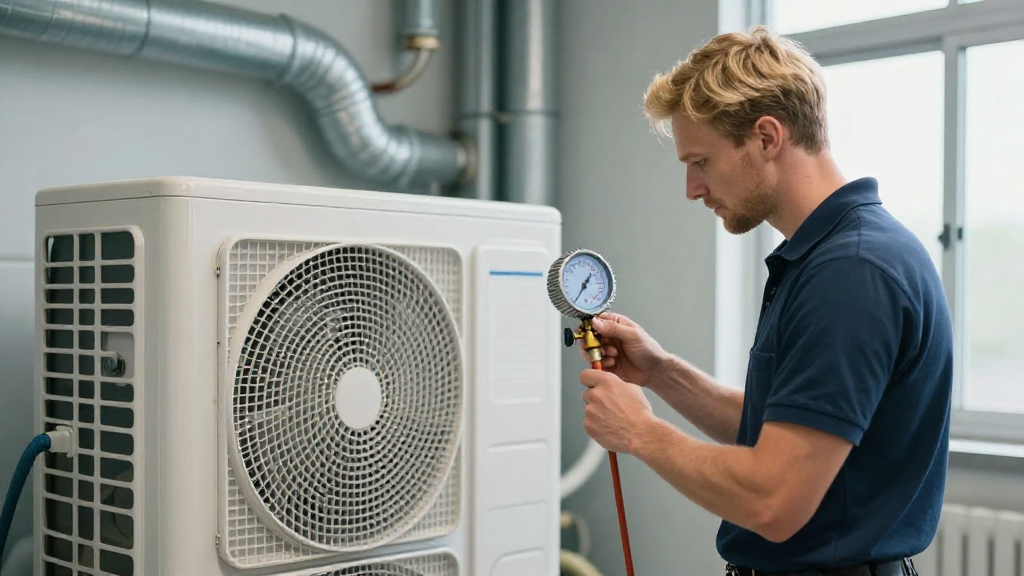
When it comes to achieving optimal comfort levels in your home or office, air conditioning air balancing plays a crucial role.
Whether you are installing a new system or improving an existing one, understanding the principles of air balancing can significantly enhance your indoor air quality and energy efficiency.
What is Air Balancing?
Air balancing is the process of adjusting and setting the airflow of a heating, ventilation, and air conditioning (HVAC) system.
This ensures uniform distribution of conditioned air throughout different areas of the building.
By performing air conditioning air balancing, you can achieve:
- Consistent temperatures in every room
- Improved energy efficiency
- Reduced noise levels
- Extended system lifespan
Proper air balancing is an essential component of an efficient HVAC system.
Why is Air Balancing Important?
Understanding the importance of air conditioning air balancing can help you maintain a comfortable indoor environment.
Here are a few reasons why air balancing matters:
-
Comfort: Variations in airflow can lead to hot and cold spots, causing discomfort for occupants. Proper air balancing ensures even temperatures throughout your space.
-
Energy Efficiency: An unbalanced system can cause your HVAC unit to work harder, leading to increased energy consumption and higher utility bills. Proper balancing maximizes efficiency.
-
Air Quality: Uneven distribution of conditioned air can result in poor indoor air quality. Proper air balancing helps ensure that air is filtered evenly, reducing dust and allergens.
-
System Longevity: A well-balanced system reduces wear and tear on HVAC components, extending the life of your equipment.
How Can You Identify an Unbalanced Air Conditioning System?
Before performing air conditioning air balancing, it’s essential to identify the signs of an unbalanced system.
Here are some common indicators:
- Hot or cold spots in certain areas
- Excessive noise coming from vents
- An inconsistent thermostat reading
- Increased energy bills despite no changes in usage
- Frequent adjustments to the thermostat settings
If you notice any of these issues, it may be time to perform air conditioning air balancing.
What Tools Do You Need for Air Balancing?
To achieve successful air conditioning air balancing, you will require the following tools:
-
Anemometer: This tool measures airflow velocity, which helps in adjusting ducts accurately.
-
Manometer: It measures pressure differences in the duct system to identify imbalances.
-
Thermometer: A digital or dial thermometer can measure temperature differences in various rooms.
-
Duct Blower: This tool is helpful for testing airflow and ensuring that the system is delivering the right amount of air.
-
Masking Tape and Paper: Useful for sealing leaks during the process.
How to Perform Air Balancing in Four Steps
Performing air conditioning air balancing may sound complicated, but it can be broken down into four key steps.
Step 1: Measure Airflow
-
Turn on your HVAC system and allow it to run for at least 15 minutes to stabilize the airflow.
-
Use the anemometer to measure the airflow at each supply vent. Record the readings for each vent.
-
Identify the target airflow for each room based on design specifications and square footage.
Step 2: Adjust Ducts
-
Inspect ducts for any leaks or restrictions that could affect airflow. Use the manometer to detect pressure drops in the system.
-
Use dampers to adjust airflow to individual ducts. Open or close dampers as needed based on your measurements.
-
If necessary, seal any leaks using masking tape or duct sealing mastic to improve airflow efficiency.
Step 3: Re-measure Airflow
-
After making adjustments, use the anemometer again to measure airflow at the supply vents.
-
Compare the new readings with your initial recordings to ensure that the airflow is balanced.
-
Make further adjustments if necessary, repeating the steps until the airflow matches your target measurements.
Step 4: Fine-Tune the System
-
Once airflow is balanced, turn on the system and monitor it for a few days.
-
Check for comfort levels in different rooms.
-
Make any minor adjustments as needed based on user feedback and performance.
When Should You Consider Professional Air Balancing?
While it is possible to perform air conditioning air balancing on your own, there are scenarios where hiring a professional may be more beneficial:
- Complex or large HVAC systems
- If you lack the necessary tools or expertise
- When experiencing persistent airflow issues that can’t be resolved with basic adjustments
A professional HVAC technician possesses the experience and knowledge to perform effective air balancing and can help identify underlying issues that may be affecting your system’s performance.
Conclusion
Air conditioning air balancing is essential for ensuring comfort, improving energy efficiency, and enhancing indoor air quality.
By measuring airflow, adjusting ducts, and fine-tuning your HVAC system, you can achieve balanced air distribution in your home or office.
If you notice signs of an unbalanced system or find that adjustments are ineffective, don’t hesitate to contact a professional technician.
With attention to proper air balancing practices, you can enjoy a comfortable and efficient indoor environment all year round.