Accurate holes demand more than a powerful motor. The best drill presses for precision combine controlled speed, minimal spindle runout, stable construction, and a work surface that keeps material aligned.
This roundup covers compact micro drill presses, full-size benchtop models, and machines with features such as variable speed, laser guides, depth stops, and X-Y positioning. Use the guide below to match the machine to your materials, hole sizes, and available workspace.
Best 10 Drill Presses for Precision Picks for 2026
Best Budget Benchtop Pick
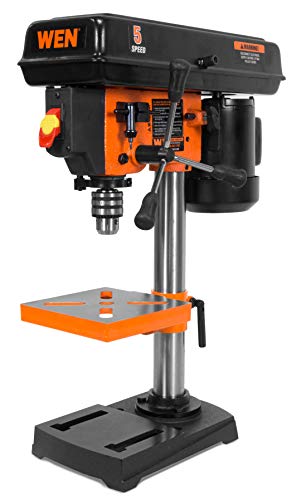
- Five speeds from 750 to 3,200 RPM
- Adjustable, beveling worktable
- Cast iron benchtop design
Best For: Home workshops and light-duty hobby drilling
Best Micro-Drilling Choice
PROXXON TBM 115 Precision Press

- Drills micro holes down to 1/64 inch
- Includes six precision collets
- Fence and depth gauge aid repeatability
Best For: Detailed hobby, model-making, and jewelry projects
Best Compact Craft Option

- Compact 3.5-pound portable design
- Adjustable speed up to 7,000 RPM
- Accepts 0.6-to-6 mm drill bits
Best For: Jewelry, crafts, models, and small-scale drilling
Best Full-Size Precision Upgrade
WEN 12-Inch Variable-Speed Press
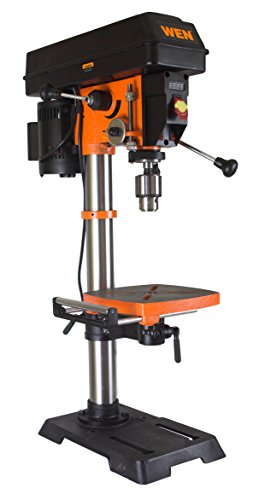
- 580–3,100 RPM mechanical variable speed
- Digital RPM display with laser and LED light
- 12-inch swing and 3-1/8-inch spindle travel
Best For: Serious home workshops and larger workpieces
Compact Precision Pick

- 7,000 RPM variable-speed DC motor
- 40mm stroke and 0.6-6mm chuck
- Includes vise and HSS drill bits
Best For: Small DIY crafts, repairs, and model work
Workshop Precision Pick
VEVOR 8-Inch Benchtop Drill Press

- Five speeds from 750 to 3,200 RPM
- 2-inch spindle travel and depth stop
- 45-degree tilting table with LED light
Best For: General wood and metal workshop drilling
Fine-Craft Precision Pick
Variable-Speed Mini Drill Press

- 400-4,500 RPM continuous speed control
- CNC-processed aluminum-alloy body
- Handles small holes in soft materials
Best For: Jewelry, crafts, and delicate DIY drilling
Compact Workshop Pick
710W Six-Speed Bench Drill Press
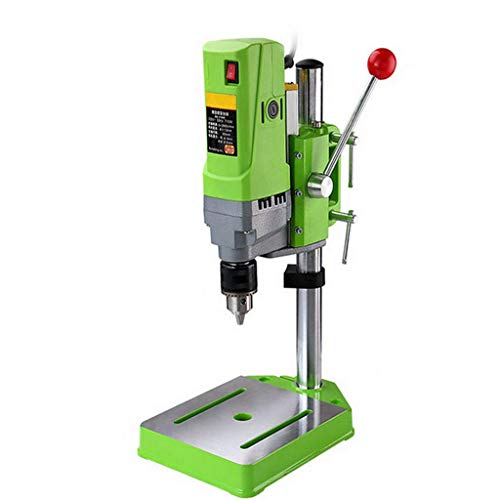
- 710W motor with six adjustable speeds
- 1.5–13mm chuck for common drill bits
- Cast-iron base supports stable drilling
Best For: DIY and general home-workshop drilling
Watchmaker’s Precision Choice

- ER11 precision collet and XY cross slide
- Specialized vise for tiny watch components
- 3.175mm chuck for miniature drilling
Best For: Watch repair and fine small-part work
Micro-Drilling Layout Pick
X-Y Positioning Mini Drill Press
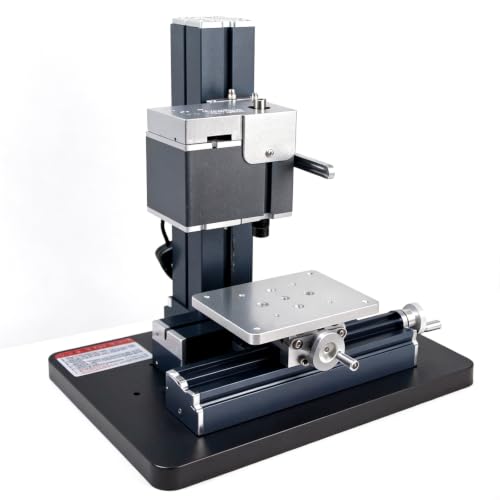
- X-Y-Z table supports repeatable hole placement
- 0.02mm handwheel graduations aid fine control
- 20,000 RPM motor handles micro-drilling tasks
Best For: PCBs, models, acrylic, and soft-metal projects
Best Budget Benchtop Pick – Compact 5-Speed Drill Press
For shoppers comparing drill presses for precision, the WEN 4206T offers a straightforward benchtop design with five selectable speeds, a cast iron build, and a height-adjustable table. Its compact footprint and 2-inch spindle travel make it suited to lighter workshop tasks where control matters more than large drilling capacity.
Best For: Home workshops, hobby projects, and light-duty drilling in wood or metal.
Pros:
- Five speeds from 750 to 3,200 RPM provide useful material flexibility.
- Cast iron construction and a 7-by-11-inch base support a stable setup.
- The table adjusts in height and bevels up to 45 degrees in either direction.
- Includes a 1/2-inch keyed chuck and onboard chuck-key storage.
Cons:
- The 2-inch spindle travel is limited for deeper holes.
- Its 8-inch swing and 1/2-inch metal drilling capacity are best suited to smaller projects.
The WEN 4206T is a practical entry-level option when you want speed selection and a stable benchtop format without a large machine. Choose it for general hobby work rather than demanding, deep, or oversized drilling.
Best Micro-Drilling Choice – PROXXON TBM 115 Precision Press
Among drill presses for precision, the PROXXON TBM 115 stands out for micro-hole work and detailed projects. Its precision collet set, depth gauge, parallel fence, and solid metal construction are designed for controlled drilling where small bit sizes and repeatability are priorities.
Best For: Model making, jewelry work, electronics projects, and other detailed hobby applications.
Pros:
- Supports micro holes down to 1/64 inch, or 0.5 mm.
- Includes six precision collets for small drilling applications.
- Adjustable parallel fence, scale, and depth gauge help improve consistency.
- Ribbed die-cast aluminum table and hard-chromed steel column provide a stable platform.
Cons:
- The listed 0.5 mm drilling capacity makes it specialized rather than a general-purpose press.
- Its 85-watt motor and 1.5 ft-lb torque are intended for detailed hobby work, not heavy-duty drilling.
- Only three spindle speeds are available.
The TBM 115 is the most specialized option here for tiny, controlled holes. Its included collets and positioning aids make it appealing for precision-focused projects, provided you do not need the capacity of a larger benchtop machine.
Best Compact Craft Option – Portable Mini Drill Press
This mini machine is a portable choice for shoppers seeking drill presses for precision in jewelry, crafting, and small-scale work. Its metal frame, linear bearings, dual springs, adjustable speed control, and compact dimensions emphasize maneuverability and controlled drilling over large material capacity.
Best For: Jewelry benches, model making, DIY crafts, and small holes in wood, plastic, resin, aluminum, and other soft materials.
Pros:
- Compact 5.9-by-4.7-by-8.7-inch design weighs about 3.5 pounds.
- Adjustable 24V power supply and a 795 DC motor support speed control.
- B10 chuck accepts 0.6-to-6 mm HSS drill bits.
- Base slots can accommodate a mini vise or CNC sliding table.
Cons:
- The 40 mm maximum drilling stroke limits deeper work.
- Its 6 mm chuck capacity is not suitable for larger bits.
- The supplied specifications are geared toward small and soft-material projects rather than heavy-duty drilling.
Choose this portable press when workspace, low weight, and small-hole control are more important than reach. The expandable base adds flexibility for craft and CNC-style setups, while the limited stroke and chuck size define its niche.
Best Full-Size Precision Upgrade – WEN 12-Inch Variable-Speed Press
For larger projects that still demand controlled results, the WEN DP1263V is a strong contender among drill presses for precision. It combines a 12-inch swing and 3-1/8-inch spindle travel with mechanical variable speed, a digital RPM display, laser alignment, and an LED work light.
Best For: Serious home workshops and users drilling larger workpieces in wood or metal.
Pros:
- Variable speed adjusts from 580 to 3,100 RPM for material-specific control.
- Digital speed readout displays the machine’s current RPM.
- Laser, LED work light, adjustable depth stop, and beveling table support accurate setup.
- 12-inch swing and 3-1/8-inch spindle travel provide more reach than compact presses.
Cons:
- At about 85 pounds, it is substantially less portable than the smaller options.
- The larger footprint requires more dedicated bench space.
- The 5/8-inch keyed chuck still limits maximum bit size.
The DP1263V is the best fit when precision features and working capacity need to coexist. Its digital readout and alignment aids simplify setup, while the larger swing and deeper travel make it more versatile for demanding home-shop work.
Compact Precision Pick – Upgraded Mini Drill Press B10
For small craft, repair, and model-making tasks, this compact machine is one of the more space-conscious drill presses for precision. Its metal structure, linear bearings, adjustable 24V supply, and variable speed up to 7,000 RPM are designed to support controlled drilling in softer materials.
Best For: Jewelry, watch, phone, toy, wood, resin, plastic, and other small DIY projects where a compact footprint matters.
Pros:
- Compact 5.9-by-4.7-by-8.7-inch design for home workspaces.
- Adjustable speed and up to 40mm of drilling stroke.
- Includes a mini vise, HSS bits, adjustable power supply, and expansion slots for accessories.
- B10 chuck accepts 0.6-6mm drill bits.
Cons:
- Its 6mm capacity is intended for small-scale drilling rather than large holes.
- Designed mainly for wood, plastic, resin, aluminum, and other softer materials.
- The included vise supports only up to 2 inches of clamping width.
This is a practical choice when portability, low noise, and fine control are more important than heavy-duty capacity. The included accessories add value for users starting small repair or craft projects.
Workshop Precision Pick – VEVOR 8-Inch Benchtop Drill Press
For a broader range of workshop jobs, this VEVOR model offers the flexibility expected from drill presses for precision. Its 2.5A induction motor, five belt-selected speeds, adjustable depth stop, and tilting worktable provide useful control for wood and metal drilling.
Best For: Home workshops and bench projects requiring adjustable speed, repeatable drilling depth, and a larger work surface.
Pros:
- Five speeds from 750 to 3,200 RPM for different materials and tasks.
- Adjustable depth stop and 2-inch spindle travel support consistent holes.
- Worktable adjusts in height and tilts up to 45 degrees.
- Integrated LED work light improves visibility in dim areas.
Cons:
- At 25.4 pounds, it is less portable than the mini drill presses in this roundup.
- The maximum chuck and stated drilling capacity are 1/2 inch.
- Speed changes require belt adjustment rather than an electronic speed dial.
This is the most workshop-oriented option here, combining a stable induction motor with useful table and depth adjustments. It makes a stronger fit for general bench drilling than for ultra-small jewelry or precision craft work.
Fine-Craft Precision Pick – Variable-Speed Mini Drill Press
This small benchtop machine is suited to delicate work where compact drill presses for precision are useful. Its aluminum-alloy body, solid base, CNC-processed parts, and continuously variable 400-4,500 RPM control are aimed at steady drilling in wood, plastic, resin, aluminum, and similar materials.
Best For: Fine DIY furniture work, jewelry, crafts, and small holes in wood, plastic, resin, composite panels, or soft metal.
Pros:
- Continuously variable speed from 400 to 4,500 RPM.
- Compact 3.94-by-3.15-by-7.09-inch footprint and approximately 1,050g weight.
- Solid aluminum-alloy construction and thickened non-skid base help limit vibration.
- Supports 0.3-4mm holes in wood and plastic and 1-3mm holes in soft metal.
Cons:
- Recommended for non-hard materials and small hole sizes.
- Requires a suitable 3-12V power supply, with 12V/5A recommended.
- Its stated 30W motor is less suited to demanding drilling than larger presses.
This model emphasizes small-scale control and a very compact footprint. It is a sensible option for delicate craft work, provided its limited drilling range and separate power-supply requirement match your projects.
Compact Workshop Pick – 710W Six-Speed Bench Drill Press
For shoppers comparing drill presses for precision, this compact bench model combines a cast-iron base with a 710W motor and six-speed control. Its 1.5–13mm chuck, 0–2800 RPM range, and stated drilling capacities make it a versatile choice for general home-workshop tasks.
Best For: DIY users drilling wood, plastic, and metal in a small workshop, garage, or hobby space.
Pros:
- Six adjustable speeds support different materials and drilling requirements.
- 1.5–13mm chuck accommodates many standard drill bits.
- Heavy-duty metal base is designed to reduce movement and drilling deviation.
- Compact, portable design suits space-limited work areas.
Cons:
- Metal drilling capacity is listed at 8mm, limiting heavier metalwork.
- The compact design may be less suitable for large workpieces.
With its stronger motor and broader chuck range, this is the most general-purpose option of the three. It prioritizes flexibility and accessible benchtop use rather than specialized micro-machining.
Watchmaker’s Precision Choice – Mini Watch Repair Drill Press
Among drill presses for precision, this specialized mini press is designed for watch repair and very small components. Its 3.175mm chuck, ER11 precision collet, adjustable XY cross slide, and included brass-and-steel vise focus on controlled, fine-scale work.
Best For: Watchmakers and repairers working on crowns, movement plates, tubes, hands, and other tiny parts.
Pros:
- XY cross slide is designed for fine positioning, with a stated error of 0.01u.
- Brass table vise and hard-steel clamp hold small watch components.
- Multiple vise holes accommodate very small parts and drill sizes.
- 110–220V adaptability supports use with compatible power systems.
Cons:
- The 3.175mm chuck is specialized and may require an ER11 sleeve change for other sizes.
- Its stated 0.15-inch drilling capacities are intended for small work, not general fabrication.
- The watch-repair-focused design is less versatile for ordinary shop projects.
This machine is a niche precision tool rather than an all-purpose drill press. The dedicated vise and cross-slide adjustments make it particularly relevant when repeatable positioning of tiny watch components matters most.
Micro-Drilling Layout Pick – X-Y Positioning Mini Drill Press
For drill presses for precision on small layouts, this 36W micro drill press offers X-Y-Z positioning and dual feed control. Its 0.02mm handwheel graduations, 1–6mm chuck, and 20,000 RPM motor are aimed at repeatable holes in PCBs, models, acrylic, plastics, and soft metals.
Best For: Hobbyists, model makers, electronics users, and classrooms needing controlled micro drilling and hole layouts.
Pros:
- X, Y, and Z positioning helps move workpieces without repeated reclamping.
- Handwheels use 0.02mm scale graduations for fine adjustments.
- Dual swing-arm and handwheel feeds provide quick or controlled depth changes.
- All-metal construction and dovetail slides are designed to reduce play.
Cons:
- The 36W motor is intended for micro drilling rather than demanding work.
- The 1–6mm chuck limits compatibility with larger drill bits.
- It has one speed, so there is no selectable speed range for different materials.
This is the strongest fit for precise positioning and evenly spaced small holes. Its compact table and fine handwheel scales favor detail work, while the limited chuck size and power define its intended use.
How We Picked These Drill Presses for Precision
We focused on machines suited to controlled, repeatable drilling rather than simple power alone. The selection includes compact models for electronics, jewelry, model making, and light workshop tasks, along with larger cast-iron benchtop presses for wood, plastic, and light metalwork. We considered speed control, chuck range, depth adjustment, table design, footprint, motor capability, and the stability needed for clean holes.
Because specifications and included accessories can vary by seller or version, verify the current listing before buying. Pay particular attention to chuck size, speed ranges, compatible bits, and whether a vise or precision table is included.
Quick Comparison
| Best For | Look For | Most Suitable Type |
|---|---|---|
| Small parts and micro holes | Low runout, fine depth control, compact chuck | Precision mini drill press |
| General home workshop use | Cast-iron base, multiple speeds, adjustable table | 8-inch benchtop press |
| Larger workpieces | Greater throat depth, stronger motor, taller column | 12-inch benchtop press |
| Angled or repeated drilling | Stable table, depth stop, accurate alignment | Press with adjustable table |
Key Buying Factors for Drill Presses for Precision
Runout and Spindle Stability
Low runout keeps the bit centered as it rotates, reducing oversized or wandering holes. A rigid column, solid quill, and well-supported spindle matter as much as advertised motor power.
Speed Control
Variable or multi-speed operation lets you slow down for metal and larger bits, or increase speed for small bits and softer materials. More speed options are useful when working across different materials.
Depth and Table Adjustment
A dependable depth stop improves repeatability, especially for countersinks, dowel holes, and production-style tasks. Look for a table that tilts or moves vertically without excessive play.
Chuck Range and Work Envelope
Check the minimum and maximum bit sizes, throat depth, maximum drilling capacity, and available clearance beneath the quill. A compact press may be more precise for tiny parts but unsuitable for larger stock.
Construction and Workholding
Cast iron helps reduce vibration, while an X-Y table or compatible vise improves positioning. Never rely on hand pressure alone when drilling small or slippery workpieces.
Who Should Buy Which Drill Presses for Precision?
Choose a precision mini model if you primarily drill tiny holes in electronics, models, jewelry, plastic, or thin wood. Select an 8-inch benchtop press for a balanced general-purpose setup with a manageable footprint. A 12-inch model is better when you need more clearance, deeper reach, or a stronger platform for larger workpieces.
Buy a machine with an X-Y table when repeatable positioning is a priority. For occasional household drilling, a simpler multi-speed model may provide better value than a specialized micro press. Whichever model you choose, pair it with sharp, compatible bits, secure workholding, eye protection, and careful speed selection.