Uneven temperatures across a large home often come from long duct runs, restrictive registers, or rooms that sit far from the HVAC equipment. The right duct booster fan can improve airflow where you need it most without replacing the entire system.
This roundup compares 10 options ranging from discreet register fans to high-output inline boosters. Use the guide below to match fan type, airflow, controls, noise, and installation requirements to your home’s layout.
Best 10 Duct Booster Fans for Large Homes Picks for 2026
Classic Duct Booster
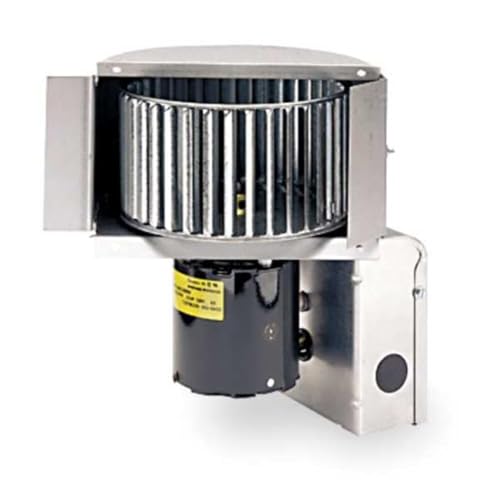
- 275 CFM airflow for compatible ductwork
- Fits 5- to 8-inch round ducts
- Single-speed pressure-switch operation
Best For: Straightforward airflow boosting in compatible HVAC ducts
Smart Register Booster

- Fits 4 x 10-inch register openings
- 120 CFM with 10 speed settings
- App, remote, and smart-home control
Best For: Room-by-room comfort balancing at compatible registers
Adjustable Inline Airflow

- 345 CFM capacity for 6-inch ducts
- Quiet, efficient EC motor
- Stepless dial speed adjustment
Best For: Flexible indoor ventilation and exhaust installations
High-Capacity Duct Booster

- Moves up to 975 CFM
- Designed for 12-inch ducts
- High-velocity indoor exhaust fan
Best For: Large-volume exhaust through compatible ductwork
High-Capacity Pick
Field Controls AB-1 Air Booster

- Up to 305 CFM airflow
- Fits square or round ducts
- Metal construction
Best For: Large-home HVAC systems needing higher airflow
Adjustable Inline Option
AC Infinity RAXIAL S6 Inline Fan

- 265 CFM airflow
- Three-speed controller
- For 6-inch ducts
Best For: 6-inch HVAC ducts needing adjustable airflow
Maximum-Airflow Pick
16-Inch 2875 CFM Inline Duct Fan

- Moves up to 2,875 CFM at 1,720 RPM
- Iron housing with NSK/SKF bearings
- ETL listed with high-static-pressure design
Best For: Large duct systems and high-volume ventilation
Heavy-Duty Large-Duct Choice
Acme Miami 14-Inch 1290 CFM Fan

- Rated for 1,290 CFM at 1,550 RPM
- Fits 14-inch duct or larger
- Steel housing with aluminum fan blade
Best For: Large round duct runs and straightforward exhaust boosting
Low-Power Adjustable Pick
Hon&Guan 4-Inch Inline Booster Fan

- Uses only 6 watts for efficient ventilation
- Variable speed controller included
- 130 CFM output with 26 dBA noise rating
Best For: Small duct branches and quiet localized ventilation
Classic Duct Booster – Tjernlund DB-2
For homeowners comparing duct booster fans for large homes, the Tjernlund DB-2 is a straightforward option for improving airflow in compatible 5- to 8-inch round ducts or shallow rectangular ductwork. It delivers 275 CFM and uses a pressure switch for automatic operation.
Best For: Boosting airflow through compatible small-to-medium duct runs in heating, cooling, or exhaust applications.
Pros:
- Supports 5- to 8-inch round ducts and rectangular ducts as shallow as 3.25 inches
- Provides up to 275 CFM of airflow
- Rated for temperatures up to 200°F
- UL-certified and built with galvanized steel
Cons:
- Has only one speed and one power level
- Produces a listed 45 dB noise level
- No warranty is supplied in the product details
The DB-2 emphasizes simple, durable operation rather than advanced controls. Verify duct dimensions and available electrical access before choosing it for a larger-home HVAC setup.
Smart Register Booster – AC Infinity AIRTAP T4
The AC Infinity AIRTAP T4 is a register-mounted choice among duct booster fans for large homes, designed specifically for 4 x 10-inch openings. Its temperature-responsive operation, 10 speeds, and app-enabled controls make it suited to rooms with uneven heating or cooling.
Best For: Improving comfort in individual rooms with compatible 4 x 10-inch floor or wall registers.
Pros:
- Automatically responds to HVAC-driven temperature changes
- Offers 10 speeds, timers, and customizable heating and cooling triggers
- Includes an LCD display and IR remote
- Supports Alexa, Google Home, and app-based controls
Cons:
- Designed exclusively for 4 x 10-inch duct openings
- Its 120 CFM capacity is lower than the larger inline options in this roundup
- Requires a corded electrical connection
With quiet operation rated at 18 dB and extensive controls, the AIRTAP T4 is a refined room-level solution. Measure the register opening carefully before purchase.
Adjustable Inline Airflow – VIVOSUN P6 6-Inch Inline Fan
For larger duct systems, the VIVOSUN P6 offers 345 CFM from a 6-inch inline fan. Its EC motor, stepless speed regulator, and multiple mounting options make it practical for ventilation, exhausting, and airflow support in areas such as basements, attics, bathrooms, kitchens, and workshops.
Best For: Adjustable ventilation and exhaust in 6-inch indoor duct installations.
Pros:
- Delivers up to 345 CFM of airflow
- Uses an energy-efficient brushless EC motor
- Runs at a listed 32 dB(A) noise level
- Includes stall protection and low-voltage safety features
Cons:
- Limited to 6-inch ducting
- Listed controls provide three power levels despite the stepless speed regulator description
- Intended for indoor use
The P6 is a flexible middle-ground option for homeowners who want more airflow than a register booster and more adjustment than a single-speed fan. Confirm the duct diameter and mounting location first.
High-Capacity Duct Booster – DIVERSITECH 625-AF12
The DIVERSITECH 625-AF12 stands out for shoppers seeking duct booster fans for large homes that can move substantial air volume. This 12-inch duct fan is rated at 975 CFM and is designed for high-velocity indoor exhausting.
Best For: High-volume exhaust applications using compatible 12-inch ductwork.
Pros:
- Provides a strong 975 CFM airflow capacity
- Large 12-inch diameter supports high-volume ventilation
- Listed as easy to install
- Uses aluminum, metal, and plastic construction materials
Cons:
- Requires 12-inch duct space
- The supplied details do not list a noise rating or speed settings
- Recommended primarily for exhausting rather than general room-level boosting
The 625-AF12 is the highest-capacity option here, but its larger duct requirement makes it less suitable for compact branch runs. Check system compatibility and installation space before ordering.
High-Capacity Pick – Field Controls AB-1 Air Booster
For homeowners comparing duct booster fans for large homes, the Field Controls AB-1 is a straightforward option for increasing airflow through either square or round ductwork. Its stated capacity reaches up to 305 CFM, making it a practical fit when you need more air movement than a small register fan can provide.
Best For: Large-home HVAC applications using square or round ducts.
Pros:
- Supports square or round duct installations.
- Provides airflow capacity up to 305 CFM.
- Metal construction is suited to duct-mounted use.
Cons:
- The supplied notes do not identify a variable-speed controller.
- Duct compatibility and installation dimensions should be confirmed before purchase.
The AB-1 stands out for its flexible duct-shape compatibility and relatively high stated airflow. Verify the existing duct layout and installation requirements to ensure it matches your HVAC system.
Adjustable Inline Option – AC Infinity RAXIAL S6 Inline Fan
The AC Infinity RAXIAL S6 is a 6-inch inline booster fan designed to increase existing HVAC airflow or ventilate spaces such as attics, basements, bathrooms, kitchens, and workshops. Its included speed controller lets you balance airflow and noise for different areas of a larger home.
Best For: 6-inch duct runs where adjustable airflow and compact inline installation are priorities.
Pros:
- Variable speed control with three speed levels.
- Produces up to 265 CFM of airflow.
- Die-cast unibody construction is designed to reduce vibration.
- Brushless AC motor with dual-ball bearings.
Cons:
- Designed for 6-inch ducts, limiting compatibility with other duct sizes.
- The notes state that it is not suitable for restricted-airflow applications.
- At 35 dBA, it is not the quietest option listed here.
For large homes with appropriately sized 6-inch ductwork, the RAXIAL S6 offers a useful combination of inline installation, moderate airflow, and speed adjustment. Confirm that the duct run is not restricted before installing it.
Quiet Register Choice – VELLEE 6 x 12 Register Booster Fan
The VELLEE register booster fan is designed to improve airflow at a 6 x 12-inch wall or floor register. For duct booster fans for large homes, its temperature-sensing automation, 10 speed levels, and low stated noise can make it useful in bedrooms and other rooms where comfort and quiet operation matter.
Best For: 6 x 12-inch registers in bedrooms, living spaces, and other rooms needing quieter supplemental airflow.
Pros:
- Rated for airflow up to 200 CFM.
- Operates as quietly as 18 dBA.
- Offers 10 adjustable speeds and automatic temperature-based start/stop.
- Includes a remote, wall adapter, and 12-foot cord.
Cons:
- Requires a nearby electrical outlet.
- Compatibility depends on accurately measuring the 6 x 12-inch duct opening and checking insertion clearance.
- May provide limited benefit if ducts are poorly sealed or insulated.
This is the most room-focused option in the group, with quiet operation and automatic controls rather than inline duct installation. Measure the duct opening—not just the vent cover—and check for obstructions before ordering.
Maximum-Airflow Pick – 16-Inch 2875 CFM Inline Duct Fan
For large homes that need substantial air movement, this 16-inch inline fan stands out among duct booster fans for large homes with its rated 2,875 CFM capacity. Its iron housing, high-static-pressure design, and NSK/SKF bearings make it a strong option for demanding indoor ventilation applications.
Best For: Large duct systems, substantial exhaust needs, greenhouses, grow tents, kitchens, bathrooms, and other spaces requiring high airflow.
Pros:
- High 2,875 CFM airflow at 1,720 RPM.
- Durable iron construction with NSK/SKF bearings.
- ETL listed and designed for high static pressure with low energy consumption.
- Plastic blades are designed for smooth, lower-noise operation than comparable fans.
Cons:
- Large 16-inch size may not suit smaller ductwork.
- Uses 440 watts and has only one power level.
- Requires periodic inspection and cleaning of the impeller.
This is the most capable choice of the three for moving a large volume of air, but its size and power draw make it better suited to substantial systems than modest residential runs.
Heavy-Duty Large-Duct Choice – Acme Miami 14-Inch 1290 CFM Fan
This Acme Miami model is a practical option for large homes using 14-inch or larger round ductwork. Among duct booster fans for large homes, it balances a 1,290 CFM rating with a heavy-duty steel housing, aluminum fan blade, and enclosed motor for straightforward exhaust ventilation.
Best For: 14-inch or larger residential duct runs, dryer-duct boosting, and indoor exhaust applications where a sturdy, single-speed fan is preferred.
Pros:
- Rated for 1,290 CFM airflow at 1,550 RPM.
- Fits 14-inch duct or larger.
- Heavy-duty steel housing and aluminum fan blade.
- Auto thermal reset adds a practical motor-protection feature.
Cons:
- Single-speed operation provides no airflow adjustment.
- Designed for larger ductwork and will not fit smaller runs.
- Its listed 8.1-pound weight may require a secure installation.
Choose this fan when compatibility with a large round duct and durable construction matter more than variable-speed control or maximum listed airflow.
Low-Power Adjustable Pick – Hon&Guan 4-Inch Inline Booster Fan
For smaller runs within a large home, this compact Hon&Guan fan offers a quieter, more adjustable approach than high-capacity inline units. It delivers 130 CFM through 4-inch ductwork, uses only 6 watts, and includes a variable speed controller for tailoring airflow and noise.
Best For: Small HVAC branches, bathrooms, kitchens, basements, attics, workshops, and grow rooms where low power use and adjustable ventilation are priorities.
Pros:
- Low 6-watt maximum power consumption.
- Variable speed controller allows airflow and noise adjustment.
- Rated at 26 dBA for quieter operation.
- Compact 4-inch design supports DIY installation and easy maintenance.
Cons:
- 130 CFM capacity is intended for smaller duct sections, not whole-home high-volume movement.
- Plastic body and blades may be less rugged than metal-bodied alternatives.
- Its 4-inch duct size limits compatibility with larger duct systems.
This is the best fit when a large home needs targeted airflow assistance rather than a single fan for major central ductwork. Its low energy use and speed control are particularly useful for continuous, localized ventilation.
How We Picked the Best Duct Booster Fans for Large Homes
We focused on the factors that matter most in a larger house: useful airflow, compatibility with common duct and register sizes, control options, installation flexibility, noise, power use, and intended application. The list includes register-mounted boosters for single rooms, inline fans for longer duct runs, and high-CFM models for demanding ventilation or large-diameter ductwork.
Because a booster fan cannot fix every HVAC problem, we also considered whether each design is best suited to improving supply airflow, supporting a weak branch run, or moving air through a dedicated ventilation path.
Quick Comparison
| Fan type | Best for | Typical advantage | Key limitation |
|---|---|---|---|
| Register booster | One cold or warm room | Simple, localized installation | Limited to compatible openings |
| Inline duct fan | Long or weak duct runs | Higher airflow and flexible placement | Usually requires duct access and wiring |
| High-CFM fan | Large ducts or ventilation | Moves substantial air volume | May be louder and oversized for room boosting |
| Low-power compact fan | Small branches or supplemental airflow | Efficient and easier to control | Lower output |
Key Buying Factors for Duct Booster Fans for Large Homes
Fan Type and Installation Location
Choose a register booster when you need a quick solution for one room and have a compatible floor or wall opening. An inline fan is usually better for a long branch duct, basement run, or hard-to-reach area, but it requires more involved installation and access to power.
Airflow and Duct Size
Compare the fan’s rated CFM with the duct diameter and the capacity of the existing HVAC branch. A very high-CFM fan is not automatically better: excessive airflow can create noise, drafts, pressure imbalance, or strain on the system. Verify dimensions before ordering, especially for 4-by-10-inch and 6-by-12-inch registers.
Controls, Sensors, and Speed Settings
Variable-speed controls make it easier to balance comfort and noise. Some installations benefit from temperature-triggered operation, while others work better with a manual controller or a fan that runs only when the HVAC system is active.
Noise, Power, and Duct Resistance
Look beyond the headline airflow rating. Grilles, filters, bends, dampers, and long ducts reduce real-world performance. For bedrooms and offices, prioritize low-noise operation and modest power consumption. Seal leaks around the installation so the boosted air reaches the intended room.
Who Should Buy Which Duct Booster Fans for Large Homes?
- Choose a register booster if one room consistently feels too hot or cold and you want the simplest installation.
- Choose a compact, low-power inline model for a smaller branch run, modest airflow needs, or a quieter supplemental setup.
- Choose a controllable 6-inch inline fan when you need adjustable airflow through a longer duct and have room for an in-line installation.
- Choose a high-CFM fan only when the duct diameter, ventilation task, and HVAC system can support its output.
Before buying, inspect the duct for collapsed sections, closed dampers, dirty filters, and leaks. Correcting those issues may improve comfort more than adding a fan. If airflow remains uneven, an HVAC professional can confirm static pressure and recommend a properly sized booster.