Uneven temperatures, weak airflow, and stuffy rooms can make a small home feel uncomfortable even when the HVAC system is running normally. The right duct booster fan can improve air movement in problem areas without requiring a major system upgrade.
This roundup compares 10 booster fans across register-mounted and inline designs, highlighting airflow, control options, noise, power use, and installation considerations so you can choose a practical match for your ductwork and room layout.
Best 10 Duct Booster Fans for Small Homes Picks for 2026
Compact Round-Duct Pick
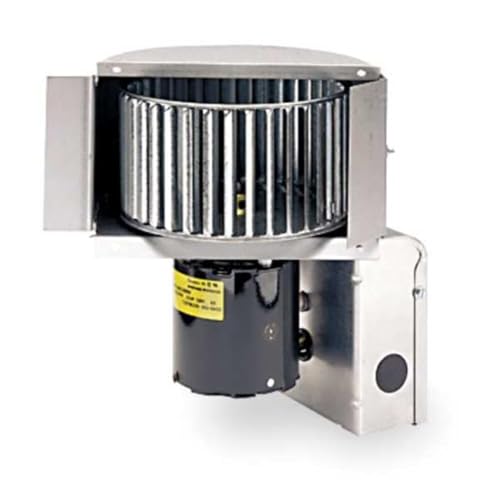
- 275 CFM airflow
- Fits 5- to 8-inch round duct
- Single-speed, 45 dB design
Best For: Compatible small-home duct runs needing simple airflow boosting
Smart Register Upgrade

- Fits 4 x 10-inch openings
- 120 CFM at 18 dB
- App, remote, and smart-home controls
Best For: Quiet, automated airflow improvement in compatible bedrooms
Adjustable Inline Power

- 345 CFM airflow
- 32 dB(A) operation
- Stepless speed adjustment
Best For: Variable ventilation in bathrooms, kitchens, basements, or workshops
High-Capacity Duct Choice
DIVERSITECH 625-AF12 Booster Fan

- 975 CFM airflow
- 12-inch duct diameter
- Designed for indoor exhausting
Best For: Large compatible duct openings and high-volume exhaust tasks
Best Overall

- 265 CFM airflow for 6-inch ducts
- Three-speed controller for airflow and noise adjustment
- Die-cast body helps reduce vibration
Best For: Flexible HVAC boosting and indoor ventilation
Best Simple Inline Option

- Up to 250 CFM airflow
- Designed for flexible or rigid ducts
- Boosts room delivery without major rework
Best For: Basic room-to-room airflow improvement
Best Low-Power Pick

- Uses only 6 watts
- 130 CFM airflow with 26 dBA noise rating
- Three-level speed control included
Best For: Quiet, energy-efficient ventilation in compact spaces
Quiet 5-Inch Pick
Suncourt DB205C Inline Booster Fan

- Up to 130 CFM of boosted airflow
- Quiet, low-energy single-speed design
- DIY installation for 5-inch ductwork
Best For: Small rooms needing a simple forced-air boost
Adjustable Airflow Pick
Simple Deluxe 6-Inch Booster Fan

- Up to 275 CFM airflow
- Variable speed controller included
- Steel housing with overheating protection
Best For: Flexible ventilation in bathrooms, kitchens, basements, and attics
High-Output Pick
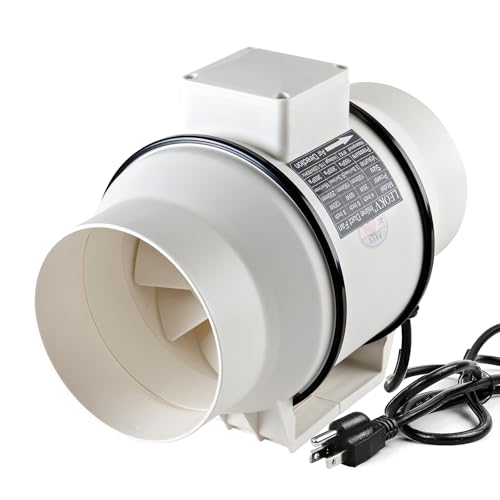
- Powerful 420 CFM airflow rating
- Mixed-flow design for efficient ventilation
- Mounting brackets for horizontal or vertical setup
Best For: Strong ventilation in 6-inch indoor ducting applications
Compact Round-Duct Pick – Tjernlund DB-2
For small homes with underperforming round or shallow rectangular ductwork, the Tjernlund DB-2 is a straightforward option among duct booster fans for small homes. It moves up to 275 CFM through 5- to 8-inch round duct and supports rectangular duct as shallow as 3.25 inches.
Best For: Boosting airflow in compatible residential heating, cooling, or exhausting applications.
Pros:
- Supports 5- to 8-inch round ducts and shallow rectangular duct.
- Provides up to 275 CFM of airflow.
- Rated for temperatures up to 200°F and meets UL specifications.
- Compact 4-pound galvanized-steel construction.
Cons:
- Only one speed and one power level.
- Rated noise level is 45 dB.
- No warranty is listed in the supplied specifications.
The DB-2 makes the most sense when you need a simple, single-speed booster for smaller duct runs and do not need app control or fine speed adjustment.
Smart Register Upgrade – AC Infinity AIRTAP T4
The AC Infinity AIRTAP T4 is a register-style choice for duct booster fans for small homes, especially where a room has persistent hot or cold spots. Built specifically for 4 x 10-inch openings, it adds temperature-responsive airflow and multiple control options without requiring a conventional inline installation.
Best For: Bedrooms and other rooms with 4 x 10-inch registers where quiet, automated airflow control is a priority.
Pros:
- Delivers up to 120 CFM with a quiet 18 dB rating.
- Offers 10 speeds, timers, and customizable heating and cooling triggers.
- Supports the included IR remote, app features, Alexa, and Google Home.
- Automatic vents open with HVAC activity and close when inactive.
Cons:
- Designed exclusively for 4 x 10-inch duct openings.
- Airflow capacity is lower than the larger inline models listed here.
- Requires a corded electrical connection.
Measure the existing register before buying. If the opening matches, the T4 stands out for quiet operation and unusually extensive controls in a compact register booster.
Adjustable Inline Power – VIVOSUN P6 6-Inch Inline Fan
For small homes that need more airflow than a register booster can provide, the VIVOSUN P6 is a flexible inline option among duct booster fans for small homes. Its 6-inch duct format, 345 CFM capacity, and stepless speed control suit ventilation, exhausting, and air-circulation tasks.
Best For: Bathrooms, kitchens, basements, workshops, and other areas needing adjustable inline ventilation.
Pros:
- Moves up to 345 CFM through a 6-inch inline setup.
- Brushless EC motor is designed for energy efficiency and long service life.
- 32 dB(A) noise rating supports quieter operation.
- Allows precise adjustment with a stepless speed regulator.
Cons:
- Inline installation requires compatible duct routing and mounting space.
- It is intended for indoor use.
- The supplied details list three power levels despite the stepless speed-control description.
The P6 is a practical middle ground: more capable than a register fan but less oversized than a 12-inch, 975-CFM booster. Its adjustable control is useful when ventilation needs vary by room or task.
High-Capacity Duct Choice – DIVERSITECH 625-AF12 Booster Fan
The DIVERSITECH 625-AF12 is the high-output option in this group of duct booster fans for small homes. Its 12-inch diameter and 975 CFM rating are better suited to large duct openings or demanding exhaust jobs than to compact residential registers.
Best For: High-volume indoor exhausting where a compatible 12-inch duct fan can be installed.
Pros:
- Provides a substantial 975 CFM of airflow.
- Uses a 12-inch fan format for high-volume applications.
- Designed for easy installation.
- Aluminum, metal, and plastic construction is described as durable.
Cons:
- The 12-inch diameter may be excessive for many small-home duct runs.
- The supplied details do not include a noise rating or speed count.
- Recommended use is focused on exhausting rather than heating and cooling distribution.
Choose this model only after confirming the duct diameter and airflow requirement. Its 975 CFM capacity is compelling for heavy exhaust work but may be more fan than a typical small room needs.
Best Overall – AC Infinity RAXIAL S6
For homeowners comparing duct booster fans for small homes, the AC Infinity RAXIAL S6 offers adjustable airflow for existing HVAC ducts and indoor ventilation. Its 6-inch design delivers up to 265 CFM, while the speed controller helps balance airflow and noise.
Best For: Small homes needing flexible HVAC airflow boosting in rooms, workshops, basements, or other indoor spaces.
Pros:
- Variable speed control helps optimize airflow and noise.
- Moves up to 265 CFM through 6-inch ducting.
- Die-cast construction is designed to reduce vibration.
- Brushless motor with dual-ball bearings and steel blades.
Cons:
- Not suitable for restricted-airflow applications.
- At 35 dBA, it may be more noticeable than quieter compact models.
- Its 6-inch duct size may not fit smaller duct runs.
This is a strong all-purpose choice when you need higher airflow and three-speed adjustment, provided your ductwork can accommodate the 6-inch size.
Best Simple Inline Option – Suncourt In-Line Duct Booster
The Suncourt in-line duct fan is a straightforward option for duct booster fans for small homes. It is designed to improve delivery to rooms that run too hot or cold without major HVAC rework, and it fits both flexible and rigid ducts.
Best For: Homeowners who want a basic inline fan for balancing airflow between rooms.
Pros:
- Designed to boost airflow without major system modifications.
- Works with flexible and rigid ducts.
- Provides up to 250 CFM for indoor ventilation.
- UL-listed according to the supplied product details.
Cons:
- The supplied notes do not specify a variable speed controller.
- Noise level and duct size are not provided in the available details.
- Its basic design may offer less adjustment than speed-controlled models.
Choose this model when simplicity matters more than fine airflow control, but confirm the required duct size and noise expectations before installation.
Best Low-Power Pick – Hon&Guan 4-Inch Inline Fan
For smaller duct runs and energy-conscious spaces, the Hon&Guan 4-inch fan is a compact choice among duct booster fans for small homes. It uses only 6 watts, produces up to 130 CFM, and includes adjustable speed control for ventilation and HVAC airflow boosting.
Best For: Small bathrooms, kitchens, basements, attics, workshops, or other areas using 4-inch ducting.
Pros:
- Low 6-watt power consumption.
- Quiet 26 dBA operation according to the supplied details.
- Variable controller allows airflow and noise adjustment.
- Compact plastic body is designed for quick removal and maintenance.
Cons:
- 130 CFM is lower than the larger 6-inch models in this roundup.
- Plastic construction may be less robust than metal or die-cast alternatives.
- Designed for 4-inch ducts, limiting compatibility with larger ductwork.
This fan makes the most sense where low energy use and quieter operation outweigh the need for maximum airflow, especially in compact rooms with 4-inch ducting.
Quiet 5-Inch Pick – Suncourt DB205C Inline Booster Fan
For small homes with one uncomfortable room, the Suncourt DB205C is a straightforward option among duct booster fans for small homes. Its 5-inch inline design fits existing forced-air ductwork, offers up to 130 CFM, and is designed for quiet, low-energy operation.
Best For: Quietly improving airflow to a hot or cold room in a forced-air heating or cooling system.
Pros:
- Provides up to 130 CFM of boosted airflow.
- Designed for quiet operation with a 51 dB noise rating.
- Simple DIY installation at any angle using basic tools.
- MET-listed and assembled in the USA, with thermal fuse protection.
Cons:
- Single-speed operation offers no airflow adjustment.
- Designed specifically for 5-inch ductwork.
- Intended for indoor use and corded power.
The DB205C is a practical choice when you want a modest airflow boost without adding a controller or making complicated HVAC modifications. Its single-speed setup keeps operation simple, though it provides less flexibility than variable-speed models.
Adjustable Airflow Pick – Simple Deluxe 6-Inch Booster Fan
The Simple Deluxe 6-inch model stands out among duct booster fans for small homes when adjustable airflow matters. It delivers up to 275 CFM and includes a variable speed controller, making it useful for balancing ventilation, noise, and circulation in spaces such as bathrooms, kitchens, basements, and attics.
Best For: Homeowners who want adjustable airflow for ventilation or duct boosting across several indoor spaces.
Pros:
- Offers up to 275 CFM of airflow.
- Variable speed controller helps adjust airflow and noise.
- Steel housing and overheating protection support durable operation.
- Suitable for bathrooms, kitchens, basements, attics, workshops, and grow tents.
Cons:
- Larger 6-inch format may not fit smaller existing ductwork.
- Its listed noise figures vary between the product description and specifications.
- Requires corded electrical power and a standard North American 3-prong connector.
With its controller and higher airflow rating, this Simple Deluxe fan offers more control than a basic single-speed booster. Verify duct size and available installation space before buying, especially in compact rooms or tight utility areas.
High-Output Pick – 6-Inch 420 CFM Inline Fan
For buyers prioritizing strong ventilation, this 6-inch inline fan is the highest-output option among these duct booster fans for small homes. Its mixed-flow design is rated at 420 CFM and includes mounting brackets for horizontal or vertical installation in indoor ducting applications.
Best For: High-airflow ventilation in bathrooms, kitchens, grow tents, and similar indoor spaces with 6-inch ducting.
Pros:
- Rated for powerful 420 CFM airflow.
- Mixed-flow design is intended to improve air movement while reducing noise.
- Mounting brackets support horizontal or vertical installation.
- Sealed plastic housing helps protect against moisture and dust.
Cons:
- Single-speed operation provides limited control.
- Uses 65 watts, more than the lower-output options listed here.
- Requires compatible 6-inch ducting and has a relatively large footprint.
This model makes sense when maximum airflow is more important than fine adjustment. Its 6-inch size, 65-watt motor, and single-speed control are worth checking against your available space and ventilation needs before installation.
How We Picked the Best Duct Booster Fans for Small Homes
We evaluated these fans by looking at the factors that matter most in compact residential spaces: airflow capacity, duct and register compatibility, speed control, operating noise, power consumption, installation complexity, and suitability for heating, cooling, or general ventilation. We also considered whether each model is best used as a register booster, an inline duct fan, or an exhaust-style fan. A higher CFM rating does not automatically mean better performance; the fan must match the duct size and the amount of resistance in the system.
Because small homes often have limited mechanical-room space and rooms close to living areas, quiet operation and simple controls received particular attention. Safety certifications, listed installation requirements, and the manufacturer’s intended use should always take priority over a headline airflow number.
Quick Comparison
- Register-mounted boosters: The AC Infinity AIRTAP T4 is designed for compatible 4-by-10-inch floor or wall registers and is usually the simplest option for one problem room.
- Compact inline fans: Four- and five-inch models are useful where duct access is limited or lower airflow is sufficient.
- Higher-airflow inline fans: Six-inch options can move more air through longer runs, but they need matching ductwork and enough installation space.
- Best for adjustable output: Models with speed controllers let you reduce noise and power use when full airflow is unnecessary.
Key Buying Factors for Duct Booster Fans for Small Homes
Duct Size and Installation Position
Measure the duct diameter or register opening before buying. A fan that is too large may require reducers, create turbulence, or be difficult to mount. Register boosters are convenient for room-level correction, while inline fans belong in an accessible section of duct and may need clamps, supports, or electrical connections.
Airflow, Static Pressure, and Room Size
Use CFM as a starting point, not the only specification. Real airflow falls when the fan pushes through restrictive grilles, filters, bends, or long duct runs. Smaller bedrooms and offices may need only modest assistance, while basements, kitchens, and longer branches may benefit from a larger inline unit.
Noise and Speed Control
For bedrooms and living areas, choose a fan with multiple speeds or a variable controller. Running a larger fan at a lower setting can be quieter and more comfortable than operating a small fan at maximum speed.
Power, Controls, and Safety
Check wattage, plug or wiring requirements, timer compatibility, and whether the fan is intended for HVAC boosting or exhaust ventilation. Do not place an exhaust-oriented model into a forced-air system unless the manufacturer specifically permits that use.
Who Should Buy Which Duct Booster Fans for Small Homes?
Choose a register-mounted booster if you want the easiest solution for one consistently hot or cold room and have a compatible opening. Choose a four- or five-inch inline fan for a compact duct run where low power and a small footprint matter most. A six-inch adjustable inline model is a better fit for longer runs, basements, or larger airflow demands. If quiet operation is your priority, favor a controllable model and run it below maximum speed. Before installation, verify duct dimensions, airflow direction, electrical requirements, and local code expectations.