Hydronic baseboard heaters deliver steady, low-profile warmth by circulating heated water or another liquid through a radiator-style element. They can provide comfortable room heating with less noticeable cycling than many forced-air systems.
This roundup includes complete hot-water baseboards, commercial electric hydronic units, and portable models. Compare output, electrical requirements, dimensions, and installation needs to find the best fit for your room and heating system.
Best 10 Hydronic Baseboard Heaters Picks for 2026
Classic Hydronic Comfort
Slant & Fin 4 ft. Complete Baseboard

- Assembled water-powered hydronic heater
- Radiant heating with adjustable temperature
- White cabinet design for indoor rooms
Best For: Bedrooms and living rooms needing a complete hydronic assembly
High-Output Wall Heating
10-Panel Aluminum Hydronic Radiator

- Produces up to 5,768 BTUs
- Space-saving wall-mounted format
- Quiet operation with included accessories
Best For: Hot-water systems serving bedrooms, bathrooms, or home offices
Extended Baseboard Coverage
5 ft. 30 Series Hydronic Heater
- Five-foot complete baseboard assembly
- Arrives assembled for installation planning
- Made with premium materials
Best For: Hydronic installations needing a longer baseboard section
Commercial Electric Hydronic
Dayton 34 in. Liquid-Filled Baseboard

- 1,918/2,560 BTUs at 240/208VAC
- Liquid-filled element provides residual heat
- Steel housing with overload protection
Best For: Commercial offices with compatible 208/240VAC service
Compact Hydronic Pick
58-Inch 1250W Baseboard Heater

- 58-inch white hydronic electric design
- 1250 watts at 120 volts
- Copper construction; 18-pound listed weight
Best For: 120-volt installations needing a longer white baseboard heater
Commercial-Grade Choice
70-Inch 5118 BTU Hydronic Heater
- 70-inch floor-mounted steel housing
- 5118 BTU output at 120 volts
- Liquid-filled element with residual heat
Best For: Commercial or larger residential rooms needing higher output
Flexible Voltage Pick
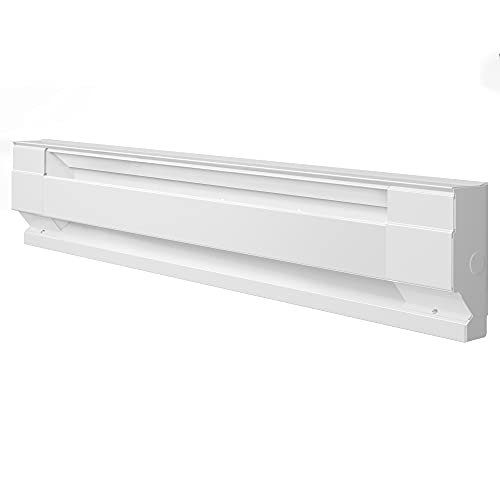
- 36-inch compact baseboard form
- 750/563 watts at 240/208 volts
- Automatic shut-off and limited lifetime warranty
Best For: Smaller rooms with compatible 208- or 240-volt wiring
Commercial Compact Pick
Dayton Hydronic Electric Baseboard Heater
- Quiet liquid-filled heating
- 208/240VAC operation
- 28-inch steel cabinet
Best For: Compact commercial or residential installations
Consistent Whole-Room Heat
Qmark HBB1254 Hydronic Baseboard Heater

- 1,250-watt liquid-filled element
- Quiet natural convection
- Built-in thermal cutoff
Best For: Fixed heating in bedrooms, bathrooms, and living rooms
Portable 120V Option
Fahrenheat FHP1500T Hydronic Heater

- Portable 1,500-watt design
- Built-in smart thermostat
- 150–200 sq. ft. coverage
Best For: Movable supplemental heat in standard 120V rooms
Classic Hydronic Comfort – Slant & Fin 4 ft. Complete Baseboard
For shoppers comparing hydronic baseboard heaters, this assembled Slant & Fin 4 ft. unit offers radiant, water-powered heating in a white cabinet-style design. It is intended for indoor rooms such as bedrooms and living rooms and includes adjustable temperature functionality.
Best For: Indoor bedrooms or living rooms needing a complete hydronic baseboard assembly.
Pros:
- Assembled hydronic heater design
- Radiant heating powered by water
- Adjustable temperature feature
- White cabinet form factor suits many interiors
Cons:
- Listed heat output is 580 BTUs
- Indoor use only
- Product dimensions are unusually detailed and should be verified before installation
This is a straightforward choice when you want a complete, assembled hydronic baseboard heater with a conventional white finish. Confirm the listed dimensions and heat-output requirements for your room before purchasing.
High-Output Wall Heating – 10-Panel Aluminum Hydronic Radiator
This wall-mounted radiator is a strong option for shoppers comparing hydronic baseboard heaters and other hot-water heating systems. Its 10-panel aluminum construction delivers up to 5,768 BTUs, while the side baffles are designed to support even airflow and efficient room heating.
Best For: Bedrooms, bathrooms, home offices, and study rooms with compatible boiler or central-heating systems.
Pros:
- Heat output rated up to 5,768 BTUs
- Wall-mounted design saves floor space
- Quiet, non-blowing operation
- Includes installation accessories and instructions
Cons:
- Requires connection to a boiler or central heating system
- Air vent plug must be opened to ventilate before use
- Wall mounting may require more installation planning than floor units
With its high stated output, compact wall-mounted format, and quiet operation, this radiator suits rooms that need substantial hot-water heat without using floor space. Verify system compatibility and mounting requirements before installation.
Extended Baseboard Coverage – 5 ft. 30 Series Hydronic Heater
This 5 ft. 30 Series complete baseboard is worth considering when comparing hydronic baseboard heaters for a longer heating run. It arrives assembled and is described as being made with premium materials, making it a practical candidate for installations that need the extended length of a five-foot unit.
Best For: Indoor installations requiring a 5 ft. assembled hydronic baseboard section.
Pros:
- Five-foot length provides an extended baseboard run
- Complete hydronic heater assembly
- Arrives assembled
- Designed with premium materials
Cons:
- Detailed heat-output and dimensional information is not provided in the supplied notes
- Longer length may require careful wall-space planning
- Compatibility with the existing hydronic system should be confirmed
The main appeal here is the five-foot format and assembled construction. Since the supplied information does not specify output or full dimensions, check those details and confirm system fit before choosing it for a particular room.
Commercial Electric Hydronic – Dayton 34 in. Liquid-Filled Baseboard
This Dayton unit combines a liquid-filled hydronic element with electric operation, making it a useful comparison point among hydronic baseboard heaters. It provides 1,918/2,560 BTUs at 240/208VAC, mounts on the floor, and is designed for quiet, low-maintenance commercial heating.
Best For: Commercial offices and indoor spaces with a compatible 208/240VAC electrical supply.
Pros:
- Liquid-filled element helps reduce temperature swings
- Provides residual heat after the thermostat turns off
- Rugged 18-gauge steel construction
- Includes overload protection, wiring pigtails, and grounding wires
Cons:
- Requires 208/240VAC electrical service
- Thermostat is sold separately
- Commercial-focused design may not suit every residential installation
This model is a solid fit when you want the steadier heat characteristics of a liquid-filled element in an electric commercial baseboard. Confirm voltage, mounting clearance, wiring requirements, and thermostat compatibility before installation.
Compact Hydronic Pick – 58-Inch 1250W Baseboard Heater
This 58-inch hydronic electric baseboard heater is a straightforward option for shoppers comparing hydronic baseboard heaters for indoor spaces. Its white finish, copper material, and 1250-watt, 120-volt configuration suit installations where a longer baseboard profile is appropriate.
Best For: Buyers needing a white 120-volt hydronic baseboard heater with a 1250-watt rating.
Pros:
- 58-inch length provides an extended heating profile.
- Uses a 1250-watt, 120-volt electrical configuration.
- White finish works with many interior color schemes.
- Copper material is specified for the heater.
Cons:
- Supplied notes do not identify thermostat or mounting hardware.
- The 120-volt configuration may not match every installation.
Consider this model when its 58-inch size and 120-volt electrical requirements align with your room and wiring. Verify installation details before purchase, since the supplied information is limited on controls and mounting.
Commercial-Grade Choice – 70-Inch 5118 BTU Hydronic Heater
Hydronic Electric Baseboard Heater, Commercial, 120VAC, Amps AC 12.5, 1 Phase, BtuH 5118
Check Price On AmazonThis DAYTON hydronic electric baseboard heater is designed for shoppers seeking hydronic baseboard heaters with a commercial-oriented steel housing. Its liquid-filled element is described as quiet, designed to reduce temperature swings, and capable of providing residual heat after the thermostat turns off.
Best For: Commercial or residential rooms needing a 70-inch, 120-volt heater with 5118 BTU output.
Pros:
- 5118 BTU output and 1500-watt rating are specified.
- Liquid-filled element provides residual heat after shutoff.
- Rugged 18-gauge steel construction with enamel finish.
- Includes overload protection, safety limit switch, wiring pigtails, and multiple knockouts.
Cons:
- Thermostat is sold separately.
- Its 70-inch length requires more wall space.
- At 12.5 amps, the electrical circuit should be checked for compatibility.
This is a strong fit when quiet operation, durable steel construction, and residual warmth matter. Confirm available wall length and electrical requirements, and plan for a compatible field-installed thermostat.
Flexible Voltage Pick – Cadet F Series 36-Inch Heater
The Cadet F Series 36-inch electric baseboard heater is a practical comparison point for hydronic baseboard heaters and other electric baseboard options. Its multi-watt, multi-voltage design supports 750/563 watts at 240/208 volts, while universal wiring and pre-punched knockouts are intended to simplify installation.
Best For: Bedrooms, offices, and study rooms needing a compact 36-inch convection heater for up to 125 square feet.
Pros:
- Supports both 240-volt and 208-volt installations.
- Offers 750/563-watt multi-watt capability.
- 36-inch size suits more compact wall areas.
- Includes automatic shut-off and a limited lifetime warranty.
Cons:
- This is an electric convection baseboard heater, not a liquid-filled hydronic model according to the supplied notes.
- Its listed coverage is limited to about 125 square feet.
- It requires a 208- or 240-volt setup rather than 120 volts.
Choose this Cadet when compact dimensions and flexible 208/240-volt wiring are more important than a hydronic element. Its stated coverage and wattage make it best suited to smaller rooms or targeted supplemental heating.
Commercial Compact Pick – Dayton Hydronic Electric Baseboard Heater
For shoppers comparing hydronic baseboard heaters for a commercial or residential room, this Dayton model offers quiet, liquid-filled convection heating in a compact 28-inch cabinet. Its 208/240VAC design produces 1,280 or 1,706 BTU/h, depending on the connection, and it mounts flush to walls over wood, tile, or carpet flooring.
Best For: Commercial spaces or rooms needing a compact, permanently mounted 208/240V heater.
Pros:
- Liquid-filled element helps reduce temperature swings and provides residual heat after shutdown.
- Fanless operation is designed for quiet heating.
- Includes steel construction, automatic overload protection, wiring pigtails, and grounding wires.
- Its 28-inch length suits smaller installation areas.
Cons:
- Requires 208/240VAC wiring and professional installation considerations.
- Thermostat is sold separately.
- Lower output than some longer baseboard units.
This Dayton heater is a practical choice when compact size, durable steel construction, and quiet hydronic performance matter. Confirm the available voltage and plan for a compatible field-installed thermostat before buying.
Consistent Whole-Room Heat – Qmark HBB1254 Hydronic Baseboard Heater
Qmark HBB1254 Liquid Filled Electric Hydronic Baseboard Heater 1250 Watt 240 Volt Navajo White
Check Price On AmazonThe Qmark HBB1254 is one of the more traditional hydronic baseboard heaters for steady room heating. Its 1,250-watt liquid-immersed element uses natural convection instead of a fan, helping distribute heat evenly while retaining warmth after the unit shuts off.
Best For: Bedrooms, bathrooms, and living rooms where quiet, fixed 240V heating is preferred.
Pros:
- Liquid-filled element helps limit temperature swings and hold residual heat.
- Fanless convection avoids fan noise and reduces circulation of dust, allergens, and bacteria.
- Thermal cutoff helps protect against overheating.
- Designed for use on flooring, tile, or carpet.
Cons:
- Requires a 240V electrical supply.
- Its approximately 58-inch length needs more wall space than compact models.
- Fixed floor-mount design is less flexible than a portable heater.
Choose the Qmark when you want a long baseboard profile and steady, quiet convection heat. Verify the installation space and electrical compatibility, especially because this is a 240V unit.
Portable 120V Option – Fahrenheat FHP1500T Hydronic Heater
Fahrenheat FHP1500T 58 in. 1,500-Watt Electric Hydronic Portable Baseboard Heater
Check Price On AmazonAmong hydronic baseboard heaters, the Fahrenheat FHP1500T stands out for portability and standard 120V operation. Its liquid-filled element provides even convection heat, while the built-in smart thermostat helps regulate rooms of about 150 to 200 square feet.
Best For: Renters, offices, bedrooms, and other spaces needing movable supplemental heat without a fixed 240V installation.
Pros:
- Portable floor-mount design can be moved between indoor rooms.
- Liquid-filled element distributes heat evenly.
- Built-in smart thermostat simplifies temperature control.
- 1,500-watt output is listed for approximately 150 to 200 square feet.
Cons:
- Portable construction takes up floor space and is less discreet than a wall-mounted baseboard.
- At 12.5 amps, it may require a suitable 120V circuit.
- Its listed coverage may not suit larger or poorly insulated rooms.
This Fahrenheat model is a convenient choice when flexibility matters more than permanent installation. Its 120V plug-in format and built-in thermostat make it straightforward for supplemental heating, provided the room falls within its stated coverage range.
How We Picked These Hydronic Baseboard Heaters
We selected models across the main categories shoppers encounter: permanently installed hydronic baseboards, liquid-filled electric heaters, commercial electric units, wall-mounted radiators, and portable baseboards. We considered heating output, voltage and amperage, length, installation format, portability, and suitability for residential or commercial spaces.
Because product specifications vary by voltage and configuration, check the manufacturer’s documentation before ordering. A qualified electrician or HVAC professional should verify circuit capacity, wiring, controls, and placement for permanently installed equipment.
Quick Comparison
| Best For | What to Compare | Typical Consideration |
|---|---|---|
| Whole-room supplemental heat | Wattage or BTU output | Higher output generally suits larger or colder rooms |
| Existing hot-water systems | Water connections and dimensions | Choose a compatible complete baseboard assembly |
| Electric installation | Voltage, amperage, and circuit size | Confirm the heater matches the available supply |
| Temporary or flexible heating | Portability and controls | Portable units avoid permanent installation |
Key Buying Factors for Hydronic Baseboard Heaters
Heating Capacity
Compare BTU per hour or wattage with the room’s size, insulation, window area, ceiling height, and climate. Oversizing can increase cost and cycling, while an undersized heater may run continuously without maintaining comfort.
Hydronic System or Electric Hydronic Element
Traditional hydronic baseboards connect to a boiler-fed hot-water loop. Electric hydronic models heat a sealed liquid reservoir and need an electrical connection instead. They are not interchangeable, so identify your system type first.
Voltage, Amperage, and Wiring
Models may require 120, 208, or 240 volts, with substantially different current demands. Confirm the circuit, breaker, thermostat, and wire requirements before installation; never assume a standard household outlet is suitable.
Size, Placement, and Controls
Measure the available wall length and leave the clearances specified by the manufacturer. Baseboards typically work best on exterior walls or beneath windows, where they can counteract drafts. A compatible thermostat can improve comfort and reduce wasted energy.
Who Should Buy Which Hydronic Baseboard Heaters?
- Choose a complete hot-water baseboard if you already have a compatible boiler and hydronic loop.
- Choose a commercial electric model for durable fixed heating in offices, workshops, rentals, or other spaces with verified electrical capacity.
- Choose a wall-mounted liquid-filled radiator when you want a compact electric installation for a bedroom, bathroom, or kitchen.
- Choose a portable electric hydronic heater when you need supplemental heat without permanently mounting a unit.
- Choose a longer or higher-output model for larger rooms, but confirm that the available circuit and wall space can support it.