Staying comfortable in an RV during chilly mornings and cool nights requires a heater that delivers steady warmth without taking up valuable floor space. Infrared models can be an efficient supplement to your RV’s built-in furnace, especially when you want targeted heat in the living area, bedroom, or workspace.
We gathered 10 portable and wall-mountable options with useful features such as thermostats, remote controls, oscillation, timers, humidifiers, Wi-Fi access, and tip-over protection. The right choice depends on your RV’s electrical capacity, available space, insulation, and whether you need occasional spot heating or longer supplemental use.
Best 10 Infrared Heaters for Rvs Picks for 2026
Large-Room Portable Pick

- Dual quartz-and-PTC heating system
- Wheels, remote, timer, and thermostat
- 576-square-foot coverage claim
Best For: Larger enclosed RV interiors with adequate electrical capacity
Space-Saving Smart Pick

- Wall-mounted, floor-saving design
- Wi-Fi phone control and remote included
- Supplemental coverage up to 750 square feet
Best For: RV interiors with a suitable wall location and Wi-Fi control needs
Comfort-Boosting Portable Pick
Dr Infrared DR-998 with Humidifier

- Heating and cool-mist humidification
- Oscillation spreads warmth more evenly
- Remote, timer, wheels, and safety protection
Best For: Portable RV heating with added humidity control
Compact Quiet-Operation Pick

- Three settings including ECO mode
- Quiet 34 dB operation
- Compact cabinet with extensive safety features
Best For: Smaller RV spaces and quiet nighttime heating
Best Wall-or-Floor Option
Heat Storm Phoenix Infrared Heater

- 750W and 1,500W heat settings
- Floor or wall mounting with removable feet
- Thermostat, remote, child lock, and tip-over switch
Best For: RV owners seeking flexible placement and adjustable wattage
Best Hybrid Heating
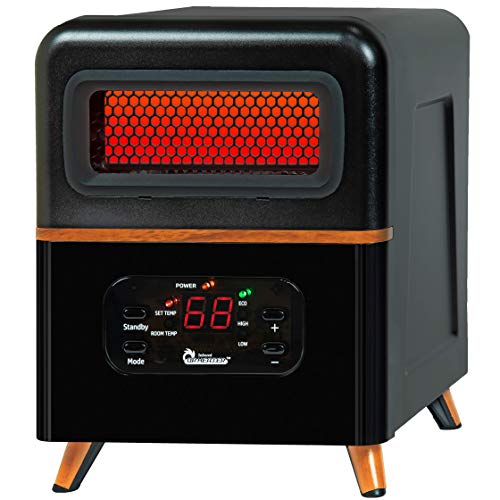
- PTC and infrared dual-heating system
- Eco, 1,200W, and 1,500W settings
- Thermostat, 12-hour timer, remote, and safety shutoffs
Best For: RV owners wanting controlled, cabinet-style hybrid heating
Best Outdoor-Mount Option
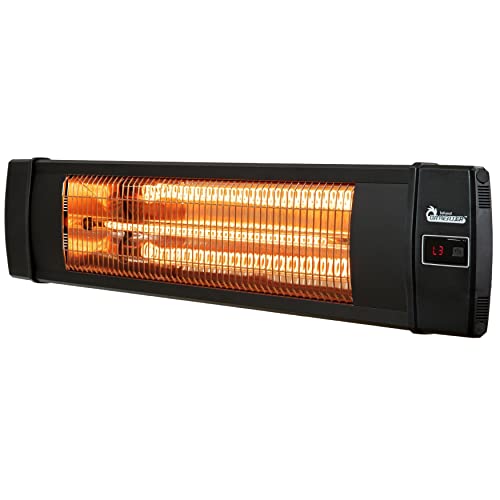
- IP55-rated for indoor and outdoor use
- Three settings up to 1500W
- Remote control and wall/ceiling brackets included
Best For: Covered RV patios, garages, and fixed-mount locations
Best Thermostat-Controlled Cabinet
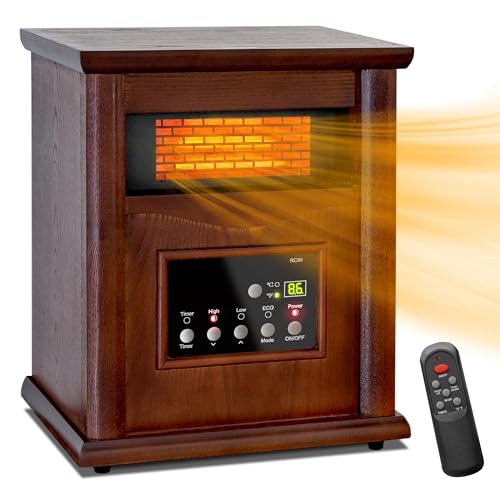
- Adjustable thermostat with LED display
- 1–12-hour timer and quiet operation
- Tip-over and overheat protection
Best For: Indoor RV living areas needing floor placement and temperature control
Best Flexible Placement

- Freestanding, wall, or ceiling mounting
- Three settings up to 1500W
- Timer, remote, and multiple safety protections
Best For: RV users wanting a movable or mountable indoor/outdoor heater
Large-Room Portable Pick – Dr Infrared DR-968
For shoppers comparing infrared heaters for RVs, the Dr Infrared DR-968 is a substantial freestanding option with 1,500 watts of power, caster wheels, and a dual quartz-and-PTC heating system. Its remote, thermostat, timer, and safety features make it practical for controlled indoor zone heating, though its 12.5-amp draw should be checked against your RV’s available electrical capacity.
Best For: Larger RV interiors or other indoor spaces where a wheeled cabinet heater and broad feature set are useful.
Pros:
- Dual infrared quartz tube and PTC heating system rated at about 5,200 BTU.
- Electronic thermostat adjusts from 50°F to 85°F.
- Includes remote control, 12-hour timer, caster wheels, tip-over protection, and overheat protection.
- Advertised heating coverage of up to 576 square feet.
Cons:
- Uses 12.5 amps at 1,500 watts, which may be demanding for some RV electrical setups.
- At 19 pounds, it is less convenient to move than compact heaters.
- Designed for indoor use rather than outdoor RV areas.
The DR-968 stands out when you want a feature-rich, movable heater for a sizable enclosed space. Confirm your RV’s circuit capacity and available floor space before choosing this larger cabinet design.
Space-Saving Smart Pick – Heat Storm HS-1500-PHX-WIFI
The Heat Storm HS-1500-PHX-WIFI is a wall-mounted choice for shoppers seeking infrared heaters for RVs without sacrificing floor space. It offers Wi-Fi control, a digital thermostat, and a remote, while its 1,500-watt output is intended for supplemental heating of spaces up to 750 square feet depending on insulation.
Best For: RV owners who prefer a permanently mounted heater and remote temperature control.
Pros:
- Wall-mounted design preserves valuable RV floor space.
- Wi-Fi connectivity allows temperature control from a phone.
- Includes a digital thermostat, remote, washable filters, and tip-over safety shutoff.
- Can provide supplemental zone heating for up to 750 square feet depending on insulation.
Cons:
- Feet are not included, so it cannot be used as a freestanding heater.
- Installation is required and the unit is intended for indoor use.
- At 1,500 watts and 12.5 amps, it may require careful RV circuit planning.
This model is best suited to a dedicated wall location where saving floor space matters. Its smart controls are convenient, but the wall-mount-only format makes it less flexible than portable alternatives.
Comfort-Boosting Portable Pick – Dr Infrared DR-998 with Humidifier
The Dr Infrared DR-998 combines 1,500-watt infrared heating with a cool-mist ultrasonic humidifier, making it an appealing multifunction option among infrared heaters for RVs. Oscillation helps distribute warmth, while the remote, thermostat, timer, wheels, and safety protections support convenient indoor use.
Best For: RV users who want portable heating plus humidification in one cabinet-style appliance.
Pros:
- Combines infrared quartz and PTC heating for the manufacturer’s stated 60% more warmth than standard 1,500-watt heaters.
- Built-in cool-mist humidifier can help address dry winter air.
- Oscillation promotes more even heat distribution.
- Includes remote control, 50°F–85°F thermostat, 1–12-hour timer, wheels, and tip-over and overheat protection.
Cons:
- Its 12.6-amp draw may be significant for an RV electrical circuit.
- The multifunction cabinet occupies more space than a basic compact heater.
- Designed for indoor use.
The DR-998 is a strong fit when both warmth and humidity control are priorities. Its added functions increase versatility, but RV owners should account for its floor footprint and electrical demand.
Compact Quiet-Operation Pick – WEWARM 1500W Infrared Heater
The WEWARM cabinet heater is a compact option for shoppers comparing infrared heaters for RVs, with 1,000-watt, 1,500-watt, and ECO settings. Its 34 dB operation, 50°F–90°F thermostat, 12-hour timer, remote, and safety features make it practical for bedrooms, offices, and other enclosed spaces.
Best For: Smaller RV rooms where quiet operation, adjustable output, and a compact floor footprint matter.
Pros:
- Three heat settings include 1,000 watts, 1,500 watts, and ECO mode.
- Quiet 34 dB operation is suited to sleeping or focused work.
- Compact 6.4-pound cabinet measures about 9.84 by 10.03 by 12.6 inches.
- Includes a 50°F–90°F thermostat, 12-hour timer, remote, child lock, cool-touch exterior, and tip-over and overheat protection.
Cons:
- Its stated heating coverage is up to 300 square feet, so it may be less suitable for larger RV interiors.
- At 1,500 watts and 12.5 amps, maximum output can still challenge limited RV circuits.
- Floor-mounted design requires a safe location away from traffic and combustible materials.
The WEWARM offers a useful balance of compact size, quiet operation, and flexible power settings. ECO and 1,000-watt modes may be especially helpful when managing an RV’s electrical limits, while the 1,500-watt setting provides maximum output when available.
Best Wall-or-Floor Option – Heat Storm Phoenix Infrared Heater
For shoppers comparing infrared heaters for rvs, the Heat Storm Phoenix is a flexible 1,500-watt option that can sit on the floor or mount on a wall. Its two heat settings, thermostat, remote, and compact cabinet make it practical for a small indoor RV space, provided the installation and electrical setup are suitable.
Best For: RV owners who want a versatile heater with floor and wall-mount options.
Pros:
- Offers 750W and 1,500W power modes for adjustable heat use.
- Includes a thermostat, LED temperature display, and remote control.
- Removable feet and rear mounting points support floor or wall placement.
- Includes child-lock and tip-over protection features.
Cons:
- Designed for indoor use only.
- Its primary listed coverage is 150 square feet, so it may not suit larger RV interiors.
- At 12.5 amps on 1,500W, electrical capacity should be considered before use.
The Phoenix stands out for placement flexibility and convenient controls. It is a sensible pick for a compact RV room or office area when you want selectable wattage and a tidy wall-mounted setup.
Best Compact Radiant Heater – SONBION Portable Quartz Heater
Among infrared heaters for rvs, this SONBION model prioritizes portability and simple radiant warmth. Its lightweight 3.5-pound design, foldable holder, quiet operation, and two-speed settings make it easy to move between suitable indoor areas of an RV.
Best For: RV users who need a small, lightweight heater for targeted indoor warmth.
Pros:
- Compact design weighs 3.5 pounds and includes a foldable holder for storage.
- Uses a quartz/halogen heating element for quiet radiant heat.
- Two speeds provide some control over heat output.
- Includes overheat protection and an anti-tip switch.
Cons:
- Indoor use only and intended for tabletop-style placement.
- No thermostat or remote control is listed in the supplied details.
- Its compact format is better suited to spot heating than broad-area heating.
This is a straightforward choice when storage space matters and you want quiet, localized heat. Its portable format is useful in an RV, but it lacks the controls and mounting flexibility of larger cabinet heaters.
Best Hybrid Heating – Dr Infrared Heater DR-978
The DR-978 is a strong option for shoppers evaluating infrared heaters for rvs who want infrared warmth combined with forced-air circulation. Its hybrid PTC and infrared system, 1,500W high setting, thermostat, timer, and remote provide more control than a basic radiant heater.
Best For: RV owners who prefer a cabinet-style heater with thermostat control and broader listed coverage.
Pros:
- Combines PTC and infrared heating with a larger, low-noise blower.
- Provides Eco, 1,200W low, and 1,500W high settings.
- Thermostat range is listed from 50°F to 86°F, with a 12-hour timer.
- Includes tip-over and overheat shutoff protection plus a three-year limited warranty.
Cons:
- At 10 pounds, it is less portable than compact personal heaters.
- Its listed heating coverage is 400 square feet, but actual RV performance will vary.
- It is freestanding and intended for indoor use rather than wall mounting.
The DR-978 offers the most feature-rich control package of these options and is rated for a larger area. Its hybrid airflow design may appeal to RV users who want more than localized radiant heat, assuming the available electrical supply can support it.
Best Outdoor-Mount Option – DR. INFRARED HEATER 1500W
For shoppers comparing infrared heaters for RVs, this DR. INFRARED HEATER is a strong option when you want instant radiant heat in an indoor or outdoor area. It offers three power settings and can be mounted to a wall or ceiling, though it does not include a thermostat.
Best For: RV owners who need a weather-resistant heater for a covered patio, garage, workshop, or other suitable 120V location.
Pros:
- IP55-rated design supports indoor and outdoor use.
- Three heat settings: 900W, 1200W, and 1500W.
- Includes remote control plus wall and ceiling mounting brackets.
- Aluminum housing and 90% reflective mirror aluminum reflector support efficient radiant heating.
Cons:
- No thermostat for automatic temperature regulation.
- Requires a suitable 120V outlet and draws up to 12.5 amps.
- Mounting-focused design may be less convenient if you need a portable RV heater.
This model makes the most sense when fixed mounting and indoor/outdoor flexibility matter more than portability or thermostat control. Confirm that your RV or campsite electrical setup can support its 1500W maximum draw.
Best Thermostat-Controlled Cabinet – Lifeplus 1500W Quartz Heater
Among infrared heaters for RVs, the Lifeplus 1500W Quartz Heater suits indoor spaces where convenient temperature control and floor placement are priorities. Its cabinet design includes an adjustable thermostat, remote control, timer, and multiple safety features.
Best For: RV interiors, bedrooms, offices, or living areas where a floor-standing heater with thermostat control and quiet operation is preferred.
Pros:
- Offers high, low, and eco heating modes.
- Adjustable thermostat with an LED digital screen.
- Includes a 1–12-hour timer, remote control, and child lock.
- Tip-over and overheat protection add important operating safeguards.
Cons:
- Designed for indoor use only.
- At 16.3 pounds, it is less lightweight than a compact portable heater.
- Remote requires two AAA batteries, which are not included.
This is a practical choice for an RV living space when you want set-and-forget temperature management rather than outdoor versatility. Its 1500W output should be matched to the available electrical capacity before use.
Best Flexible Placement – DR. INFRARED HEATER DR-298
For RV owners seeking infrared heaters for RVs with flexible placement, the DR. INFRARED HEATER DR-298 can operate as a freestanding unit or be mounted to a wall or ceiling. It combines three heat levels, a 12-hour timer, remote control, and indoor/outdoor versatility.
Best For: RV users who want one heater that can roll between suitable indoor spaces or be installed in a fixed location such as a garage, workshop, or covered patio.
Pros:
- Supports freestanding, wall, and ceiling mounting.
- Provides 900W, 1200W, and 1500W settings with remote control.
- Includes a programmable timer of up to 12 hours.
- Has tip-over and over-temperature protection, plus ETL certification.
Cons:
- Maximum power draw is 1500W at 120V and 12.5 amps.
- Its 39-inch height and wheeled base may require careful storage in a compact RV.
- Suitable placement and electrical capacity still need to be confirmed for RV use.
The DR-298 is the most adaptable pick of this group because it can move between spaces or be installed permanently. Its safety interlocks and multiple mounting choices are useful, but the relatively tall form factor should be considered before choosing it for a smaller RV.
How We Picked the Best Infrared Heaters for Rvs
We focused on heaters that are practical for compact interiors and flexible travel use. The selection includes portable units, models with attachable feet, and wall-mountable designs so shoppers can match the heater to their floor plan. We also considered maximum wattage, control options, thermostat functionality, safety features, portability, and whether a unit can work in spaces such as garages or covered patios.
Because RV electrical systems vary, this list includes mostly 1,500-watt heaters but also options with lower heat settings. Always confirm your RV’s circuit capacity and avoid overloading the same circuit with other high-draw appliances.
Quick Comparison
| Feature | Why It Matters in an RV |
|---|---|
| Wattage | Higher output heats faster but places more demand on the electrical circuit. |
| Portability | Portable models can move between rooms, while wall units preserve floor space. |
| Thermostat and timer | These controls help maintain comfort without continuous maximum output. |
| Safety protection | Tip-over and overheat protection are especially important in small, active spaces. |
| Remote or Wi-Fi control | Lets you adjust settings without reaching behind furniture or leaving bed. |
Key Buying Factors for Infrared Heaters for Rvs
Electrical Load and Heat Output
A 1,500-watt heater can draw substantial power, particularly on a 120-volt RV hookup. Lower settings are useful when sharing a circuit with other appliances, but they may take longer to warm a poorly insulated RV. Check the product’s amp draw and your shore-power or generator limits before buying.
Size, Placement, and Mounting
Measure the available floor and wall area first. A compact portable unit is convenient, but it must sit on a stable surface with clear space around it. Wall-mounted heaters save floor space and may be better for narrow aisles, provided the installation location and wall construction are suitable.
Controls and Everyday Convenience
Look for an adjustable thermostat, multiple heat levels, a timer, and a remote if you want simple overnight or morning use. Wi-Fi control can be useful for a permanently installed heater, while basic manual controls may be preferable for occasional travel.
Safety and Operating Environment
Prioritize tip-over shutoff, overheat protection, stable feet, and clearances around the heater. Do not use an indoor-rated model in damp locations unless the manufacturer specifically permits it. Keep cords away from walkways and follow the manual’s placement guidance.
Who Should Buy Which Infrared Heaters for Rvs?
- Choose a portable heater if you move between the living area, bedroom, and workspace.
- Choose a wall-mounted model if floor space is limited and you want a more permanent setup.
- Choose Wi-Fi control if remote temperature adjustments are important for a fixed RV location.
- Choose a humidifier-equipped model if heated indoor air feels particularly dry, while remembering to clean and maintain the water reservoir.
- Choose a lower-setting or multi-level heater if your RV has limited electrical capacity or you regularly share a circuit with other appliances.