The best plastic welders for home workshops make it easier to repair cracked bumpers, containers, pipes, panels, and household plastics without replacing the entire part.
This roundup compares 10 practical options, from compact hot-stapler kits to higher-powered hot-air welders and dedicated PP-R pipe tools, so you can match the equipment to your typical projects.
Best 10 Plastic Welders for Home Workshops Picks for 2026
Versatile Staple Repair

- 1,000 mixed staples in six styles
- Heats staples in about 1–2 seconds
- Front light, ergonomic grip, and carry case
Best For: Home automotive and household plastic repairs
Pipe-Fitting Specialist
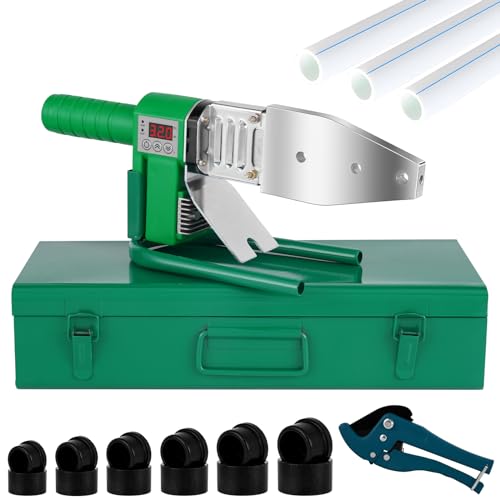
- Six die heads from 0.79 to 2.46 inches
- Adjustable 0–320°C digital temperature display
- Includes a protective iron storage case
Best For: Plastic pipe fusion and plumbing maintenance
High-Volume Staple Repairs
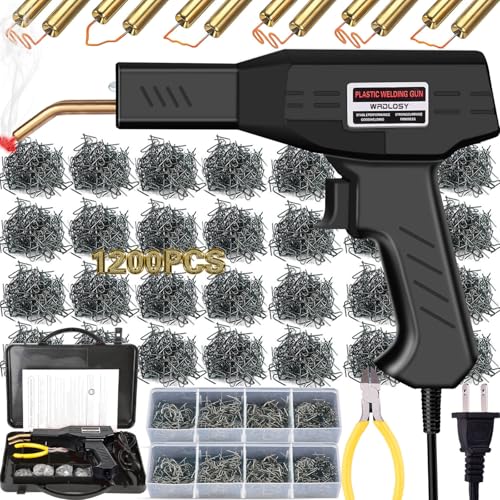
- Includes 1,200 mixed repair staples
- Built-in LED and 1–2-second heating
- Designed for PP, ABS, and PLA plastics
Best For: Frequent bumper and household plastic repairs
Rod-and-Mesh Repair

- UL-certified 80W plastic welding iron
- Includes rods, mesh, tips, tape, and sandpaper
- Stated compatibility with many plastic types
Best For: DIY rod welding on automotive and recreational plastics
Heavy-Duty Hot Air Pick
1600W Plastic Welding Roofing Kit

- 1600W output with 40°C–650°C adjustment
- Multiple nozzles and silicone roller included
- Suitable for membranes, tarps, flooring, and bumpers
Best For: Larger thermoplastic repairs and roofing or seam work
Automotive Repair Pick

- 100W welder and soldering iron in one kit
- Reaches up to 800°F
- Includes a 1,000-piece hot-stapler assortment
Best For: Bumper, dashboard, kayak, and similar plastic repairs
Versatile DIY Pick

- 56 rods cover seven plastic material types
- Three temperature settings and interchangeable tips
- Includes mesh, tape, abrasives, and workshop accessories
Best For: Targeted DIY repairs and material-matching projects
Best Value Hot Stapler

- 200 assorted hot staples included
- LED work light and overheating protection
- Compact 110V tool for ABS crack repairs
Best For: DIY automotive and household crack reinforcement
Best Accessory Bundle

- 900 staples and numerous repair accessories
- 100W heater reaches 400°C in 2–3 seconds
- Front light and portable construction
Best For: Frequent home repairs needing varied supplies
Best Full-Finish Kit

- 150W hot stapler plus 60W soldering iron
- 600°C heating in about three seconds
- Includes rods, staples, tools, and abrasive paper
Best For: Repairs requiring reinforcement and surface finishing
Versatile Staple Repair – ATOLS Plastic Welder Kit
For plastic welders for home workshops, the ATOLS kit is a practical choice for reinforcing cracks and breaks across automotive, household, and recreational plastic parts. It heats staples in about 1–2 seconds and includes six staple styles for different repair shapes.
Best For: Home mechanics repairing bumpers, dashboards, headlights, handles, kayaks, and other common plastic parts.
Pros:
- Includes 1,000 mixed stainless steel staples in six styles.
- Rapid heating and a front light support more controlled repairs.
- Ergonomic rubber handle and carry case make extended or mobile work easier.
Cons:
- It is a corded AC tool, so workshop use requires access to an outlet.
- Staple selection and melting technique require practice on scrap plastic.
With its broad stated plastic compatibility and generous staple assortment, this is a flexible staple-insertion kit for routine home workshop repairs where reinforcement matters more than cosmetic finishing.
Pipe-Fitting Specialist – 110V PP-R Pipe Welder
Among plastic welders for home workshops, this 110V pipe welding machine is designed specifically for joining plastic pipe and fittings rather than repairing cracks with staples or rods. Its adjustable digital temperature display and six included die heads support common pipe-welding tasks.
Best For: Home plumbing projects, maintenance workshops, and construction work involving PPR, PE, PV, and related plastic pipes.
Pros:
- Six included die heads cover sizes from 0.79 to 2.46 inches.
- Temperature adjusts from 0 to 320°C with a visible digital display.
- Thickened 6061 aluminum panel is designed for thermal conductivity.
- Iron storage case simplifies transport and organization.
Cons:
- Its pipe-focused design is less suitable for automotive body or sheet-plastic repairs.
- Users must insert and remove pipe directly without rotating it for proper results.
This is the most specialized option in the group. Choose it when your home workshop needs socket-style pipe fusion, not a general-purpose plastic repair gun.
High-Volume Staple Repairs – WRDLOSY Plastic Welder Kit
For plastic welders for home workshops that handle frequent bumper and household repairs, the WRDLOSY kit supplies 1,200 staples and a built-in LED. It is intended for common plastics such as PP, ABS, and PLA, with the staples embedded gradually into the damaged area.
Best For: Repeated repairs on bumpers, fenders, dashboards, trash cans, appliance handles, and PLA 3D-printed parts.
Pros:
- Complete 1,200-piece assortment includes wave, flat, inside-corner, and outside-corner staples.
- Heats in about 1–2 seconds and includes a front LED for placement visibility.
- Rust-resistant stainless steel staples are designed to hold under shock and twisting.
- Includes a staple cutter and carry case.
Cons:
- Supplied staples are specified for the Wrdlosy brand and a 0.03-inch crown width.
- Not recommended in the notes for nylon or TPO plastics.
- Replacement staples may be needed after the included assortment is used.
The large staple supply makes this a strong choice for a busy repair bench. Its stated material limitations and proprietary staple sizing are important to check before buying.
Rod-and-Mesh Repair – JOUNJIP 80W Plastic Welder
The JOUNJIP uses a heated welding iron, rods, and mesh rather than metal staples, making it a useful alternative among plastic welders for home workshops. Its UL certification, 80W output, and included accessories suit repairs on many automotive, recreational, and household plastic items.
Best For: DIY users repairing bumpers, kayaks, tanks, dashboards, plastic tabs, toys, and recycling bins with welding rods.
Pros:
- UL-certified welder with an 80W heating element.
- Heats to 525°F in a few minutes.
- Includes two triangle tips, wire mesh, aluminum tape, rods, and sandpaper.
- Stated compatibility includes HDPE, LDPE, PP, ABS, PE, TPO, PA, and other plastics.
Cons:
- Heating takes minutes rather than the near-instant staple heating of some alternatives.
- The standard kit includes only 20 black welding rods.
- Rod welding requires surface preparation and technique for a neat, strong joint.
Choose this kit when you want a conventional plastic-welding iron with rods and mesh, especially for larger repairs or materials that are not suited to staple insertion. The UL certification and one-year manufacturer warranty add reassurance for workshop use.
Heavy-Duty Hot Air Pick – 1600W Plastic Welding Roofing Kit
For home workshops handling larger sheets, membranes, or thermoplastic repairs, this 1600W hot air unit is one of the more versatile plastic welders for home workshops. Its adjustable 40°C–650°C range and included nozzles support shaping, seam work, and welding across several compatible plastics.
Best For: Roofing membranes, vinyl flooring, tarps, pool liners, bumpers, and other larger thermoplastic repairs.
Pros:
- High 1600W output with a broad adjustable temperature range.
- Includes flat, round, and speed-welding nozzles plus a silicone roller.
- Works with PVC, PE, PP, PVDF, and similar materials.
- Built-in fan and automatic cooling system support extended use.
Cons:
- At about 2.2 pounds and 12.6 inches long, it is larger than compact plastic repair guns.
- Requires practice to select heat settings without damaging plastic.
- Proper cool-down procedure is needed to protect the heating element.
This is the strongest choice here for broad, high-temperature work rather than small spot repairs. The accessory selection adds useful flexibility, but beginners should practice on scrap material and follow the shutdown instructions.
Automotive Repair Pick – RX WELD 2-in-1 Plastic Welder
This 100W 2-in-1 kit combines a plastic welding gun with a soldering iron, making it a practical option among plastic welders for home workshops that focus on cracks, tabs, and surface finishing. It reaches up to 800°F and includes a 1,000-piece hot-stapler repair assortment.
Best For: Car bumpers, dashboards, kayaks, canoes, children’s ride-on toys, and fuel-tank repairs.
Pros:
- Combines plastic crack repair with a soldering iron for smoothing scars.
- Reaches a maximum temperature of 800°F within about five minutes.
- Includes a large 1,000-piece hot-stapler repair kit.
- Designed for corded residential use and backed by a stated one-year quality guarantee.
Cons:
- Its 100W output is less suited to broad hot-air welding or roofing work.
- Heating takes up to five minutes to reach the listed maximum temperature.
- The supplied notes do not specify the complete contents of the 1,000-piece assortment.
Choose this kit when automotive-style plastic repairs and reinforcement are the priority. The separate soldering-iron function is useful for cleanup, giving it more finishing capability than a basic welding gun.
Versatile DIY Pick – 100W Plastic Welder with Rods
For smaller repairs and material-matching projects, this 100W kit is a straightforward choice among plastic welders for home workshops. It offers three temperature settings, interchangeable tips, and 56 plastic rods covering several common material types.
Best For: DIY repairs on car bumpers, dashboards, kayaks, and assorted household plastic parts.
Pros:
- Includes 56 rods in ABS, PP, PE, TPE, PC, PUR, and PA.
- Three temperature settings and multiple tips support different repair tasks.
- Comes with stainless mesh, foil tape, sandpaper, a brush, screwdriver, and stand.
- Heats quickly and can also function as a soldering iron.
Cons:
- Three preset settings provide less fine control than a continuous temperature dial.
- At 100W, it is intended more for targeted repairs than large-area welding.
- May produce a small amount of smoke during first use from factory protective liquid.
This kit offers a useful balance for occasional workshop repairs, especially when having several rod materials on hand matters. Its compact, pencil-style format is better suited to controlled repair work than large seams or membrane welding.
Best Value Hot Stapler – WEP 960-V Plastic Welder Kit
For home workshops looking for practical plastic welders for home workshops, the WEP 960-V is a focused hot-staple repair tool. It is designed for joining cracks in ABS parts such as bumpers, dashboards, plastic tanks, and household items, with an LED light to illuminate the work area.
Best For: DIY automotive and household crack repairs where hot staples provide internal reinforcement.
Pros:
- Includes 200 hot staples in four shapes for different crack types.
- Built-in LED light helps illuminate the repair point.
- Compact 110V design includes pliers and overheating protection functions.
- Backed by one year of USA technical support.
Cons:
- Primarily a hot-staple tool rather than a full surface-finishing kit.
- Rated for 110–127V USA power and must not be connected to 220V.
- Plastic-welding fumes require appropriate respiratory protection.
The WEP 960-V is a straightforward choice when the main goal is reinforcing cracked plastic quickly. Its included staple assortment and work light make it convenient for routine garage or household repairs.
Best Accessory Bundle – SONNLER 2-in-1 Plastic Welder
The SONNLER stands out among plastic welders for home workshops by pairing a hot stapler with a broad accessory assortment. Its 100W heater reaches up to 400°C in about two to three seconds, making it suited to repeated bumper, household, and other residential plastic repairs.
Best For: Home users who want a large supply of staples and accessories for varied plastic repair projects.
Pros:
- Includes 900 staples plus rods, metal mesh, abrasive paper, tape, pliers, and a tool knife.
- 100W heating system reaches up to 400°C quickly.
- Front light supports visibility during repairs.
- Portable design and one-year quality guarantee.
Cons:
- The large accessory kit weighs about 2.05 kg.
- Supplied details do not specify a separate surface-finishing soldering iron.
- Its 400°C upper temperature rating may offer less heat than higher-power kits.
This kit is appealing when versatility and consumable quantity matter more than minimal size. The extensive staple and accessory selection can reduce the need to buy supplies separately for ongoing home repairs.
Best Full-Finish Kit – SEESII 150W Plastic Welder
For demanding plastic welders for home workshops, the SEESII combines hot-staple reinforcement with a dedicated 60W soldering iron. The 150W welder heats staples to 600°C in about three seconds, while the soldering iron can melt plastic rods and smooth the repaired surface on bumpers, kayaks, dashboards, toys, and similar parts.
Best For: DIYers who want both crack reinforcement and a more finished, sandable repair surface.
Pros:
- 2-in-1 setup includes a 150W hot stapler and 60W plastic soldering iron.
- Heats staples to 600°C in approximately three seconds.
- Includes 200 staples, 20 plastic rods, pliers, knife, and abrasive paper.
- Soft-grip, lightweight tools are designed to reduce hand fatigue.
Cons:
- More equipment than needed for simple staple-only repairs.
- The supplied kit weighs about 2.12 pounds overall.
- Higher power and temperature call for careful handling during DIY use.
The SEESII is the most complete option here for repairs where appearance matters as well as strength. Its separate soldering iron and filler rods provide a practical way to blend, patch, and prepare repairs for sanding.
How We Picked the Best Plastic Welders for Home Workshops
We grouped these tools by the jobs they are designed to handle: reinforcing cracks with heated staples, melting and joining plastic with a tip or rod, welding sheet materials with hot air, and joining PP-R water pipe. We also considered power, included accessories, temperature control, ease of handling, and the types of plastic each design can realistically repair.
Accessory counts can be useful, but they are not the same as performance. A large staple assortment may suit bumper repairs, while interchangeable tips and matching plastic rods matter more for a broader repair workload.
Quick Comparison
| Tool type | Best suited to | What to prioritize |
|---|---|---|
| Hot stapler | Cracks in bumpers, housings, and panels | Fast heating, staple variety, comfortable grip |
| Tip-and-rod welder | Small repairs and material bonding | Temperature control, tips, compatible rods |
| Hot-air welder | Sheet plastic, vinyl, PVC, and roofing membranes | Airflow, heat control, nozzle options |
| PP-R pipe welder | Thermoplastic water-pipe joints | Correct die sizes, stable heating, safe support |
Key Buying Factors for Plastic Welders for Home Workshops
Match the Tool to the Plastic and Repair
Hot staplers reinforce a crack rather than filling it, making them especially useful for automotive trim and rigid plastic housings. Tip-based kits can melt a groove, blend edges, or apply a plastic rod. Hot-air models are better for larger sheet materials but demand more control. A pipe welder is specialized and should not be treated as a general-purpose repair tool.
Check Heat Control and Power
Higher wattage can mean faster heating, but it does not automatically produce better welds. Adjustable temperature or multiple heat settings help prevent scorching thin plastic and provide better control across materials. For occasional small repairs, an 80W to 100W tool may be sufficient; larger hot-air jobs require substantially more power.
Inspect the Included Accessories
Look for staple shapes that fit your repair style, usable pliers, soldering tips, nozzles, and plastic rods labeled for compatible materials. LED lighting can help with close work, while a carrying case and organized storage are worthwhile for a workshop tool used periodically.
Plan for Safety and Cleanup
Use ventilation, eye protection, heat-resistant gloves, and a stable work surface. Remove paint, grease, and loose material before welding, and allow the repair to cool fully before sanding or loading it. Avoid welding unknown plastics or materials that release hazardous fumes when heated.
Who Should Buy Which Plastic Welders for Home Workshops?
- For bumper and panel cracks: Choose a hot-stapler kit with several staple profiles and enough power for quick heating.
- For varied small workshop repairs: Choose a 2-in-1 kit with a soldering-style tip, temperature control, and plastic rods.
- For vinyl, PVC, or roofing work: Choose a dedicated hot-air welder with suitable nozzles and controllable heat.
- For PP-R plumbing: Choose the pipe welder with the die sizes required for your pipe system.
- For frequent or demanding repairs: Favor build quality, thermal consistency, replacement accessories, and safer handling over the largest advertised accessory count.