Portable solar panels can help RV travelers recharge power stations, maintain batteries, and stay comfortable away from hookups. The best choice depends on your energy needs, storage space, connector compatibility, and willingness to set up multiple panels.
We compared 10 portable options ranging from compact 200-watt models to powerful 480-watt systems, including foldable blankets, bifacial panels, and kits with charge controllers. Use the guide below to narrow the list by output, portability, durability, and RV compatibility.
Best 10 Portable Solar Panels for Rvs Picks for 2026
Best Lightweight Blanket
Renogy 400W Solar Panel Blanket
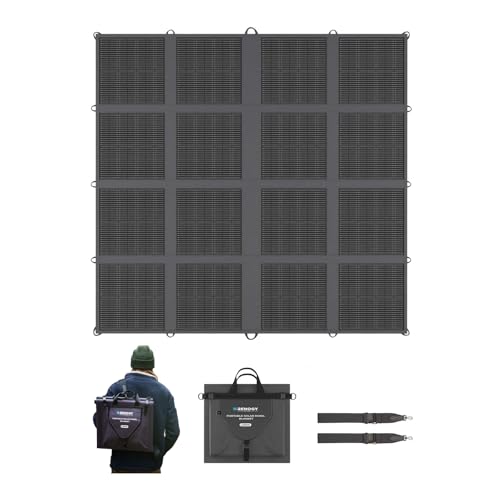
- Compact 16-fold design weighs 16.09 pounds
- 25% efficiency N-Type cells
- Flexible ground, windshield, or hanging setup
Best For: RVers and campers needing easy storage and deployment
Best High-Voltage Pick
ZOUPW 450W Portable Solar Panel

- 450W output with 25% N-Type efficiency
- Designed for 40–60V solar inputs
- Includes kickstands, stakes, cables, and storage bag
Best For: Large compatible power stations used for RV boondocking
Best Complete RV Kit
ECO-WORTHY 200W Solar Panel Kit
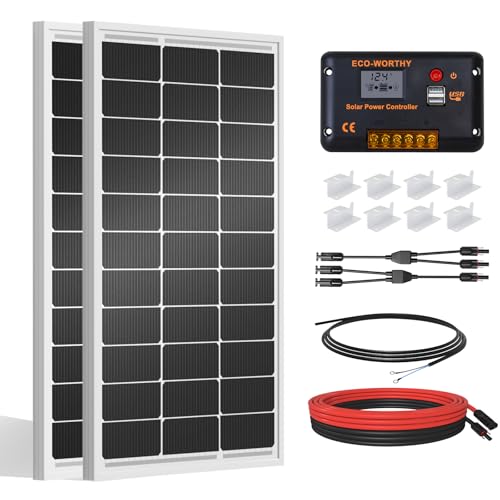
- Includes two 100W panels and a 30A PWM controller
- Supports 12V parallel or 24V series setups
- Includes brackets and solar cables
Best For: Semi-permanent RV and camper installations
Best Bifacial Performance
ZOUPW 480W Bifacial Solar Panel

- 480W N-Type panel with 25% stated conversion
- Bifacial design can gain from reflective surfaces
- 22.5-pound composite construction
Best For: High-voltage RV power stations and reflective campsites
High-Capacity Pick

- 400W output with 21.5–23.5% stated efficiency
- MC4 connection works with most major power stations
- Kickstands, hanging loops, and briefcase-style handle
Best For: RVers prioritizing higher charging capacity
Lightweight Efficiency Pick

- 25% stated efficiency from 16BB N-type cells
- 13.89 lb with a compact magnetic-folding design
- USB-C PD and dual USB-A charging ports
Best For: RVers needing compact storage and direct USB charging
Best High-Output Blanket

- 400W foldable blanket with up to 25% efficiency
- Compact 14-fold design with backpack-style carry features
- IP65 waterproof and compatible with select power stations
Best For: RVers needing high portable output and flexible placement
Best Bifacial Design

- 400W foldable panel with dual-sided power generation
- 25%+ efficiency from N-type solar cells
- IP68-rated frame with included charging cables
Best For: RVers using reflective campsite surfaces and wanting durable construction
Best Connector Flexibility
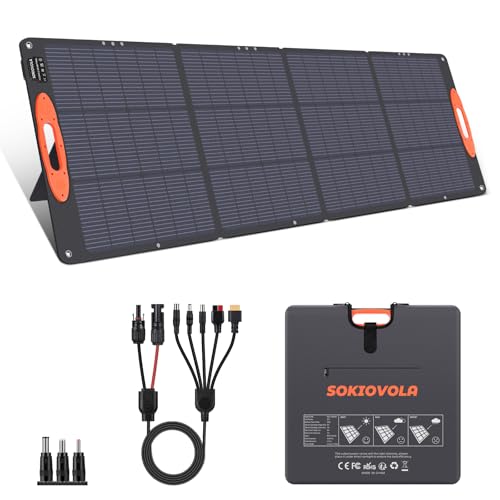
- 200W foldable panel with up to 25% efficiency
- Includes MC4-to-5-in-1 cable for broad compatibility
- IP68 waterproof ETFE-coated construction
Best For: RVers wanting versatile connections and compact storage
Best Lightweight Blanket – Renogy 400W Solar Panel Blanket
If storage space is limited, the Renogy 400W blanket is a practical option among portable solar panels for RVs. Its 16-fold design packs down compactly, while multiple placement methods make it adaptable to campsites, vehicles, and other off-grid setups.
Best For: RVers, van travelers, and campers who prioritize compact storage and flexible deployment.
Pros:
- 16-fold design weighs 16.09 pounds and stores compactly.
- 25% efficiency N-Type cells are designed to capture more power from available sunlight.
- Can be placed on a windshield, ground, or suspended from trees and racks.
- UL 61730 certified, with additional listed compliance claims including CE, RoHS, and FCC.
Cons:
- Provides MC4 output only; the 4-in-1 adapter is sold separately.
- Actual output depends on sunlight, shade, temperature, cable length, and the power station’s input limits.
This blanket is a strong fit when portability matters more than a rigid, fixed installation. Check your power station’s input requirements and plan for a compatible adapter if needed.
Best High-Voltage Pick – ZOUPW 450W Portable Solar Panel
The ZOUPW 450W is designed for large power stations and is worth considering when shopping for portable solar panels for RVs with a 40–60V solar input. Its rigid fiberglass construction, kickstands, stakes, and adapter cable support quick outdoor setup.
Best For: RV boondockers using compatible high-capacity power stations such as select EcoFlow, Anker, and Bluetti models.
Pros:
- 450W N-Type 16BB panel with a stated 25% efficiency.
- Four adjustable kickstands help position the panel toward the sun.
- IP68-rated construction and ETFE coating are designed for rain, dust, and marine spray.
- Includes a 4-in-1 connector cable, extension cable, ground stakes, and storage bag.
Cons:
- Its 45.9V open-circuit voltage makes it unsuitable for low-voltage units below 30V input, including listed Jackery 1000/500/300 models.
- The manufacturer does not recommend long-term fixed, series, or parallel connections.
This model can deliver substantial charging potential, but compatibility is the deciding factor. Confirm your power station’s voltage range before buying, especially if you use a Jackery or another lower-voltage unit.
Best Complete RV Kit – ECO-WORTHY 200W Solar Panel Kit
For RV owners building a more traditional solar setup, the ECO-WORTHY kit offers two 100W monocrystalline panels plus a 30A PWM charge controller. It is a more installation-oriented choice among portable solar panels for RVs, with mounting hardware and cables included for 12V or 24V configurations.
Best For: RVs, campers, caravans, and other off-grid applications needing a bundled panel-and-controller system.
Pros:
- Includes two 100W panels, a 30A PWM controller, mounting brackets, and cables.
- Can be connected in series for 24V or parallel for 12V applications.
- Aluminum frames are rated for 2400Pa wind load and 5400Pa snow load.
- Pre-drilled panels and plug-and-play cables support quicker installation.
Cons:
- At 31.6 pounds and with 35.2-by-23.1-inch dimensions per listed item, it is less compact than foldable blankets.
- The included controller is PWM rather than MPPT.
- Power production depends on sunlight; the stated 800Wh/day figure assumes four hours of full sunshine.
This kit makes sense when you want a complete 200W system rather than a standalone folding panel. It is better suited to a semi-permanent RV or camper installation than frequent pack-in, pack-out travel.
Best Bifacial Performance – ZOUPW 480W Bifacial Solar Panel
The ZOUPW 480W combines a high-voltage design with bifacial cells that can use reflected light from suitable surfaces. For shoppers comparing portable solar panels for RVs, its low stated weight and included cables make it appealing for larger power stations and off-grid travel.
Best For: RV and wilderness users with compatible high-voltage power stations who can position the panel over reflective ground such as sand or snow.
Pros:
- 480W N-Type 16BB panel with a stated 25% conversion rate.
- Bifacial design may provide up to 30% additional gain on high-albedo surfaces.
- Composite construction weighs 22.5 pounds for easier single-person deployment.
- Includes a 4-in-1 connector cable, extension cable, ground stakes, and storage bag.
Cons:
- The 42.5V architecture is intended for large, compatible power stations rather than every portable generator.
- Bifacial gains depend on reflected light and may not be available on ordinary shaded or dark ground.
- The manufacturer advises against long-term fixed, series, or parallel connections.
This is a compelling choice for high-capacity systems where weight and maximum portable output matter. To benefit from the bifacial design, give the rear side room to receive reflected light and verify your power station’s input specifications first.
High-Capacity Pick – 400W Foldable Solar Panel
For RV owners needing substantial off-grid input, this 400W foldable panel is a powerful option among portable solar panels for RVs. Its MC4 connection works with most major power-station brands, while the kickstands and hanging loops support flexible campsite or RV setups.
Best For: RVers who want high solar output and broad power-station compatibility.
Pros:
- 400W output with stated 21.5–23.5% conversion efficiency
- Compatible with most Jackery, Goal Zero, EcoFlow, Bluetti, Anker, and other power stations
- Four adjustable kickstands and edge hanging loops simplify positioning
- Folds to one-quarter size and includes a carrying handle
Cons:
- At 21.5 lb, it is heavier than the smaller panels in this roundup
- The junction box is not waterproof, and the panel should not be left in rain or submerged
This panel makes the most sense when maximizing charging potential matters more than minimizing packed weight. Confirm your power station’s solar-input limits before buying, since the station may cap usable wattage.
Lightweight Efficiency Pick – Renogy 200W Portable Panel
Renogy’s 200W panel is a compact choice for portable solar panels for RVs, especially when storage space and carrying weight matter. Its 25% stated efficiency, magnetic folding design, USB outputs, and adjustable kickstands make it useful at campsites, in SUVs, or beside an RV.
Best For: RVers who want a lightweight panel with direct USB charging and a compact folded footprint.
Pros:
- 16BB N-type cells provide a stated 25% efficiency
- Weighs 13.89 lb and folds to 23.72 x 22.99 x 1.97 inches
- USB-C PD 45W and dual USB-A ports can charge everyday devices directly
- Includes four kickstands, reinforced grommets, and multiple positioning angles
Cons:
- Its 200W maximum output is lower than the larger panels here
- MC4 output is included, but the 4-in-1 adapter is sold separately
- Compatibility should be checked against the power station’s requirements
Choose this model when a manageable carry weight and easy device charging are more important than maximum panel wattage. The two-year material and workmanship warranty adds useful ownership support.
Complete Kit Pick – DOKIO 300W Foldable Solar Panel
The DOKIO 300W kit stands out among portable solar panels for RVs because it includes a separate PWM charge controller, long cable, storage bag, and multiple connection adapters. That bundle supports 12V batteries, power stations, and small-device charging without requiring as many extra accessories.
Best For: RV and van owners who want a versatile, ready-to-use kit for 12V systems and camping.
Pros:
- 300W panel folds to 19.3 x 37.4 x 1.1 inches and weighs 15.2 lb
- Standalone controller helps protect against reverse polarity, overcharge, overload, and short circuit
- Includes a 9.85-foot cable for placing the panel in stronger sunlight
- Comes with SAE, XT60, alligator-clip, DC adapters, USB ports, bag, and manual
Cons:
- Some power stations may limit solar input to 100–200W
- The fabric case should not be left in heavy rain or strong sun for extended periods
- Its one-year warranty is shorter than the Renogy panel’s stated warranty
This is a practical pick for buyers who value included accessories and direct 12V-battery support. Check your power station’s input ceiling before ordering, because the system may not accept the panel’s full 300W rating.
Best High-Output Blanket – RENOGY REGO 400W
For shoppers comparing portable solar panels for rvs, the RENOGY REGO 400W stands out as a compact, foldable blanket designed to deliver substantial output without the bulk of a rigid setup. Its shoulder straps, carry handle, ETFE-laminated case, and multiple placement options make it practical for RV campsites, SUVs, and off-grid charging.
Best For: RVers who want a high-output, highly portable panel for compatible power stations or 12V/24V battery systems.
Pros:
- 400W output with N-type solar cells and up to 25% efficiency.
- Compact 14-fold design with carry handle and adjustable shoulder straps.
- Can be placed on the ground, hung, or used as a vehicle sunshade while charging.
- IP65 waterproof construction and operation from -10°C to 65°C.
Cons:
- MC4 output cables are included, but a 4-in-1 adapter is sold separately.
- Solar charge controller is not included for direct 12V/24V battery use.
- At 8.57 kg, it is portable but not ultralight.
This is a strong option when maximum portable wattage matters more than the simplest plug-and-play setup. Confirm your power station’s voltage, current, and connector requirements before buying.
Best Bifacial Design – Anker SOLIX PS400
The Anker SOLIX PS400 is a convenient choice among portable solar panels for rvs when you want 400W capacity with a framed, foldable design. Its bifacial construction can capture light from both sides, while the included stand and charging cables simplify campsite setup.
Best For: RV campers who frequently set up on reflective surfaces such as concrete, sand, or snow and want a durable, weather-resistant panel.
Pros:
- Dual-sided output can provide up to 10% more power in suitable conditions.
- 25%+ conversion efficiency from N-type solar cells.
- IP68 water and dust resistance with a reinforced aluminum frame.
- Includes two 8.2-foot solar cables and an XT-60i cable.
Cons:
- At 21.9 lb including the stand, it may be cumbersome for frequent repositioning.
- The bifacial advantage depends on reflected light and placement conditions.
- Its listed dimensions are substantial when unfolded.
The PS400 makes sense for RVers who prioritize rugged construction and broad solar collection over minimum carry weight. Its bifacial design is especially useful where light can reach the panel’s rear surface.
Best Connector Flexibility – SOKIOVOLA 200W
For RVers seeking portable solar panels for rvs at a more manageable power level, the SOKIOVOLA 200W foldable panel offers broad power-station compatibility and a compact folded footprint. Its included 5-in-1 cable helps connect with many popular generator brands, while the ETFE coating is designed for outdoor use.
Best For: RV campers who need a versatile 200W panel for Jackery, EcoFlow, Bluetti, Anker, and similar portable power stations.
Pros:
- Up to 25% conversion efficiency with A+ monocrystalline cells.
- Folds to approximately 21 by 23 inches and includes a magnetic handle.
- Includes an MC4-to-5-in-1 cable supporting several common connector types.
- IP68 waterproof design with ETFE coating.
Cons:
- Its 16.3-pound weight may be too much for extended backpacking.
- Actual charging can be limited by a power station’s maximum solar input.
- Output is lower than the 400W panels in this roundup.
This model is a practical fit when connector versatility and easy storage matter more than maximum wattage. Check your power station’s input limit and connector requirements to avoid leaving available solar capacity unused.
How We Picked the Best Portable Solar Panels for Rvs
We focused on practical features that matter when generating power on the road: rated wattage, panel efficiency, portability, setup time, construction, connector types, and included accessories. The selection includes panels designed for portable power stations as well as kits intended for more direct RV battery charging.
Because solar output varies with weather, shade, panel angle, and temperature, rated wattage is a best-case figure rather than a guaranteed result. We also considered whether each option is better suited to occasional camping, extended off-grid stays, or supplementing an existing RV solar system.
Quick Comparison
- Best for maximum portable output: 450W and 480W foldable panels can recharge compatible power stations faster, but they require more storage room and careful positioning.
- Best balance of power and portability: 200W to 400W panels offer useful capacity without being as cumbersome as the largest models.
- Best for direct RV battery projects: Solar kits with a charge controller simplify installation for users building or expanding a 12V or 24V system.
- Best for variable sunlight: Bifacial panels may capture reflected light from bright ground surfaces, though the real-world benefit depends heavily on placement.
Key Buying Factors for Portable Solar Panels for Rvs
Power Output and Daily Energy Needs
Estimate how much energy you use each day before choosing a panel. Phones, lights, laptops, and small appliances may work well with a 200W panel, while refrigerators, medical equipment, and larger power stations may justify 400W or more. Your power station or charge controller must also accept the panel’s voltage and current.
Portability and Storage
Foldable panels are convenient, but high-output models can be wide, heavy, and awkward to carry. Check folded dimensions, handles, case design, and setup requirements against your RV’s storage compartments. A slightly smaller panel that you use consistently may be more useful than a larger one that is difficult to deploy.
Compatibility and Connections
Confirm connector style, operating voltage, maximum input wattage, and polarity before buying. MC4-equipped panels often work with adapters, but compatibility should never be assumed. Direct battery systems generally require an appropriate charge controller; panels made for power stations may connect more simply but still need matching input limits.
Weather Resistance and Durability
Look for water-resistant construction, sturdy hinges or fabric, reinforced cables, and a stable kickstand or folding support. Even weather-resistant panels should be protected during severe storms and stored dry after exposure to rain.
Who Should Buy Which Portable Solar Panels for Rvs?
Choose a compact 200W model if you have limited storage, modest energy demands, or a smaller power station. A 300W to 400W panel is a stronger all-purpose choice for many RV owners who want faster charging without moving to the largest setup. Select a 450W or 480W option when rapid charging is the priority and your power station, roof space, and storage area can support it.
Buy a kit with a charge controller if you are assembling a dedicated RV battery system and want the core charging hardware included. Bifacial models are worth considering for sunny campsites with reflective surfaces and room to position the rear side, while high-efficiency N-type panels can be useful when available setup space is limited. Before ordering, verify every electrical specification against your RV or power station.