Thermal cameras can make RV maintenance faster, safer, and far less guesswork-driven. From finding electrical hot spots to spotting insulation gaps and moisture issues, the right tool helps you diagnose problems before they turn into expensive repairs.
Below, we’ve rounded up 10 strong options for different budgets and use cases, so you can choose a thermal camera that fits how you travel and maintain your rig.
Best 10 Thermal Cameras for Rvs Picks for 2026
AI-Powered Detail Finder
HSFTOOLS F2VW 640x480 Super Resolution Thermal Imager

- Live AI super resolution up to 640x480
- Dual IR and visual cameras with 4 imaging modes
- Wi‑Fi sharing plus LED flashlight and tripod mount
Best For: RV owners who want high-detail handheld inspections
Touchscreen Scene Scanner
HP96 3.5" Touch Thermal Camera
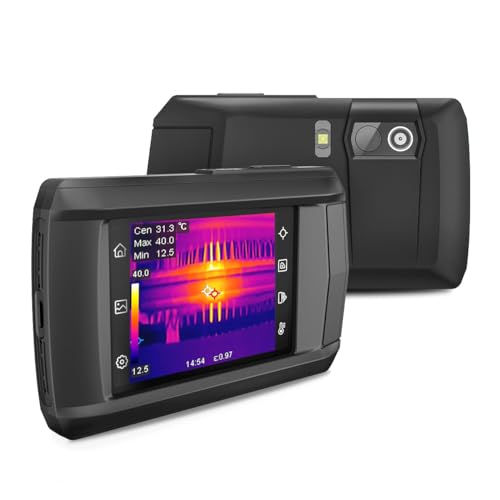
- 3.5-inch touchscreen with phone-style UI
- IntellFault helps spot leaks and insulation gaps
- Dual cameras with five imaging modes
Best For: RV owners who want guided inspections with an easy touchscreen
Phone-Ready Pocket Tool
TOPDON TC001 Max Dual-Lens Thermal Camera

- USB-C/Lightning plug-and-play for phones and tablets
- Dual-lens infrared plus visible-light imaging
- Patented TISR boosts resolution to 512x384
Best For: RV owners who want a compact phone-connected inspection tool
Durable Everyday Inspector
MILESEEY TR10 192x192 Thermal Camera

- 192x192 infrared resolution with 25Hz refresh
- 6.6-foot drop test and recessed lens protection
- 8-hour battery life with 8GB storage
Best For: RV owners who want a rugged, long-running inspection camera
AI Inspection Pick
TT17D Wi-Fi Thermal Camera with 240x240 UIRA

- AI presets for moisture, insulation, electrical, and solar checks
- 240x240 thermal imaging with fusion and multiple display modes
- Compact touchscreen design with storage and IP54 protection
Best For: RV owners who want guided thermal scanning and quick issue detection
Pocket-Friendly Pick
TOPDON TC004 Mini 240x240 TISR

- 240x240 enhanced thermal detail with TISR technology
- 15-hour battery life and pocket-friendly build
- Preset alerts can auto-capture photos when temps run high
Best For: RV owners who want a lightweight thermal camera for routine inspections
Phone-Connected Pick
RISION Magic Thermal Camera 320x240 QuadIR

- USB-C camera works with iOS, Android, and Windows devices
- 320x240 QuadIR upscaling with visible-light fusion
- App includes thresholding, PIP, and area analysis tools
Best For: RV owners who want a phone-connected thermal scanner with app diagnostics
USB-C Phone Thermal Pick
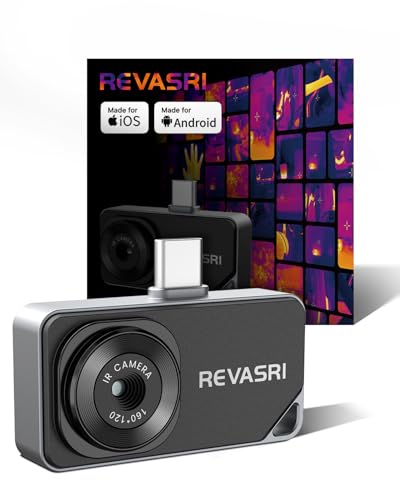
- 320x240 super-resolution with 25Hz refresh
- High/low temperature alarms and tracking
- IP54 rating with 1-meter drop protection
Best For: RV owners who want a compact USB-C thermal camera for phone-based inspections
Ultra-Portable Inspection Pick

- 320x240 X³ IR resolution with 25Hz output
- Tiny 17g body with 5-8 hour runtime
- 15x zoom, alarms, and isotherm mode
Best For: RV owners who want a pocket-sized thermal imager with solid detail and battery efficiency
Standalone Field Scanner

- 240x240 TSIR imaging with 50° x 50° view
- 18-hour battery life with 2.8-inch screen
- 16GB storage and temperature alarms
Best For: RV owners who want a standalone handheld thermal camera for long inspection days
AI-Powered Detail Finder – HSFTOOLS F2VW 640×480 Super Resolution Thermal Imager
If you want thermal cameras for rvs that can help spot hot spots, air leaks, and other hidden issues quickly, the HSFTOOLS F2VW is built for detailed inspections. Its live AI super resolution, dual-camera setup, and Wi‑Fi sharing make it a practical choice for owners who want more image clarity without a complicated workflow.
Best For: RV owners who want high-detail thermal imaging with visual overlays and wireless sharing.
Pros:
- Live AI super resolution boosts imaging from 256×192 to 640×480 for clearer detail.
- Dual IR and visual cameras offer Thermal, Visual, Fusion, and PIP modes.
- Wi‑Fi connectivity makes it easy to share images to a smartphone or tablet.
- Built-in LED flashlight and tripod mount add convenience for dim inspections.
Cons:
- Bigger than a phone accessory, so it is less pocketable than compact plug-in options.
- Best suited to users who want a dedicated handheld tool rather than a quick phone-based scan.
The F2VW stands out if you value image enhancement and flexible viewing modes during RV troubleshooting. It is a strong pick when clarity matters more than minimum size or simplicity.
Touchscreen Scene Scanner – HP96 3.5" Touch Thermal Camera
For buyers comparing thermal cameras for rvs, the HP96 is a useful option when you want a simple touchscreen workflow and scene recognition for common trouble spots. Its IntellFault detection, large 3.5-inch display, and recording features make it easier to inspect RV walls, electrical areas, and other hard-to-check spaces.
Best For: RV owners who want an easy-to-use thermal camera with touchscreen controls and automated scene detection.
Pros:
- 3.5-inch touchscreen with phone-style controls for fast operation.
- IntellFault scene recognition can identify water leaks and insulation gaps.
- Dual cameras and five image modes help improve scene clarity.
- Built-in storage, microphone support, and flashlight add inspection convenience.
Cons:
- No moisture readings, so it is not a full leak-mapping solution.
- Base infrared resolution is 96×96 before super-resolution enhancement.
The HP96 makes sense if you want guided detection and an intuitive interface more than raw portability. It is a practical midrange pick for routine RV diagnostics and spot checks.
Phone-Ready Pocket Tool – TOPDON TC001 Max Dual-Lens Thermal Camera
If you want thermal cameras for rvs that stay small and simple, the TOPDON TC001 Max is designed as a plug-and-play accessory for phones and tablets. Its dual-lens setup, case-friendly connection, and app-based analysis make it a smart option for quick RV checks without carrying a larger standalone unit.
Best For: RV owners who want a compact phone-connected thermal camera for fast on-the-go inspections.
Pros:
- USB-C and Lightning support with true plug-and-play setup.
- Dual-lens design combines infrared and visible-light imaging.
- Patented TISR boosts thermal resolution to 512×384.
- App tools support photos, video, 3D analysis, and real-time graphs.
Cons:
- Depends on a compatible phone, tablet, or Windows device.
- No built-in battery, so it runs through the connected device.
The TC001 Max is a strong choice if portability and convenience are your top priorities. It is especially appealing for RV owners who already prefer using a phone for inspection work.
Durable Everyday Inspector – MILESEEY TR10 192×192 Thermal Camera
The MILESEEY TR10 fits well into the category of thermal cameras for rvs when you want a durable handheld unit for regular checks. With 192×192 resolution, 25Hz refresh, and an 8-hour battery, it is set up for smooth scanning of components, surfaces, and problem areas around the coach.
Best For: RV owners who need a rugged thermal camera for long inspection sessions and everyday troubleshooting.
Pros:
- 192×192 infrared resolution with 25Hz refresh for smoother viewing.
- NETD under 50 mK helps reveal subtle thermal differences.
- 6.6-foot drop test and recessed lens protection improve durability.
- 8-hour battery life and 8GB storage support longer use in the field.
Cons:
- No visible-light camera is listed in the supplied specs.
- Base resolution is lower than some higher-end super-resolution competitors.
The TR10 is a solid choice if you want reliability, long runtime, and a tougher build for repeated RV inspections. It is best viewed as a practical workhorse rather than a premium imaging device.
AI Inspection Pick – TT17D Wi-Fi Thermal Camera with 240×240 UIRA
If you’re comparing thermal cameras for rvs, the TT17D stands out for its AI-assisted inspection modes and built-in visual fusion. It’s designed to help you spot moisture intrusion, insulation gaps, electrical issues, and other hidden problems quickly, with a layout that feels easy to use in the field.
Best For: RV owners and inspectors who want guided thermal scanning with quick mode presets.
Pros:
- UIRA-Scene AI can identify moisture, insulation, floor heating, electrical, and solar-related issues.
- 240×240 thermal imaging with fusion, thermal, visual, PIP, and blending modes.
- 3.5-inch touchscreen with simple swipe-and-tap controls.
- Portable build with 20,000-image storage, IP54 protection, and a tripod mount.
Cons:
- More feature-rich than a basic handheld thermal camera, so casual users may not need every mode.
- Battery life is rated at 4 hours, which may be limiting for longer inspection days.
Overall, the TT17D is a strong fit if you want a more guided diagnostic tool rather than a bare-bones imager. Its presets and fusion views make it especially useful for finding RV-related problem areas faster.
Pocket-Friendly Pick – TOPDON TC004 Mini 240×240 TISR
For shoppers focused on thermal cameras for rvs, the TOPDON TC004 Mini offers a compact, straightforward option for checking leaks, electrical faults, and other temperature-related issues. It pairs a pocket-friendly design with a 240×240 enhanced image resolution and simple alert features that make routine inspections easier.
Best For: RV owners who want a lightweight, long-runtime thermal camera for everyday checks.
Pros:
- TISR enhances 128×128 imaging to 240×240 for clearer thermal detail.
- 25Hz refresh rate and 40° x 30° field of view support smooth scanning.
- Automatic warnings can trigger photo capture when temperatures exceed your preset level.
- Up to 15 hours of runtime with IP54 protection and 2-meter drop resistance.
Cons:
- Lower native thermal resolution than some higher-end options.
- It uses built-in storage, but the 512MB eMMC capacity may feel modest for heavy use.
This is a practical pick if you want a compact thermal imager that’s easy to carry and simple to use. The long battery life and alert-driven workflow are especially helpful for routine RV troubleshooting.
Phone-Connected Pick – RISION Magic Thermal Camera 320×240 QuadIR
If you want thermal cameras for rvs that plug into a phone or tablet, the RISION Magic is built around USB-C compatibility and app-based analysis. It combines visible-light fusion with thermal imaging so you can pinpoint trouble spots more precisely during maintenance checks.
Best For: RV owners and techs who prefer a phone-connected thermal camera with app analysis.
Pros:
- USB-C connectivity works with iOS, Android, and Windows devices.
- 320×240 QuadIR upscaling from 160×120 helps improve detail.
- App tools include temp thresholding, PIP, spot, line, and area analysis.
- Wide temperature range and adjustable emissivity support more varied inspection tasks.
Cons:
- Mac devices are not supported.
- It depends on the RISION View app, so setup is more phone-centric than standalone cameras.
The RISION Magic is a smart choice if you want a compact add-on style imager with deeper analysis tools. Its fusion imaging and app reporting make it well suited for pinpointing RV electrical, insulation, and leak-related concerns.
USB-C Phone Thermal Pick – REVASRI 320×240 Super IR
If you’re comparing thermal cameras for rvs and want a simple phone-connected option, the REVASRI is built around portability and quick plug-and-play use. It works with USB-C phones, tablets, and computers, and its 320×240 super-resolution output gives you a clearer look at hot and cold spots when checking RV insulation, electrical issues, or general troubleshooting.
Best For: RV owners who want a compact thermal camera that plugs into a USB-C phone or tablet for on-the-go inspections.
Pros:
- 320×240 super-resolution with 25Hz refresh rate for smoother viewing
- High and low temperature alarms plus temperature tracking
- 15x electronic zoom and visible-light picture-in-picture mode
- IP54 waterproof rating and 1-meter drop protection
Cons:
- Requires the dedicated Camera+ app and QR-code setup
- Runs off the connected device, so there is no built-in battery
- Lightning iPhones are not listed as direct plug-in compatible
The REVASRI makes sense if you want a lightweight thermal camera that stays easy to carry and can handle basic field use. Its strong temperature range and safety-focused features are a solid fit for RV checks, especially when you want something reusable and simple rather than a standalone handheld unit.
Ultra-Portable Inspection Pick – Thermal Master P1 320×240
For shoppers looking at thermal cameras for rvs, the Thermal Master P1 stands out as a tiny USB-C thermal imager with a sharper 320×240 X³ IR resolution. It supports iOS, Android, and Windows on USB-C devices, making it a practical choice for checking RV heat loss, electrical components, and HVAC-related problem spots without carrying a bulky standalone camera.
Best For: RV owners who want an extremely small, phone-friendly thermal camera with long runtime and detailed imaging.
Pros:
- 320×240 X³ IR resolution for clearer thermal detail
- 25Hz refresh rate and 0.04°C temperature difference detection
- Compact 17g design with 5-8 hours of continuous use
- Includes 15x digital zoom, alarms, and isotherm mode
Cons:
- Lightning iPhones need a separate adapter
- Short cable length may not suit every mounting or viewing setup
- Works through the app, so it is not a standalone screen-based camera
The P1 is a strong fit if you value portability above all else. Its tiny footprint, low power draw, and detailed thermal output make it especially handy for quick RV checks where you want something easy to pack and use repeatedly.
Standalone Field Scanner – VectorPoint VPTC001 240×240
If you want a dedicated handheld option in the category of thermal cameras for rvs, the VectorPoint VPTC001 offers a built-in 2.8-inch screen and 18-hour battery life. That makes it well suited for longer inspection sessions where you want to move around the RV, check panels, vents, or plumbing areas, and record findings without relying on a phone.
Best For: RV owners who prefer a standalone thermal camera with its own display and extended battery life.
Pros:
- 240×240 TSIR imaging with a 50° x 50° field of view
- 18-hour battery life for all-day use
- Built-in 2.8-inch screen and 16GB storage
- Temperature alarms plus max, min, and center-point readings
Cons:
- Lower resolution than some phone-connected 320×240 models
- Heavier and larger than ultra-compact USB-C options
- Uses its own charging battery instead of device power
The VPTC001 is the most self-contained choice here, which is a big advantage if you do inspections away from your phone or want a camera that can keep running all day. Its long battery life and onboard screen make it especially convenient for practical RV troubleshooting.
How We Picked the Best Thermal Cameras for Rvs
We focused on Thermal Cameras for Rvs that balance image clarity, practical temperature range, portability, and ease of use. We also prioritized models that make sense in tight RV spaces, whether that means a compact handheld design, smartphone connectivity, or a built-in screen for quick checks.
Since RV owners often need to inspect wiring, appliances, seals, and interior walls, we looked for features that support both routine maintenance and fast troubleshooting in the field.
Quick Comparison
For most RV owners, the best choice depends on how you plan to use the camera. Handheld models with their own display are convenient for standalone inspections, while USB-C and smartphone-connected options are often more compact and easier to carry. Higher-resolution cameras generally reveal more detail, which can help when scanning for small temperature differences in electrical panels, slide-outs, and roof areas.
Key Buying Factors for Thermal Cameras for Rvs
Resolution and Thermal Detail
Higher resolution usually makes it easier to spot subtle changes in temperature. For RV work, that can matter when identifying loose connections, failing components, or areas where insulation is underperforming.
Display Type and Workflow
A built-in screen is useful if you want a self-contained tool. Smartphone-connected cameras can be more compact and may offer better portability, especially if you already keep your phone handy during inspections.
Temperature Range and Sensitivity
Look for a camera that covers both cold-weather and high-heat scenarios. RV owners may need to inspect everything from exterior seams and drafty walls to electrical systems, motors, and cooking appliances.
Portability and Battery Life
Because RV maintenance often happens on the road or in storage lots, lightweight designs and long battery life are major advantages. A camera that is easy to grab and use is more likely to get regular use.
Connectivity and App Support
For some users, app-based controls and image sharing make it easier to document problems, compare scans, or send findings to a technician.
Who Should Buy Which Thermal Cameras for Rvs?
If you want the easiest all-around experience, choose a handheld thermal camera with a dedicated display. If space and packability matter most, a compact USB-C or phone-connected model may be the better fit. For frequent troubleshooting or more detailed inspections, consider a higher-resolution option with stronger image processing and a wider feature set.
In short, the best Thermal Cameras for Rvs are the ones that match your maintenance habits, storage space, and inspection goals. Prioritize clarity, usability, and battery life, and you’ll get a tool that pays for itself in faster diagnostics and fewer surprises.