Finding a refrigerant leak quickly can save time, reduce repeat service calls, and help protect system performance. The best ultrasonic refrigerant leak detectors turn otherwise hard-to-hear leaks into audible signals, while some models also use infrared or heated-diode sensing for added versatility.
This roundup compares 10 selected detectors across professional HVAC tools, portable entry-level options, and kits with useful accessories. Use the guide below to match sensitivity, probe design, operating method, and budget to the work you actually perform.
Best 10 Ultrasonic Refrigerant Leak Detectors Picks for 2026
Best Infrared Pick
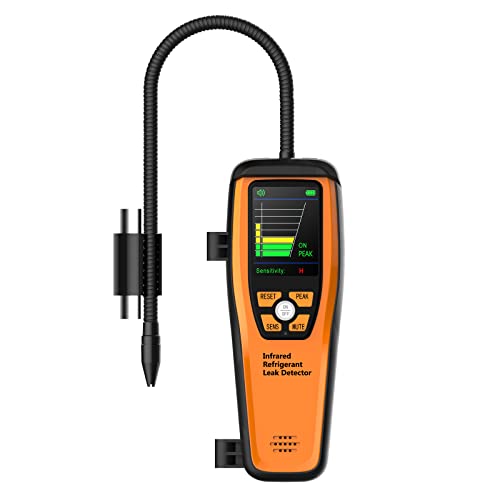
- Infrared sensor with stated 10-year life
- Sensitivity up to 0.14 oz./yr.
- Detects broad halogenated-gas range
Best For: Professional HVAC and automotive leak finding
Best Ultrasonic Versatility

- Detects pressure and vacuum leaks
- Headphones help in noisy environments
- Laser pointer aids pinpointing
Best For: Multi-purpose HVAC and industrial troubleshooting
Best Budget-Friendly Refrigerant Coverage

- Covers A1, A2L, and A3 refrigerants
- Sensitivity up to 0.14 oz./yr.
- Rechargeable battery and color display
Best For: Modern HVAC and automotive A/C service
Best Simple Audio Feedback

- Natural-sound audio from 0 Hz to 4 kHz
- Ten-element visual bar graph
- Includes headset, battery, and hard case
Best For: Basic ultrasonic leak detection with audio guidance
Ultra-Sensitive Pick
Fieldpiece DR58 Heated Diode Leak Detector

- Detects leaks smaller than 0.03 oz/yr
- Works with a wide range of refrigerants
- Includes LCD, LED, case, and replacement tips
Best For: Professional HVACR technicians needing high sensitivity
Ultrasonic Professional Kit

- Detects gas-flow and vacuum leaks
- Uses audio and a 10-element visual bar graph
- Includes headphones, waveguide, battery, and case
Best For: Professional ultrasonic leak inspection and maintenance
Feature-Rich Rechargeable Pick
Aituzero Rechargeable Refrigerant Leak Detector

- Detects leaks down to 0.1 oz/yr
- Offers TFT readings and three alarm modes
- Includes a 14.5-inch flexible probe and USB-C charging
Best For: Portable HVAC, automotive AC, and refrigeration troubleshooting
Professional Pick
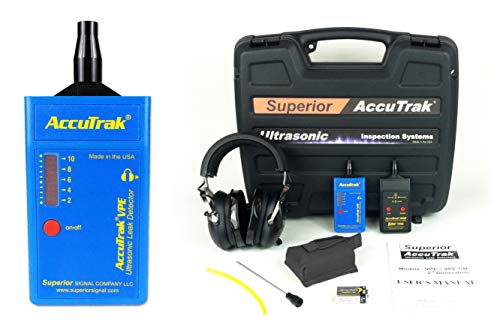
- Natural sound conversion for leak identification
- 10-element visual bar graph
- Complete kit with probe, waveguide, headphones, and case
Best For: Professional HVAC inspection work
Rechargeable Choice

- Detects numerous CFC, HCFC, HFC, and HFO refrigerants
- Rechargeable Type-C power and digital display
- 11-inch flexible gooseneck probe
Best For: Automotive AC and HVAC troubleshooting
Versatile Ultrasonic Pick

- 38-42kHz ultrasonic detection for small leaks
- Adjustable sensitivity with sound and light alerts
- Includes headset, case, manual, and 9V battery
Best For: Multi-purpose HVAC, automotive, and industrial inspections
Best Infrared Pick – Elitech ILD-200
The Elitech ILD-200 is a strong choice for technicians who want an infrared alternative to traditional ultrasonic refrigerant leak detectors. Its adjustable sensitivity, broad halogenated-gas compatibility, and large display support accurate HVAC and automotive A/C troubleshooting.
Best For: HVAC professionals and automotive technicians seeking a sensitive, infrared refrigerant leak detector with wide gas compatibility.
Pros:
- Infrared sensor is designed for fast response, anti-interference performance, and a stated 10-year sensor life.
- Adjustable High, Medium, and Low sensitivity settings reach a maximum sensitivity of 0.14 oz./yr.
- Detects many CFC, HCFC, HFC, HFO, hydrocarbon, and blended refrigerants.
- Large 2.8-inch screen and peak display help indicate the leak location.
Cons:
- It is an infrared detector rather than an ultrasonic model.
- The supplied details specify a one-year warranty and plastic construction.
The ILD-200 stands out when refrigerant-specific detection and a readable display matter more than ultrasonic versatility. It is a practical professional tool for locating small halogenated-gas leaks across several types of equipment.
Best Ultrasonic Versatility – INFICON Whisper
The INFICON Whisper is the most directly aligned with ultrasonic refrigerant leak detectors in this roundup. It detects pressure and vacuum leaks across gases, works with headphones in noisy environments, and uses a laser pointer to help pinpoint the source.
Best For: Technicians who need ultrasonic-style detection for refrigerant or nitrogen leaks, vacuum systems, and other industrial troubleshooting tasks.
Pros:
- Detects both pressure and vacuum leaks for all gases listed by the manufacturer.
- Included headphones support leak detection in noisy work areas.
- Laser pointer helps identify the leak location.
- Also supports applications such as electrical arcing and malfunctioning steam traps.
Cons:
- It is a relatively heavy three-pound instrument with a supplied carrying case.
- Runs on two D-cell alkaline batteries rather than a rechargeable battery.
- Its broad applications may be more than needed for refrigerant-only work.
Choose the Whisper if versatility is a priority. Its ability to detect pressurized nitrogen leaks and its headphone-based operation make it especially useful for technicians working across HVAC, mechanical, and industrial systems.
Best Budget-Friendly Refrigerant Coverage – ALD-200 Refrigerant Detector
The ALD-200 is a professional-grade heat-diode detector for users who need broad refrigerant coverage rather than a strictly ultrasonic tool. Its adjustable sensitivity, color display, peak mode, and support for A1, A2L, and A3 refrigerants make it suited to modern HVAC service work.
Best For: HVAC technicians and capable DIY users servicing newer refrigerants, heat pumps, air conditioners, refrigeration equipment, and automotive A/C systems.
Pros:
- Detects A1, A2L, and A3 refrigerants, plus hydrogen/nitrogen tracer gas.
- Sensitivity reaches 0.14 oz./yr. for locating micro leaks.
- 2.8-inch TFT display, audible alarm, mute function, Peak Mode, and Reset Function support field use.
- Oil-resistant and impact-resistant housing with a rechargeable battery designed for a full day of service.
Cons:
- It uses a heat-diode sensor, not ultrasonic detection.
- Proper warm-up and auto-zero calibration are required for consistent readings.
- The supplied product information is truncated in the detailed specifications.
The ALD-200 is appealing when refrigerant compatibility and modern features are more important than using an ultrasonic sensor. Its coverage of newer A2L and A3 refrigerants gives it useful flexibility for current HVAC applications.
Best Simple Audio Feedback – Superior AccuTrak VPE Basic
The Superior AccuTrak VPE Basic is a straightforward ultrasonic leak-detection kit built around audio feedback and a simple visual bar graph. For buyers comparing ultrasonic refrigerant leak detectors, its natural-sound conversion and included headset make it focused on hearing and confirming leaks.
Best For: Users who want a basic ultrasonic kit with a headset, battery, hard case, and quick visual leak indication.
Pros:
- Natural-sound conversion from 0 Hz to 4 kHz helps users hear and distinguish leaks.
- Ten-element bar graph provides a quick visual indication of leak presence.
- Basic kit includes the detector, headset, battery, and hard case.
- Compact kit dimensions are listed as 14 x 4 x 11 inches.
Cons:
- The supplied notes provide limited information about refrigerant-specific compatibility.
- The basic kit does not list a laser pointer or advanced display features.
- Product specifications include an unusually low listed item weight, so buyers may want to verify it.
The VPE Basic makes sense for buyers who value simple audio interpretation over a feature-heavy interface. Its included accessories help it function as a ready-to-use ultrasonic kit, though the supplied information is less specific about refrigerant applications.
Ultra-Sensitive Pick – Fieldpiece DR58 Heated Diode Leak Detector
For technicians comparing ultrasonic refrigerant leak detectors and other HVACR tools, the Fieldpiece DR58 stands out for its heated diode sensor and very high sensitivity. It detects leaks smaller than 0.03 oz/yr, works with a broad range of refrigerants, and provides visual and audible guidance while you scan.
Best For: HVACR professionals who need fast, highly sensitive refrigerant leak detection in tight or difficult-to-access spaces.
Pros:
- Detects leaks smaller than 0.03 oz/yr with an ultra-sensitive heated diode sensor.
- Compatible with HFC, CFC, HCFC, HFO, H2N2 tracer gas, and blends.
- Offers a backlit LCD, LED tip, audible beep, 17-inch probe, and up to 18 hours of USB-rechargeable use.
- Includes five replacement filter tips and a blow-molded carrying case.
Cons:
- At 3 pounds, it is heavier than the compact rechargeable detector in this roundup.
- The heated diode sensor has a stated 300-hour life and may require replacement over time.
The DR58 is a strong choice when sensitivity, refrigerant compatibility, and jobsite durability matter most. Its replaceable filter tips and rechargeable battery also make it practical for recurring service work.
Ultrasonic Professional Kit – Superior AccuTrak VPE-GN PRO
The Superior AccuTrak VPE-GN PRO is a professional ultrasonic leak detector for finding gases that generate ultrasonic sound during flow, including vacuum leaks. Its gooseneck design, adjustable sensitivity, visual bar graph, and supplied headphones support focused troubleshooting in noisy service environments.
Best For: Professional maintenance and HVAC technicians who want an ultrasonic tool with both audio and visual feedback.
Pros:
- Detects gas-flow leaks, including vacuum leaks, through ultrasonic sound.
- Can detect leaks equivalent to 1.5 oz/year of refrigerant.
- Combines a 10-element visual bar graph with natural sound conversion from 0 Hz to 4 kHz.
- Includes a headset, noise-blocking headphones, battery, waveguide, and large carrying case.
Cons:
- Its stated refrigerant sensitivity is lower than the Fieldpiece DR58 and the rechargeable semiconductor detector.
- At 4.4 pounds, the complete kit is relatively heavy for portable service work.
This kit makes sense when ultrasonic audio is the preferred detection method and supplied accessories are important. Adjustable sensitivity and noise-blocking headphones add flexibility for professional inspections.
Feature-Rich Rechargeable Pick – Aituzero Rechargeable Refrigerant Leak Detector
For shoppers seeking ultrasonic refrigerant leak detectors with a modern handheld interface, the Aituzero detector combines a Japanese semiconductor sensor with three sensitivity levels and real-time TFT readings. Its flexible gooseneck probe, multiple alerts, and broad refrigerant compatibility suit HVAC, automotive AC, and refrigeration troubleshooting.
Best For: Technicians and DIY users who want a lightweight rechargeable detector with adjustable sensitivity, display data, and flexible alarm settings.
Pros:
- Reaches sensitivity up to 3 g/yr, or 0.1 oz/yr, with high, medium, and low settings.
- Provides sound, light, and vibration alerts, with independent alarm controls and quick mute.
- Uses a color TFT display with funnel and trend-graph views plus real-time PPM readings.
- Offers a 14.5-inch flexible probe, USB-C charging, and up to 8 hours of continuous use.
Cons:
- Its stated sensitivity is not as high as the Fieldpiece DR58.
- The supplied notes do not specify a carrying case or replacement sensor tips.
The Aituzero is appealing when usability and feedback options matter as much as raw sensitivity. Its compact 1.01-pound design, rechargeable battery, and wide refrigerant support make it versatile for routine service calls.
Professional Pick – AccuTrak VPE PRO
For technicians comparing ultrasonic refrigerant leak detectors, the AccuTrak VPE PRO is a professional-oriented kit built around natural-sound audio conversion. Its visual bar graph, touch probe, waveguide, and noise-blocking headphones support focused leak investigation in demanding work areas.
Best For: HVAC professionals who want a complete ultrasonic inspection kit with both audio and visual feedback.
Pros:
- Natural sound conversion helps users hear and distinguish leaks.
- 10-element bar graph provides a quick visual indication of leak presence.
- Includes a touch probe, waveguide, headphones, battery, and large carrying case.
- Designed for battery-powered, compact field use.
Cons:
- At 5.3 pounds, it is heavier than compact handheld alternatives.
- The notes do not specify refrigerant compatibility by gas type.
The VPE PRO stands out when kit completeness and technician-oriented sound analysis matter more than minimum size or weight.
Rechargeable Choice – Tadeto Freon Leak Detector
The Tadeto is a practical option among ultrasonic refrigerant leak detectors for users who need refrigerant-specific sensing in automotive, residential, or commercial settings. Its rechargeable design, flexible gooseneck probe, LCD display, and audio-visual alerts are suited to routine HVAC troubleshooting.
Best For: HVAC and automotive users who want a lightweight, rechargeable detector for common halogen refrigerants.
Pros:
- Supports CFC, HCFC, HFC, and HFO refrigerants, including R22, R134a, R410A, R404A, and R1234yf.
- Combines audible alarms, light alerts, an LCD, and a bar graph.
- Rechargeable through a universal Type-C charging port.
- Flexible 11-inch gooseneck probe helps reach around coils and hoses.
Cons:
- Requires about 30 seconds for warm-up and automatic calibration.
- Incorrectly moving the probe too quickly can cause small leaks to be missed.
With its refrigerant-focused sensing and accessible controls, the Tadeto is a convenient everyday choice, especially where probe flexibility and rechargeable operation are priorities.
Versatile Ultrasonic Pick – 38-42kHz Leak Detector
This portable detector is a versatile choice for buyers seeking ultrasonic refrigerant leak detectors that can also inspect air, gas, and water systems. Its 38-42kHz ultrasonic range, adjustable sensitivity, noise-isolation headset, and simultaneous sound-and-light alerts support work across HVAC, automotive, and industrial applications.
Best For: Users who need one compact ultrasonic tool for HVAC, automotive, industrial, and pressurized-system checks.
Pros:
- 38-42kHz detection range is designed to identify turbulence from small leaks.
- Adjustable sensitivity and proximity sensing help narrow down leak locations.
- Built-in frequency filtering helps reduce ambient noise interference.
- Includes noise-canceling headphones, storage case, manual, and 9V battery.
Cons:
- It is powered by a disposable 9V battery rather than a rechargeable system.
- The notes describe ultrasonic leak detection broadly rather than refrigerant-specific gas compatibility.
This model makes the most sense for buyers who value multi-industry flexibility and portability over dedicated refrigerant-gas specifications.
How We Picked These Ultrasonic Refrigerant Leak Detectors
We selected products representing the main approaches used for refrigerant leak detection: dedicated ultrasonic instruments, traditional electronic sniffers, and combination-style tools. We considered sensor technology, stated refrigerant compatibility, sensitivity controls, probe or gooseneck design, display and alarm feedback, portability, included accessories, and suitability for HVAC, automotive, or industrial service.
Because specifications and real-world performance can vary by leak size, airflow, background noise, and technician technique, treat published sensitivity claims as a starting point. A detector is most useful when it is easy to position accurately and gives clear feedback in the conditions where you work.
Quick Comparison
| Best For | What to Prioritize | Useful Features |
|---|---|---|
| Professional HVAC service | High sensitivity and durable construction | Headset, adjustable sensitivity, carrying case |
| Noisy mechanical rooms | Clear audio and visual feedback | Noise isolation, backlit display, multiple alarms |
| Automotive work | Compact size and flexible probing | Long probe, rechargeable battery, simple controls |
| Occasional home or shop use | Affordable operation and easy setup | Automatic calibration, clear screen, included battery |
Key Buying Factors for Ultrasonic Refrigerant Leak Detectors
Detection Method and Sensitivity
Ultrasonic detectors listen for the high-frequency turbulence created as pressurized gas escapes. They can be useful when the refrigerant is difficult to access or when you want to avoid relying only on chemical tracer methods. Infrared and heated-diode models detect refrigerant concentration directly and may be preferable when you need a conventional electronic sniffer. Look for adjustable sensitivity so the tool can be tuned around fans, motors, valves, and other sources of interference.
Frequency Range and Noise Control
A stated frequency range around the ultrasonic band is only part of the picture. Headphones, filtering, sensitivity adjustment, and a focused probe can make a larger practical difference than a headline frequency figure. For busy service environments, choose a model with strong audio isolation plus visual or vibration alerts.
Probe Design and Access
A rigid probe is useful for close inspection, while a gooseneck or touch probe can reach behind panels, around fittings, and into crowded equipment. Consider the length, flexibility, and tip design before buying. A detector that cannot be positioned near the suspected leak will be less useful regardless of its sensitivity rating.
Power, Durability, and Included Kit
Check whether the detector uses replaceable batteries or rechargeable power, how long it runs, and whether charging is convenient on the job. A hard case, headset, spare battery, and multiple probes can justify a higher price for frequent technicians. For occasional use, simpler controls and lower ownership cost may matter more than advanced accessories.
Who Should Buy Which Ultrasonic Refrigerant Leak Detectors?
Professional HVAC technicians should favor a durable detector with adjustable sensitivity, dependable feedback, and a headset or case. Those working across newer and older systems should verify that the chosen tool supports the refrigerants they encounter, including newer blends such as R454B where applicable.
Automotive technicians and mobile service providers will generally benefit from a lightweight rechargeable model with a flexible probe and a bright display. Homeowners and occasional users can choose a straightforward detector with automatic operation and clear alarms, provided it is intended for the refrigerant and leak size involved. For industrial maintenance or noisy plant rooms, prioritize robust construction, strong noise rejection, and both audio and visual alerts.