The right battery can make camping more comfortable by keeping lights, refrigerators, fish finders, and other essentials running without frequent recharging. The best deep cycle batteries for camping balance usable capacity, cycle life, weight, charging compatibility, and weather resistance.
This roundup compares 10 AGM and LiFePO4 options ranging from compact 20Ah models to high-capacity 300Ah batteries. Use the guide below to match battery chemistry and capacity to your camping setup.
Best 10 Deep Cycle Batteries for Camping Picks for 2026
Lightweight Lithium Upgrade

- Group 24 replacement format
- 4,000-plus deep cycles at 100% DOD
- Built-in 100A smart BMS
Best For: Campers upgrading from lead-acid batteries
Proven AGM Value
Renogy 12V 100Ah Deep Cycle AGM Battery

- Maintenance-free sealed AGM design
- Works from -4°F to 140°F
- Supports series and up to 4P parallel connections
Best For: Campers wanting a familiar, low-maintenance AGM battery
High-Capacity Camping Power

- 1,920Wh of stated energy
- 100A BMS and IP65 waterproof design
- Expandable up to 4S4P
Best For: Higher-demand RV and off-grid camping systems
Compact Two-Battery Setup
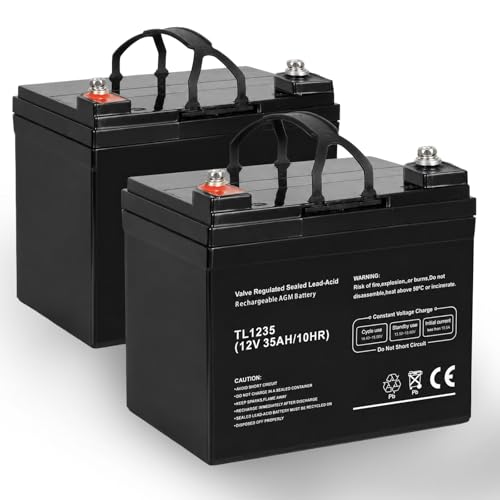
- Two 12V 35Ah rechargeable batteries
- Maintenance-free sealed AGM design
- Vibration-resistant ABS casing
Best For: Smaller camping loads and backup applications
Best Long-Life Pick
2-Pack 100Ah LiFePO4 Batteries

- Up to 4,000 cycles at 100% depth of discharge
- 1.28kWh two-battery setup with expandable connections
- About 21.6 pounds per battery
Best For: Higher-capacity RV, solar, and off-grid camping systems
Best Compact Marine Option

- Sealed, low-maintenance AGM construction
- Designed for trolling motors and 12V marine electronics
- Compact format for small boats and kayaks
Best For: Small-watercraft camping, fishing, and marine use
Best Smart-Monitoring Pick
Dyness 100Ah Bluetooth LiFePO4
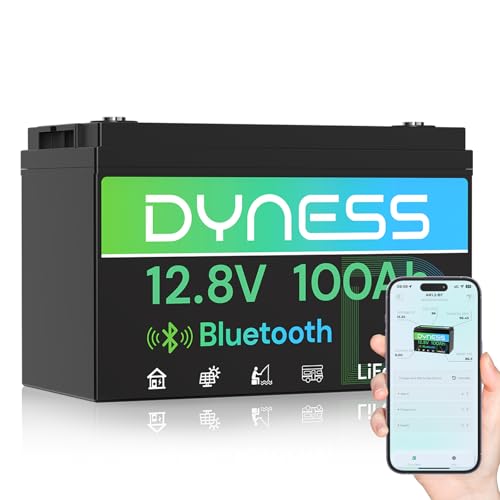
- Bluetooth app tracks voltage, current, and capacity
- 100A BMS with low-temperature protection
- Supports expansion up to a 4S4P configuration
Best For: RV and off-grid campers wanting monitoring and cold-weather safeguards
Cold-Weather Powerhouse
12V 300Ah Self-Heating LiFePO4 Battery

- 300Ah capacity for extended 12V power
- Self-heating charging support below freezing
- App monitoring and 200A BMS protection
Best For: Large RV, camper, marine, and off-grid systems
Expandable RV Essential
12V 100Ah LiFePO4 Battery 2-Pack

- Two Group 24 100Ah batteries
- Drop-in replacement for many lead-acid setups
- Expandable to 4S4P configurations
Best For: RV, marine, solar, and auxiliary house-power systems
Compact Campsite Backup

- Lightweight 5-pound, 256Wh design
- 6000+ cycles at 80% depth of discharge
- 20A BMS and parallel expansion support
Best For: Portable camping electronics, lighting, solar, and small backup loads
Lightweight Lithium Upgrade – 12V 100Ah TM LiFePO4 Battery
For campers replacing an older lead-acid setup, this 12V 100Ah LiFePO4 battery combines Group 24 compatibility with a much lighter design. It is built for energy storage in camping, RV, marine, solar, and trolling-motor applications rather than engine starting.
Best For: Campers who want a lightweight, long-cycle replacement for a Group 24 lead-acid or AGM battery.
Pros:
- Weighs about 22.6 pounds and is smaller than comparable lead-acid batteries.
- Offers 4,000-plus cycles at 100% depth of discharge, with higher cycle counts at lower discharge levels.
- Built-in 100A smart BMS helps protect against overcharging, over-discharging, overcurrent, and short circuits.
- Supports a five-year manufacturer warranty and a stated 10-year lifespan.
Cons:
- Designed for energy storage, not engine starting.
- Requires a recommended 14.6V charging voltage and 20A charging current.
Its Group 24 form factor and low weight make it a practical camping upgrade, especially when portability and repeated cycling matter more than starting power.
Proven AGM Value – Renogy 12V 100Ah Deep Cycle AGM Battery
This Renogy 12V 100Ah AGM battery is a conventional choice for deep cycle batteries for camping, RVs, cabins, and solar systems. Its sealed lead-acid construction is maintenance-free and provides stable power for common appliances and backup loads.
Best For: Campers who prefer a sealed AGM battery with straightforward maintenance and dependable temperature performance.
Pros:
- Sealed AGM design avoids routine electrolyte maintenance and internal troubleshooting.
- Specified discharge performance across -4°F to 140°F.
- Can power common loads such as refrigerators, microwaves, CPAP machines, coffee makers, and laptops.
- Supports series connections without limitation and parallel connections up to 4P.
Cons:
- At 63.9 pounds, it is substantially heavier than the listed lithium alternatives.
- Includes a two-year prorated warranty rather than a full long-term warranty.
- Offers less stated cycle-life information than the lithium options.
Choose this model when sealed lead-acid simplicity and broad temperature usability are priorities, and the added weight is acceptable for your camping setup.
High-Capacity Camping Power – 12V 150Ah Max LiFePO4 Battery
With 150Ah of capacity and 1,920Wh of stated energy, this LiFePO4 battery is suited to campers who need longer runtimes from a compact power system. The IP65-rated design, 100A BMS, and support for expanded battery banks make it a flexible option for RV and off-grid use.
Best For: RV campers and off-grid users who need more stored energy than a standard 100Ah battery provides.
Pros:
- Provides 1,920Wh of energy and more than 4,000 cycles to 80% capacity.
- 100A BMS protects against overcharge, over-discharge, short circuits, and overheating.
- Supports series and parallel expansion up to 4S4P.
- Compact 10.04-by-7.68-by-9.84-inch housing with IP65 waterproof protection.
Cons:
- Charging and performance require temperatures of at least 5°C.
- Designed for energy storage, not engine starting.
- Its 41.03-pound listed weight is heavier than the 100Ah lithium option.
This is a strong fit for higher-demand camping systems, particularly when extra capacity and future bank expansion are more important than minimum weight.
Compact Two-Battery Setup – 12V 35Ah AGM Battery 2-Pack
This two-pack of 12V 35Ah AGM batteries offers a compact way to add rechargeable power to camping, RV, marine, UPS, and off-grid setups. The sealed SLA construction is designed for maintenance-free use, while the included pair can suit smaller loads or backup arrangements.
Best For: Campers needing compact AGM batteries for modest power demands, backup equipment, or flexible two-battery installations.
Pros:
- Includes two rechargeable 12V 35Ah batteries.
- Sealed AGM/SLA construction is leak-proof and maintenance-free.
- Heavy-duty ABS casing is designed for vibration resistance.
- Low self-discharge supports more convenient storage.
Cons:
- Each 35Ah battery stores substantially less energy than the 100Ah and 150Ah options.
- Only a one-year warranty is specified.
- The supplied notes do not state a cycle count or operating-temperature range.
For smaller camping loads and backup applications, this pack provides practical AGM simplicity; higher-demand RV appliances will generally call for greater capacity.
Best Long-Life Pick – 2-Pack 100Ah LiFePO4 Batteries
For campers who want substantial capacity without the weight of lead acid, this two-pack is a strong option among deep cycle batteries for camping. Each 12V 100Ah LiFePO4 battery weighs about 21.6 pounds and offers up to 95% usable capacity, making it suitable for RVs, solar setups, and off-grid power.
Best For: Campers building a higher-capacity RV, solar, or off-grid power system.
Pros:
- Up to 4,000 cycles at 100% depth of discharge, with a stated lifespan of up to 10 years.
- Two batteries provide a 1.28kWh setup and can be connected in series or parallel, up to four units as recommended.
- Much lighter than comparable lead-acid batteries and compatible with mainstream inverters and chargers.
Cons:
- Not recommended for trolling motors rated above 700W.
- The two-battery configuration may be more capacity than a small camping setup needs.
This pack favors long service life, usable capacity, and expansion flexibility. It is especially appealing when reducing battery weight matters, but buyers should verify charger compatibility and power requirements before installation.
Best Compact Marine Option – Newport 12V 50Ah AGM Battery
This Newport AGM battery is a practical choice for smaller boats and water-based camping trips. Among deep cycle batteries for camping, its 12V 50Ah capacity is geared toward steady power for trolling motors and compatible marine electronics, while the sealed design keeps maintenance simple.
Best For: Kayaks, jon boats, inflatable boats, and small-watercraft camping or fishing trips.
Pros:
- Sealed AGM lead-acid construction provides a low-maintenance power solution.
- Designed for steady, consistent output from trolling motors and 12V marine electronics.
- Compact and manageable for carrying from a vehicle to a dock or shoreline.
Cons:
- At 32 pounds, it is heavier than the lithium options in this roundup.
- Its 50Ah capacity is lower than the 100Ah alternatives.
- It is primarily oriented toward marine use rather than expandable RV or off-grid systems.
The Newport is a straightforward, portable AGM choice when dependable 12V marine power matters more than maximum capacity or minimum weight. Its stated one-year limited warranty and USA-based support add practical reassurance.
Best Smart-Monitoring Pick – Dyness 100Ah Bluetooth LiFePO4
The Dyness combines 100Ah lithium capacity with Bluetooth monitoring, giving campers a convenient way to check battery status from a phone. It stands out among deep cycle batteries for camping with low-temperature protection, a 100A BMS, and expansion potential for RV, solar, and off-grid systems.
Best For: RV campers and off-grid users who want app-based monitoring and cold-weather protection.
Pros:
- Bluetooth 5.0 provides real-time monitoring of voltage, current, capacity, and system performance through the Dyness app.
- LiFePO4 chemistry delivers 1280Wh, 4,000-plus deep cycles, and a stated lifespan of up to 10 years.
- 100A BMS includes protection against overcharging, over-discharging, over-current, overheating, and short circuits.
- Low-temperature protection disconnects charging below 32°F and includes additional cold-weather safeguards.
Cons:
- Bluetooth monitoring requires staying within 10 meters of the battery.
- The manufacturer recommends a LiFePO4-specific charger and a 0.2C recharge rate for optimal performance.
- At 25.3 pounds, it is not the lightest 100Ah option listed.
This battery is a well-equipped choice for campers who value visibility and protection features as much as storage capacity. Its 4S4P expansion support also leaves room to scale, provided the installation uses suitable charging and system components.
Cold-Weather Powerhouse – 12V 300Ah Self-Heating LiFePO4 Battery
For campers who need substantial off-grid capacity, this 300Ah LiFePO4 battery is a strong option among deep cycle batteries for camping. Its self-heating function, app monitoring, and 200A BMS are designed to support demanding RV, camper, marine, and backup-power setups.
Best For: RV campers, off-grid solar systems, and extended trips requiring power for appliances such as refrigerators, microwaves, lights, and electronics.
Pros:
- Large 300Ah capacity for long-duration 12V power.
- Self-heating activates during charging below 32°F when charging current exceeds 10A.
- App provides real-time capacity, voltage, current, temperature, and fault information.
- Supports charging through a lithium charger, solar system, or generator.
Cons:
- At 24.8 kg, it is relatively heavy for a portable camping battery.
- Requires an appropriate lithium charging setup; a 14.6V charger is specified.
- Not suitable for use as golf cart batteries when connected in series.
This is a high-capacity choice for a permanent or semi-permanent camper power system rather than lightweight campsite portability. The built-in heating and monitoring features add practical value for cold-weather and off-grid use.
Expandable RV Essential – 12V 100Ah LiFePO4 Battery 2-Pack
This two-battery package offers 200Ah of combined 12V-class storage for RVs, boats, and off-grid systems. For shoppers comparing deep cycle batteries for camping, its Group 24 dimensions, M8 terminals, low-temperature protections, and expandable configuration make it a practical lead-acid replacement.
Best For: Campers and boat owners who want a matched pair of drop-in batteries for house power, auxiliary systems, solar storage, or future expansion.
Pros:
- Two 100Ah LiFePO4 batteries provide substantial combined storage.
- Group 24 form factor is designed to fit many standard battery boxes.
- Built-in 100A BMS protects against overcharge, over-discharge, overcurrent, short circuits, and temperature issues.
- Supports up to 4 batteries in series and 4 in parallel for larger configurations.
Cons:
- For energy storage only; it is not suitable for engine starting or cranking.
- Requires a lithium-compatible charger or controller.
- Charging pauses below 32°F, so cold-weather users need to plan around the temperature limits.
With a five-year warranty and a familiar Group 24 footprint, this set suits campers upgrading from lead-acid without redesigning the battery compartment. It is especially appealing when a two-battery system or later expansion is part of the plan.
Compact Campsite Backup – 12V 20Ah LiFePO4 Battery
When space and weight matter more than maximum capacity, this 20Ah LiFePO4 unit is a compact choice among deep cycle batteries for camping. It provides 256Wh of storage, weighs about 5 pounds, and includes a 20A BMS for small solar, lighting, fish-finder, RV, and backup applications.
Best For: Lightweight camping electronics, fish finders, small solar systems, lighting, and portable backup loads.
Pros:
- Compact 5-pound design is easier to transport and install.
- Rated for 6000+ cycles at 80% depth of discharge.
- 20A BMS provides protection against overcharge, over-discharge, short circuit, and overheating.
- Up to four batteries can be connected in parallel for increased capacity.
Cons:
- 20Ah capacity is limited for large appliances or extended RV power demands.
- Not designed for starting batteries, golf carts, or jacks.
- Uses M5 bolt terminals, so compatibility with existing wiring should be checked.
This battery is best viewed as a lightweight energy-storage building block rather than a whole-camper power source. Its compact dimensions, cycle rating, IP65 rating, and parallel expansion option make it well suited to smaller camping and outdoor electrical loads.
How We Picked the Best Deep Cycle Batteries for Camping
We focused on batteries suited to recurring RV, marine, solar, and off-grid use rather than short bursts of engine-starting power. Our comparison considers chemistry, rated capacity, battery-management protections, expected cycle life, portability, installation flexibility, and useful features such as Bluetooth monitoring or self-heating.
Because real-world performance depends on charging equipment, temperature, and load size, published specifications should be treated as a starting point. Confirm dimensions, terminals, charger requirements, and warranty details before buying.
Quick Comparison
| Battery type | Typical strengths | Best suited to |
|---|---|---|
| LiFePO4 | Low weight, long cycle life, high usable capacity | Frequent camping, RVs, solar, and off-grid systems |
| AGM | Sealed, maintenance-free, simpler upfront setup | Occasional camping, marine use, and budget installations |
| 20–50Ah | Compact and easier to carry | Fish finders, lights, small electronics, and portable power |
| 100–150Ah | Balanced capacity for everyday loads | Most RV, cabin, and weekend camping setups |
| 300Ah | Extended runtime with fewer battery banks | High-demand or multi-day off-grid use |
Key Buying Factors for Deep Cycle Batteries for Camping
Capacity and Usable Energy
Capacity is measured in amp-hours, but usable energy also depends on voltage and discharge limits. A 12V 100Ah battery stores about 1,200 watt-hours nominally. LiFePO4 batteries commonly provide more usable capacity than AGM batteries because they can typically be discharged more deeply without the same reduction in service life.
Battery Chemistry and Weight
LiFePO4 is usually lighter and lasts substantially longer through repeated cycles, making it a strong choice for frequent travel or solar use. AGM batteries are heavier but sealed, familiar, and often less expensive initially. They can make sense for occasional use or installations already designed around lead-acid charging.
Charging and Compatibility
Check that your solar controller, converter, alternator charger, and shore-power charger support the battery chemistry. Confirm the required charging voltage and whether a low-temperature charging cutoff is included. A built-in BMS helps protect many lithium batteries from overcharge, over-discharge, excessive current, and temperature problems.
Size, Connections, and Environment
Compare physical dimensions, terminal style, mounting position, and cable clearance with your battery compartment. For boats or exposed campsites, look for sealed construction and suitable water or corrosion resistance. Bluetooth monitoring can simplify checking voltage, state of charge, and battery alerts from a phone.
Who Should Buy Which Deep Cycle Batteries for Camping?
Choose a compact 20Ah or 35–50Ah battery for portable electronics, fish finders, lighting, and small weekend loads. A 100Ah LiFePO4 model is the best all-around choice for many RV and solar users who want a practical balance of runtime, weight, and longevity. Consider paired 100Ah batteries when your system needs more capacity or higher sustained output.
A 150Ah or 300Ah LiFePO4 battery is better for refrigeration, inverters, heating accessories, and longer stays away from shore power. Choose AGM when lower initial cost, sealed maintenance-free operation, or existing lead-acid equipment matters more than minimum weight and maximum cycle life.